
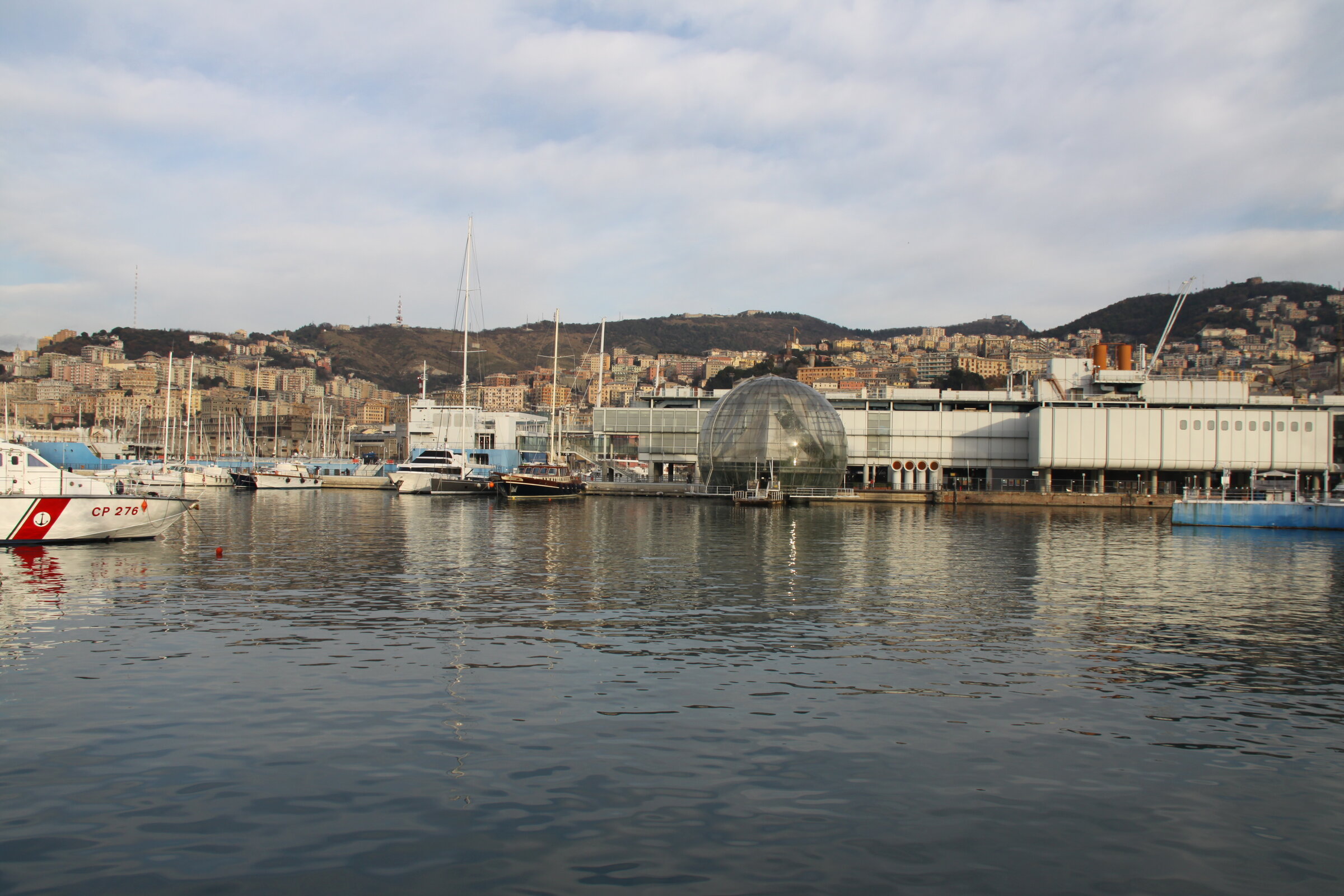
The Aquarium of Genoa is the largest aquarium in Italy and the second largest in Europe, anchoring the redeveloped Porto Antico waterfront. Commissioned for Expo ’92 — the international exhibition marking 500 years since Christopher Columbus’s voyage — it was designed by Renzo Piano with interior exhibits by Peter Chermayeff of Cambridge Seven Associates, and welcomed its first visitors on 12 October 1993.
- Address
- Ponte Spinola, Area Porto Antico, 16128 Genova GE
- Period
- Built for Expo '92 (Genoa Columbus 500); opened to the public 12 October 1993
- Architects
- Renzo Piano (architecture, within the Porto Antico masterplan); Peter Chermayeff / Cambridge Seven Associates (exhibit interiors)
- Function
- Public aquarium and marine research facility
- Current use
- Operated by Costa Edutainment S.p.A.; largest aquarium in Italy and second largest in Europe; EAZA member; over 1.2 million visitors per year
- Coordinates
- 44.4106° N, 8.9265° E
- Notes
- About 27,000 m² total footprint, 10,000 m² of exhibition space, 70 tanks holding roughly 6 million litres of water; expanded in 1998 with the 100-metre floating Nave Italia and in summer 2013 with the Cetacean Pavilion by Renzo Piano Building Workshop
Gallery
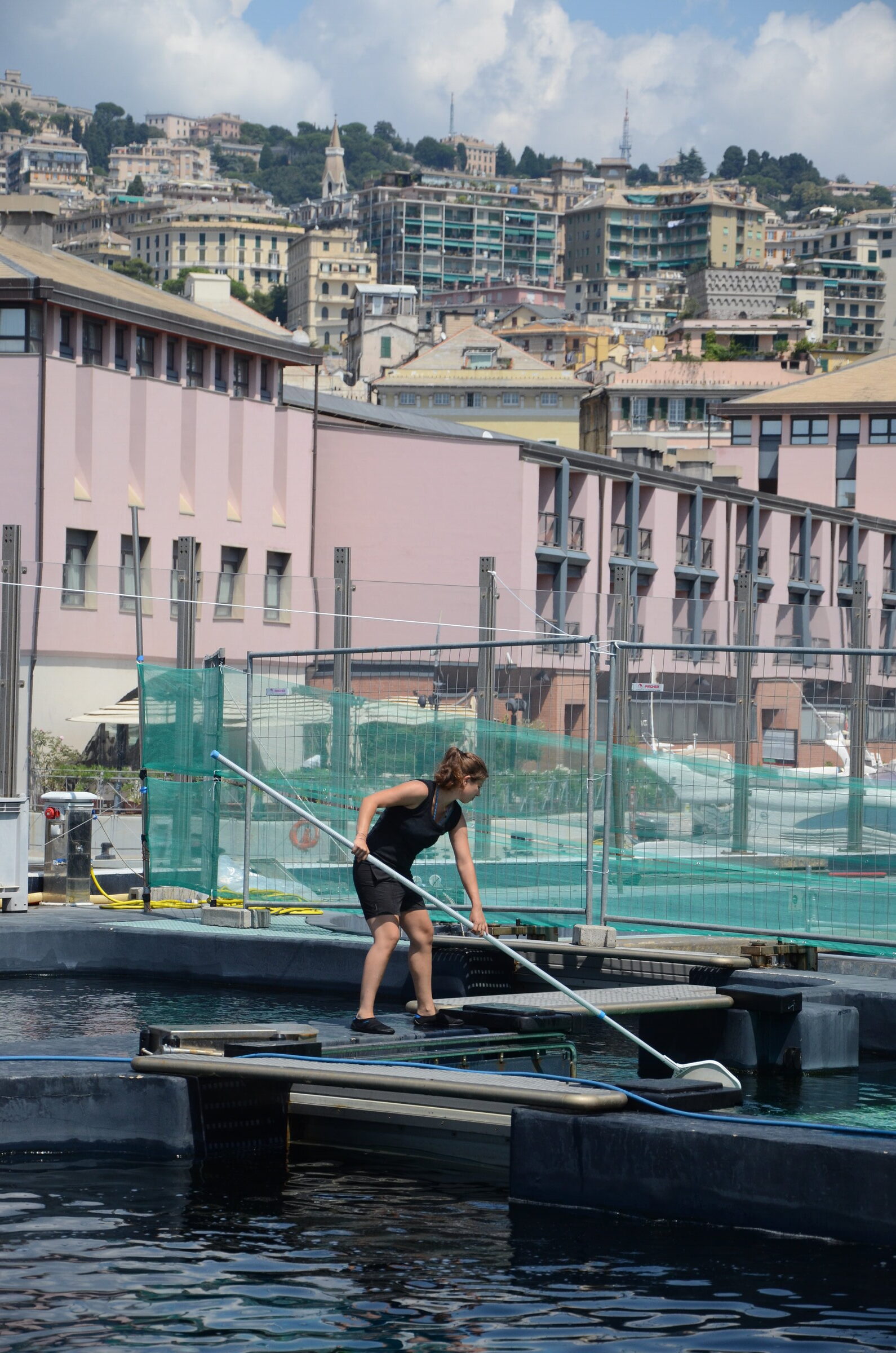
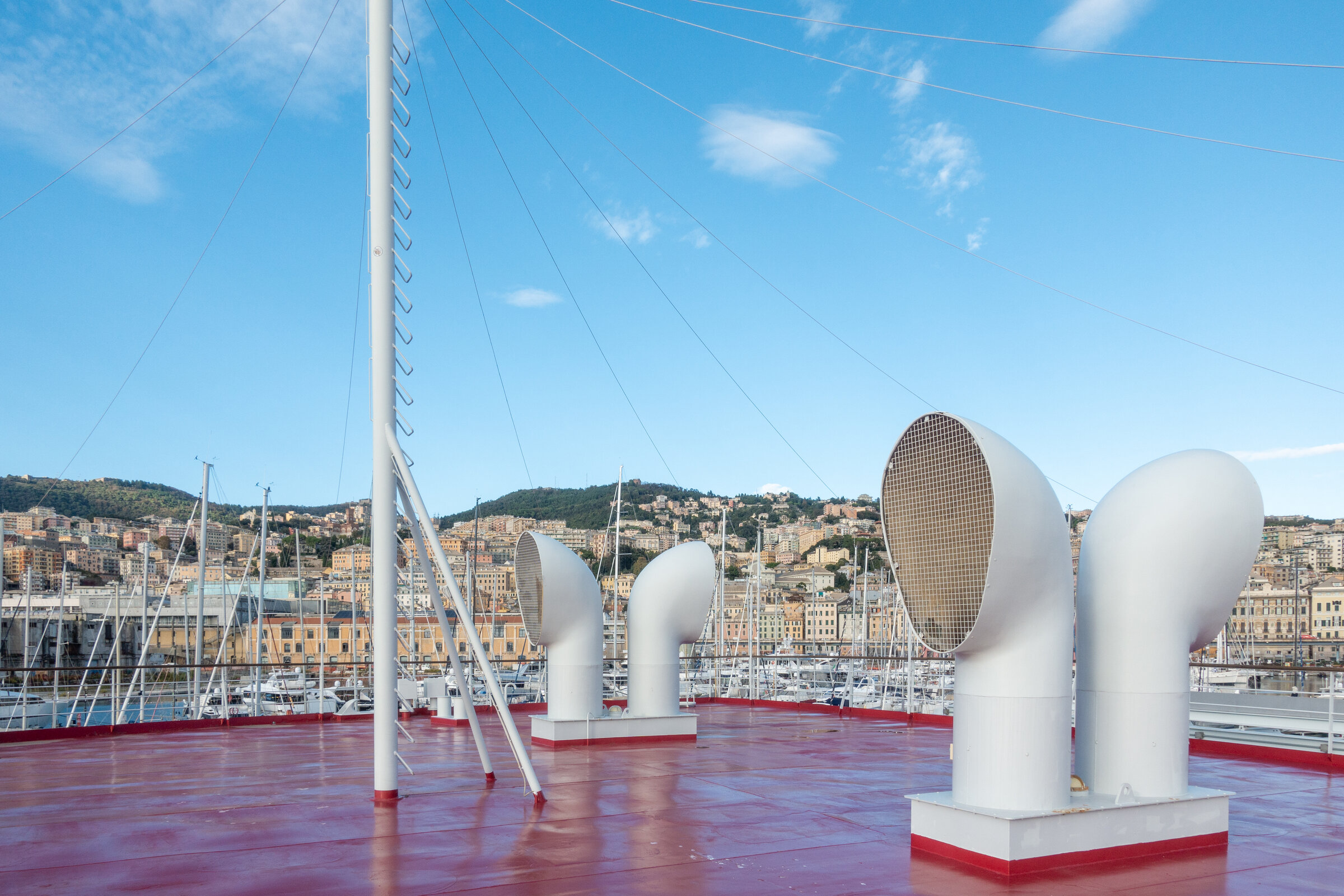
Two views: a tank inside the Cetacean Pavilion, and the main building on Ponte Spinola.
Visit on the map
Ponte Spinola · 44.4106° N, 8.9265° E
Download for your navigator
A single waypoint, ready for GPS apps, navigators, and contacts.
The aquarium is the most visible piece of a wider operation: the redevelopment of Genoa’s old port for the 1992 Colombiadi, the international exhibition marking 500 years since Christopher Columbus, a son of the city, reached the Americas. Renzo Piano drew the Porto Antico masterplan, turning a fenced-off industrial harbour back into a public waterfront with restored 19th-century warehouses, new pavilions and a covered piazza. Within that framework he designed the aquarium building itself, while the exhibit architecture and tank engineering were entrusted to Peter Chermayeff and his team at Cambridge Seven Associates, the Boston practice already known for the Baltimore National Aquarium. Construction was completed in time for Expo ’92, but the facility opened to the public on 12 October 1993.
The complex covers around 27,000 square metres, with some 10,000 square metres of exhibition space organised in roughly 70 tanks that hold close to six million litres of water. The collection is presented by ecosystem — Mediterranean, Atlantic, Tropical, Antarctic, Amazon — and counts between 12,000 and 15,000 animals from 400–600 species, including dolphins, sharks, seals, penguins, jellyfish and reef communities. The aquarium has grown twice. In 1998 a 100-metre floating extension known as the Nave Italia was moored alongside Ponte Spinola and connected to the main building by walkway, adding tanks for sharks and tropical species. In the summer of 2013 a new Cetacean Pavilion, designed by Renzo Piano Building Workshop, opened on the seaward end of the pier; its glass-roofed pools doubled the surface available to the dolphins.
Operated by Costa Edutainment and a member of the European Association of Zoos and Aquaria, the aquarium draws more than 1.2 million visitors a year, which makes it one of the most-visited paid cultural sites in Italy, comparable in volume to the archaeological park of Pompeii. Beyond the public exhibit it functions as a marine-research and conservation facility, with programmes on sea turtles, cetacean strandings and Mediterranean biodiversity. Combined tickets link it to the Galata Museo del Mare, the Biosfera and the Bigo panoramic lift — also by Renzo Piano — distributed along the same Porto Antico promenade, so a single visit easily becomes a half-day walk through Genoa’s reinvented harbour.
Resources & References
Editorial picks across Wikipedia, photo archives, and the official portal.
All photographs Wikimedia Commons (CC-BY / CC-BY-SA / Public Domain) unless otherwise stated. Editorial text Cultural Heritage Online, OASIS Tech LLC USA.
Find it on the map
See this place and what’s around it →📷 Become a Cultural Heritage Online photographer
Share your photos of places: they stay published under your name as the author. The more they're seen, the more you get noticed — and soon a contest will reward the most appreciated photos.
Log in or sign up free to add a photoIs this page about you?
This page is read by travellers and heritage enthusiasts who find it on Google. Tell us how you are connected to this place and we will take it from there.