
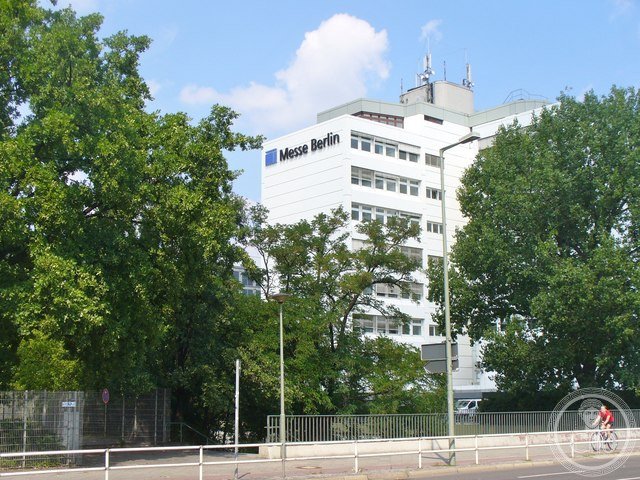
Messe Berlin (Berlin Exhibition Grounds, officially Berlin ExpoCenter City) is one of the world’s largest and most historically significant exhibition and congress venues, located in the Charlottenburg district of western Berlin. The complex spans approximately 160,000 square metres of covered exhibition space across 40 halls, complemented by extensive outdoor areas and the landmark Berlin Radio Tower (Funkturm) which has served as the symbolic centrepiece of the site since 1926. Originally developed for the Deutsche Industrie-Ausstellung from the 1920s onward, Messe Berlin is home to flagship trade fairs including ITB Berlin (international tourism), IFA (consumer electronics), and the International Green Week (Grüne Woche), attracting millions of trade and public visitors each year.
- Address
- Messedamm 22, 14055 Berlin, Germany
- Type
- International trade fair and exhibition complex
- Period
- Exhibition activities from 1896; current complex developed 1920s–1930s; major expansions 1970s–2000s
- Style
- Weimar-era exhibition architecture; post-war modernist expansions
- Location
- Charlottenburg district, Berlin, Germany
- Area
- Approximately 160,000 sq m covered exhibition space
- Landmark
- Berliner Funkturm (Berlin Radio Tower, 1926, 150 m) — listed historic monument
- Current use
- Active international trade fair and congress venue; managed by Messe Berlin GmbH
- Coordinates
- 52.5013° N, 13.2742° E
- Key events
- ITB Berlin (tourism), IFA (consumer electronics), Grüne Woche (agriculture & food), Berlin Fashion Week, transport fairs
At a glance
- Type
- International exhibition and congress complex
- Period
- Developed from 1920s; major Weimar-era halls; expanded post-war and 1990s
- Style
- Weimar exhibition modernism; post-war functionalism
- Location
- Charlottenburg, Berlin, Germany
- Landmark
- Berliner Funkturm (1926), listed historic monument
Overview
Messe Berlin is the operational arm of the Berlin Senate’s trade fair strategy and one of Europe’s most important nodes in the global congress and exhibition economy. The complex is anchored by the Berliner Funkturm — a 150-metre lattice steel radio tower built in 1926 and now a protected historic monument — which gives the site its distinctive silhouette visible from much of western Berlin. The grounds integrate exhibition halls from multiple construction phases, ranging from Weimar-era brick-and-concrete structures to contemporary glass-and-steel pavilions, making the site itself a condensed architectural history of 20th-century German design.
History
Berlin’s tradition of large-scale exhibitions dates to the 1896 Gewerbeausstellung (Trade Exhibition) held in Treptow Park. The Charlottenburg exhibition grounds were developed systematically from the 1920s, with the Funkturm inaugurated in 1926 as the centrepiece of the Deutsche Industrie-Ausstellung. The site survived World War II with significant but repairable damage and was rapidly restored in the post-war period as West Berlin sought to project normalcy and economic vitality. The reunification of Germany in 1990 and Berlin’s restoration as the national capital brought renewed investment to the site; the ICC Berlin congress centre (1979) adjacent to the Messe grounds further consolidated the area as Germany’s premier event destination. Messe Berlin GmbH, the operator, is wholly owned by the state of Berlin and the city of Berlin.
What you see
The site presents a compelling juxtaposition of architectural periods: the original Weimar-era halls with their brick facades and ornamental detailing stand alongside the sweeping concrete canopies of post-war expansion halls. The Funkturm remains the most photographed element — visitors can ascend to the observation deck and restaurant at 55 metres for panoramic views over western Berlin. The ICC Berlin (International Congress Centre), designed by Ralf Schüler and Ursulina Schüler-Witte and completed in 1979, is a remarkable example of brutalist civic architecture and is visible from the main Messedamm approach. During fair weeks, the scale of the complex — with its dedicated S-Bahn station and motorway access — becomes particularly apparent.
Cultural significance
Messe Berlin is a heritage site in the broadest sense: it embodies over a century of German urban ambition, industrial culture, and the international exchange of knowledge and commerce. The Funkturm is a listed Berlin monument, and the ensemble of Weimar-era exhibition halls is valued by architectural historians as a rare intact example of inter-war exhibition urbanism. Cultural Heritage Online has documented Messe Berlin as part of the broader European heritage of industrial and civic exhibition culture.
Practical information
Messe Berlin is open to the public only during specific trade fairs and events; the Funkturm observation deck and restaurant operate on a regular schedule (check funkturm-berlin.de). Entry to the grounds during fairs requires a trade fair ticket purchased in advance through the individual event’s website. The main entrance is at Messedamm 22; the dedicated S-Bahn station is Messe Nord/ICC.
Getting there
The most direct public transport link is the S-Bahn (S41/S42/S46) to Messe Nord/ICC, a dedicated station within the complex. U-Bahn U2 to Theodor-Heuss-Platz is a 5-minute walk from the south entrance. Bus M49 and several other BVG lines serve the Messedamm stop. By car, the complex is directly accessible from the A100 ring motorway (exit Messedamm). Berlin is served by Berlin Brandenburg Airport (BER) with direct S-Bahn and regional train connections to the city centre.
Sources & resources
See the place
Find it on the map
See this place and what’s around it →Historical events at this place (1)
📷 Become a Cultural Heritage Online photographer
Share your photos of places: they stay published under your name as the author. The more they're seen, the more you get noticed — and soon a contest will reward the most appreciated photos.
Log in or sign up free to add a photo