
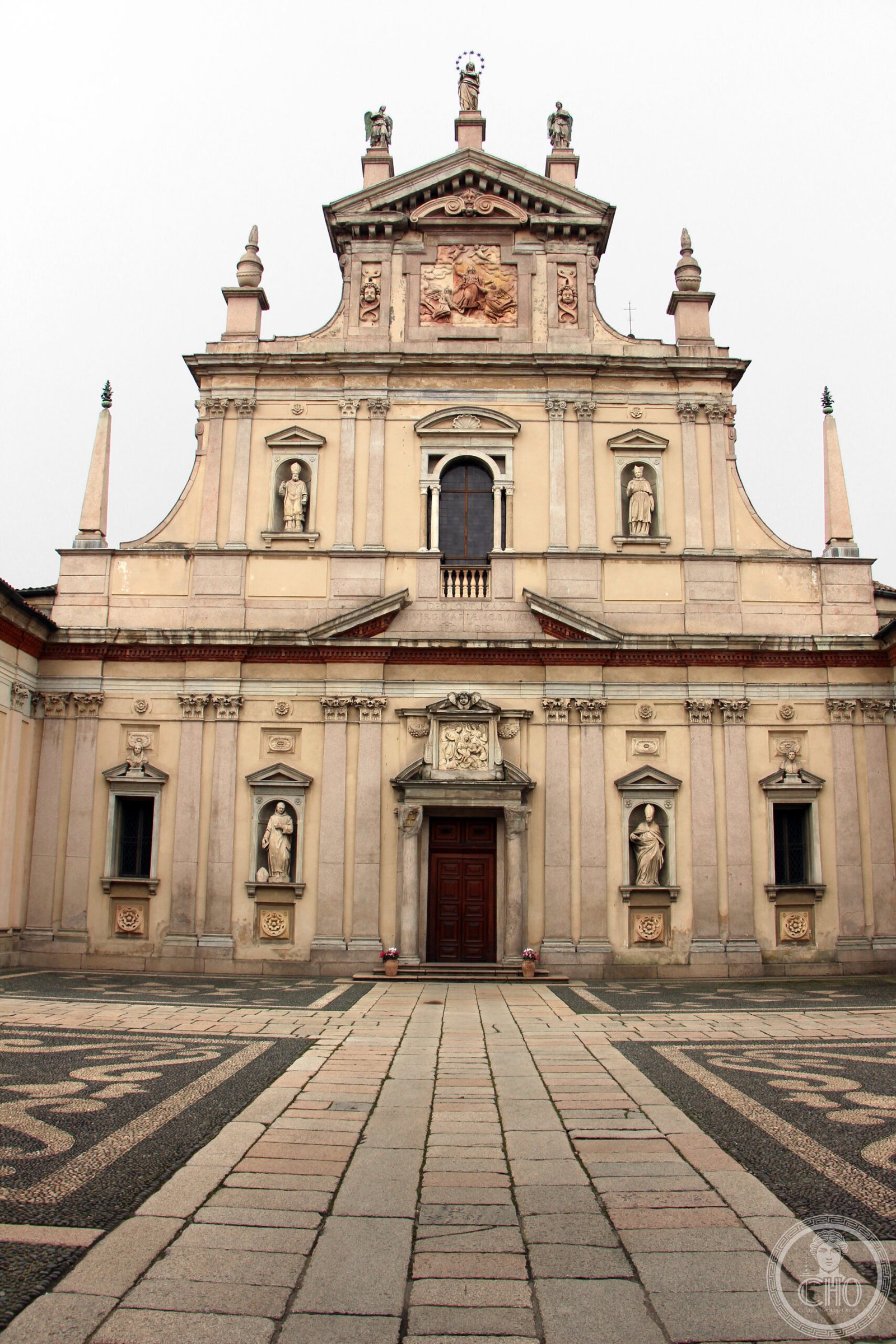
The Charterhouse of Garegnano, also known as the Milan Charterhouse, is a former Carthusian monastery on the northwestern outskirts of Milan, founded in 1349 by Galeazzo II Visconti, Lord of Milan, and consecrated to the Virgin Mary. Renowned for its richly frescoed interior — particularly the spectacular nave frescoes by Daniele Crespi (1629) depicting the life of St Bruno and the history of the Carthusian order — the complex survives largely intact and is now home to a community of Capuchin Friars. A 360° virtual tour allows global audiences to explore its extraordinary painted spaces remotely.
At a glance
- Type
- Former Carthusian monastery (charterhouse)
- Period
- Founded 1349; frescoed interior largely 17th century
- Style
- Gothic foundation; Baroque interior decoration
- Location
- Via Garegnano, Garegnano district, Milan, Lombardy, Italy
- Coordinates
- 45.5023° N, 9.1296° E
Overview
Located in the Garegnano district on Milan’s western edge, the Charterhouse stands as one of the best-preserved monastic complexes in Lombardy, largely bypassed by the urban development that engulfed surrounding neighbourhoods. Its church interior is covered almost entirely in fresco, creating an effect of overwhelming visual richness that contrasts with the austere Carthusian rule under which the monastery was originally governed. Today the complex is managed by the Capuchin Friars and remains open for worship and cultural visits.
History
The monastery was founded in 1349 by Galeazzo II Visconti as an act of dynastic piety and political prestige, placing the Visconti family’s emblem alongside the Carthusian order in one of Milan’s most significant religious commissions of the 14th century. The Carthusians maintained the complex for several centuries, accumulating works of art and enriching the church with successive campaigns of fresco decoration. The most celebrated phase came in 1629 when the Milanese painter Daniele Crespi completed his cycle of nave frescoes, considered a masterpiece of Lombard Baroque. Following the suppression of the Carthusian order in the Napoleonic period, the monastery passed eventually to the Capuchin Friars, who have maintained it since.
What you see
The church nave is dominated by Daniele Crespi’s monumental fresco cycle, which covers walls and ceiling with scenes from the life of St Bruno — founder of the Carthusian order — and episodes from Carthusian monastic history, painted with characteristic Lombard naturalism and emotional directness. The apse preserves earlier frescoes by Ambrogio Figino (16th century), while the sacristy contains intarsia woodwork of exceptional quality. The cloister, though partly altered, retains the meditative character of Carthusian architecture and gives access to the surviving monastic quarters. A 360° virtual tour of the interior is available online.
Cultural significance
The Charterhouse of Garegnano is considered one of the finest repositories of Lombard Baroque painting in existence, with Crespi’s fresco cycle ranked among the definitive works of the period. Its survival largely intact within a major industrial city makes it a rare example of a functioning monastic complex that has preserved its painted programme across nearly four centuries.
Practical information
Address: Via Garegnano 28, 20151 Milano MI, Italy. The church is generally open for visits; check with the Capuchin community for current hours. Admission is free. A 360° virtual tour is accessible online for remote exploration.
Getting there
From Milan city centre, take Metro Line 1 (red) to the Molino Dorino stop, then walk approximately 15 minutes northwest, or take a local bus towards Garegnano. By car, the complex is accessible via Via Garegnano off the outer ring road. On-street parking is available in the surrounding district.
Sources & resources
See the place
Find it on the map
See this place and what’s around it →📷 Become a Cultural Heritage Online photographer
Share your photos of places: they stay published under your name as the author. The more they're seen, the more you get noticed — and soon a contest will reward the most appreciated photos.
Log in or sign up free to add a photoIs this page about you?
This page is read by travellers and heritage enthusiasts who find it on Google. Tell us how you are connected to this place and we will take it from there.