
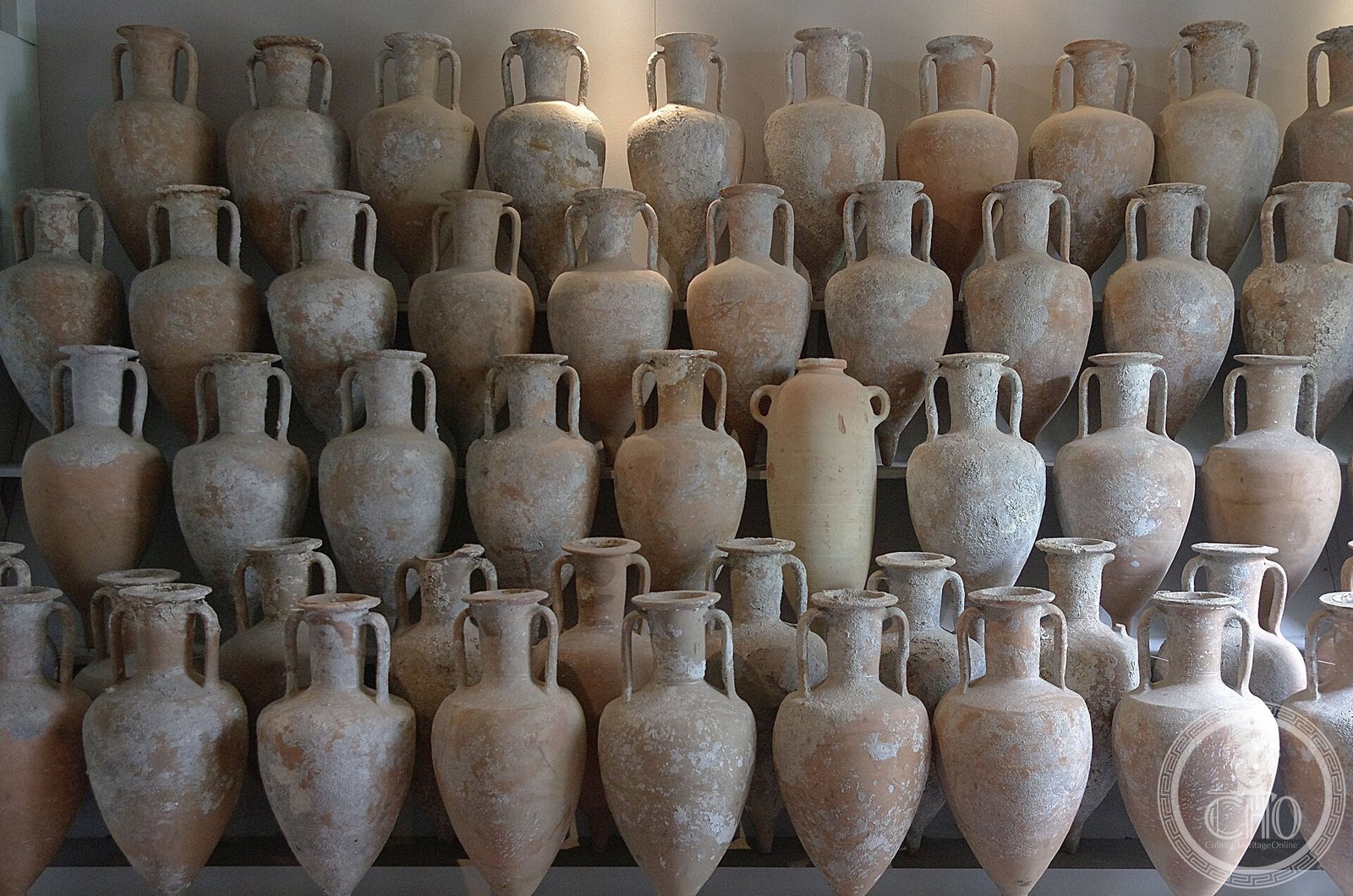
The Luigi Bernabò Brea Regional Archaeological Museum is housed within the Norman-Spanish castle complex on the acropolis of Lipari, the largest of the Aeolian Islands, and is widely regarded as one of the most important prehistoric museums in Europe. Founded in 1954 by the archaeologist Luigi Bernabò Brea, who with Madeleine Cavalier conducted the systematic excavation of the islands over four decades, the museum presents the complete stratigraphic sequence of Aeolian prehistory alongside outstanding collections of Greek and Roman material.
At a glance
- Type
- Regional archaeological museum (Museo Regionale)
- Period
- Collections spanning Neolithic (c. 4000 BC) through Roman period; castle complex Norman-16th century
- Style
- Museum occupying historic castle buildings; open-air archaeological areas on castle acropolis
- Location
- Lipari Castle, Lipari, Aeolian Islands, Metropolitan City of Messina, Sicily
- Coordinates
- 38.4676° N, 14.9535° E
Overview
Lipari Castle stands on a dramatic volcanic promontory that has been continuously occupied since the Neolithic, accumulating over five thousand years of stratified human history. The castle complex, whose current form owes most to Spanish rebuilding of the 16th century following a destructive raid by the Ottoman admiral Khayr al-Din Barbarossa in 1544, now serves as the container for one of Italy’s richest regional archaeological museums. The museum’s collections define the standard cultural sequences used by archaeologists studying Mediterranean Bronze Age societies from the western basin to the Aegean.
History
Systematic excavation of Lipari Castle began in the 1950s under Luigi Bernabò Brea, who recognised the extraordinary stratigraphic potential of the acropolis site where Bronze Age, Greek, and Roman layers were superimposed in exceptional clarity. The excavations, continued with Madeleine Cavalier through the 1990s, produced the reference sequence for the Bronze Age Capo Graziano, Milazzese, and Ausonian cultures and their transition to Aeolian Greek society after 580 BC. The museum was formally established in 1954 to house and interpret these finds, subsequently expanded across several sections as collections grew.
What you see
The museum is distributed across multiple buildings within the castle enclosure, with sections dedicated to prehistory, Greek and Roman antiquities, and minor arts. The prehistoric section presents obsidian artefacts, ceramics, and Bronze Age grave goods that trace the complete Aeolian sequence from the Neolithic Diana culture through the Capo Graziano and Milazzese phases to the Final Bronze Age Ausonian II horizon. The Greek section includes imported Attic pottery and Liparian terracotta theatrical masks — among the finest collections of ancient terracotta theatrical art in existence. An open-air section on the castle hill preserves excavated Bronze Age hut floors visible in situ.
Cultural significance
The Bernabò Brea Museum is the institutional pillar of the Aeolian Islands’ UNESCO World Heritage inscription (2000) and the intellectual foundation on which modern understanding of western Mediterranean prehistory rests. Its prehistoric collection provides the stratigraphic anchors for Bronze Age chronology across the Tyrrhenian world, while the Greek theatrical terracottas represent a concentration of evidence for ancient performance culture unparalleled in any other single collection.
Practical information
- Address
- Via del Castello, 98055 Lipari ME
- Admission
- Paid admission; check the official Sicilian Regional Museums website for current fees and concessions
- Opening hours
- Generally open Tuesday–Sunday; summer hours extended — check official website for current times
Getting there
Lipari is reached by hydrofoil (aliscafo, approximately 45 minutes) or car ferry from Milazzo on the Sicilian coast, the principal gateway port. Milazzo is connected to Messina and the Sicilian motorway network by state road SS113 and by regional rail. From Lipari harbour the castle acropolis is a 10-minute walk uphill through the town. Seasonal hydrofoil services also operate from Messina, Naples, Palermo, and Reggio Calabria.
Sources & resources
- Aeolian Islands – Wikipedia
- Lipari – Wikipedia
- UNESCO World Heritage – Aeolian Islands
- Cultural Heritage Online – Italy guides
Find it on the map
See this place and what’s around it →📷 Become a Cultural Heritage Online photographer
Share your photos of places: they stay published under your name as the author. The more they're seen, the more you get noticed — and soon a contest will reward the most appreciated photos.
Log in or sign up free to add a photoIs this page about you?
This page is read by travellers and heritage enthusiasts who find it on Google. Tell us how you are connected to this place and we will take it from there.