
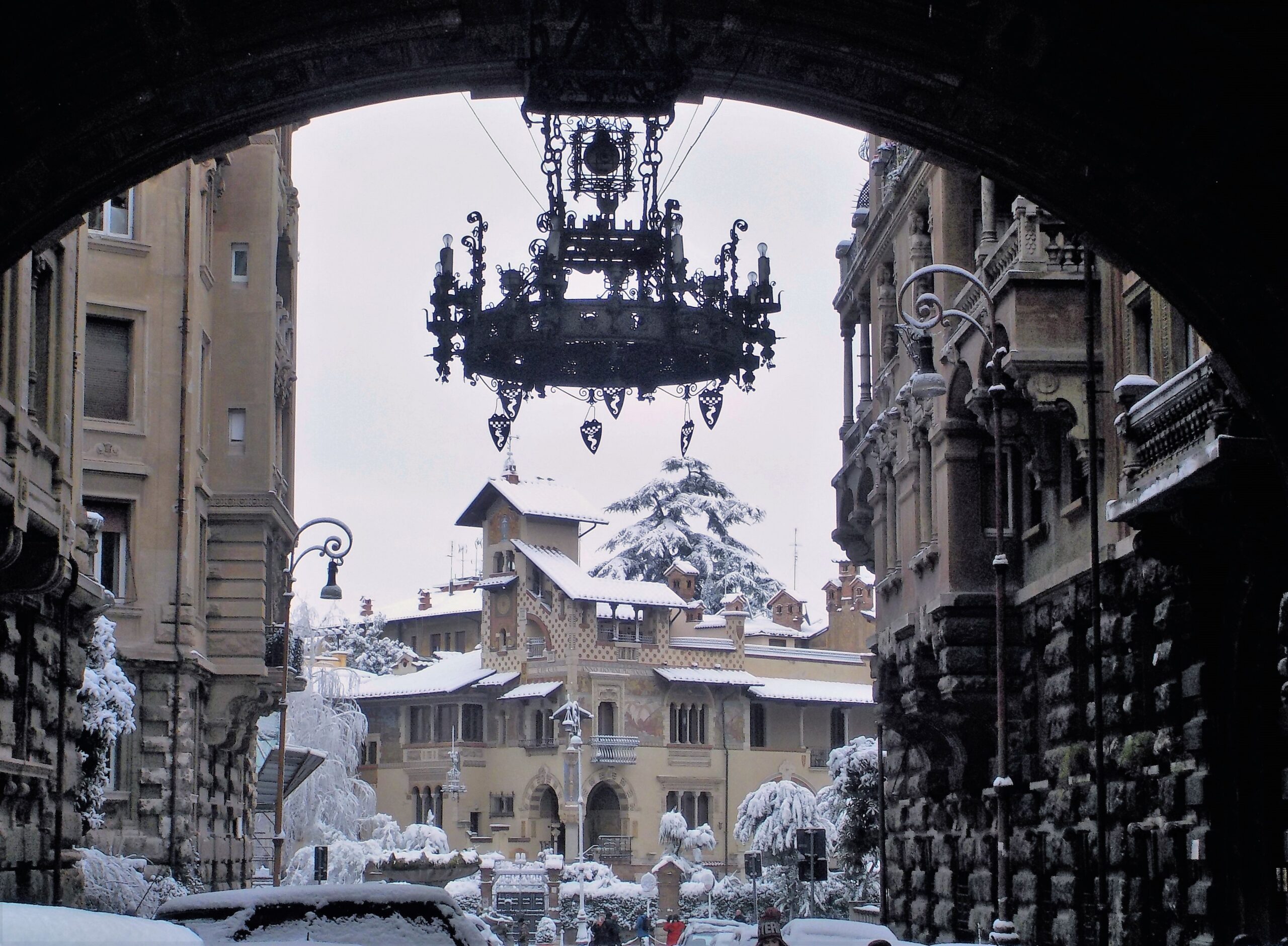
The Coppedè District is a small, unrepeatable architectural enclave in the Trieste-Salario area of Rome, designed by the Florentine architect Gino Coppedè (1866–1927) between 1915 and 1927. Across roughly seventeen palazzine and twenty-six villini gathered around Piazza Mincio, the ensemble fuses Italian Liberty and Art Nouveau with Medieval, Ancient Egyptian, Assyrian-Babylonian and Etruscan motifs. At its centre stand the Fontana delle Rane (1924) and the monumental entrance arch on Via Tagliamento, with its wrought-iron chandelier suspended over the street.
- Address
- Piazza Mincio, 00198 Roma RM (Trieste-Salario district, north-east of Villa Borghese)
- Period
- 1915–1927 (Gino Coppedè died 1927; completed by his workshop and collaborators, notably Paolo Emilio André)
- Architect
- Gino Coppedè (Florence, 26 September 1866 – Rome, 20 September 1927)
- Patron
- Società Anonima Edilizia Moderna of the Cerruti brothers (commission 1915)
- Function
- Residential urban ensemble of mixed-typology palazzine and villini
- Current use
- Active residential district; protected architectural ensemble; one of the most photographed corners of modern Rome
- Coordinates
- 41.9244° N, 12.5008° E
- Notes
- Around 17 palazzine and 26 villini are centred on Piazza Mincio, with the Fontana delle Rane (1924) at its centre. Access is from Via Tagliamento, through a monumental arch hung with a wrought-iron chandelier. The stylistic mix includes Italian Liberty, Art Nouveau, Medieval revival, Ancient Egyptian, Assyrian-Babylonian and Etruscan motifs.
Gallery
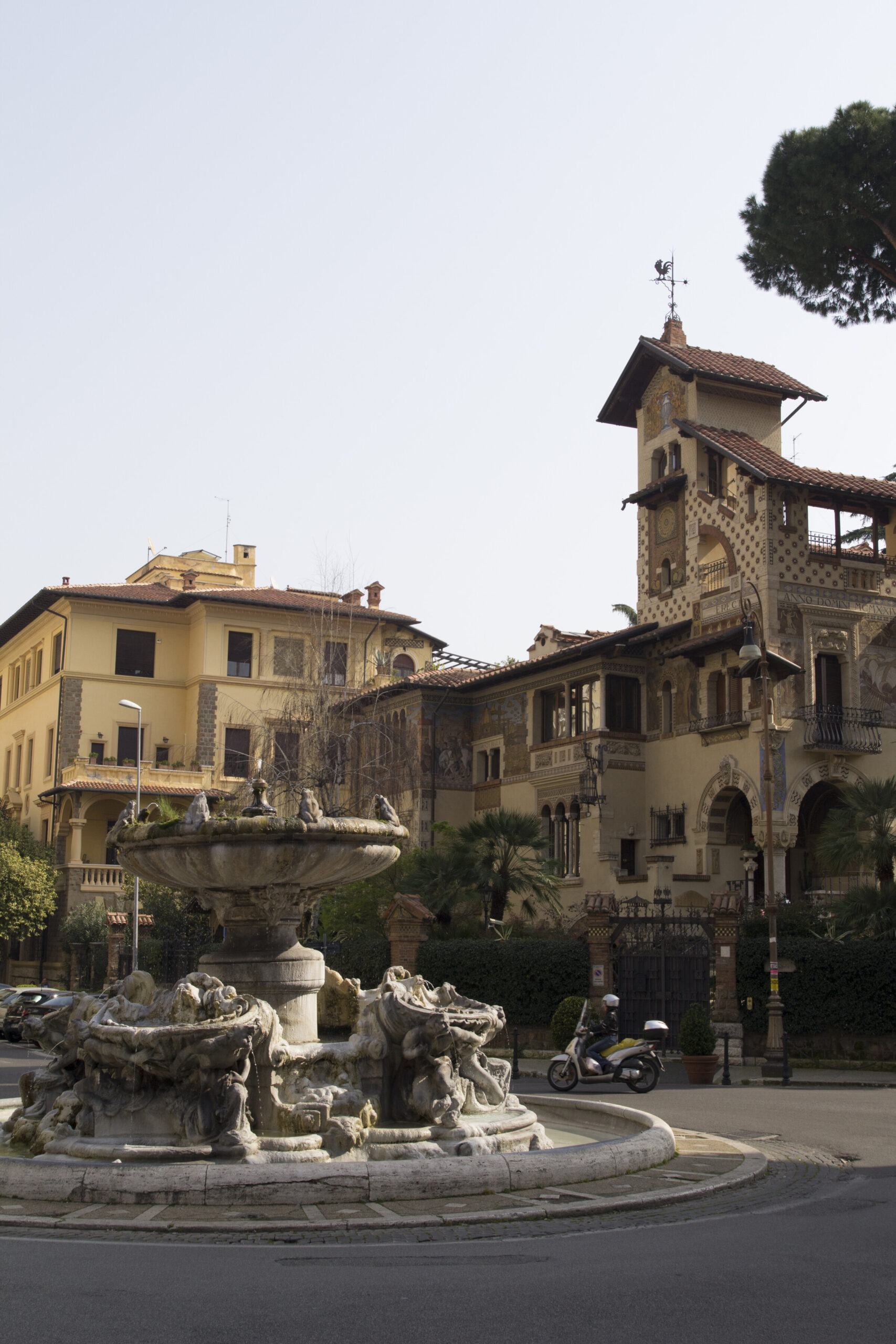
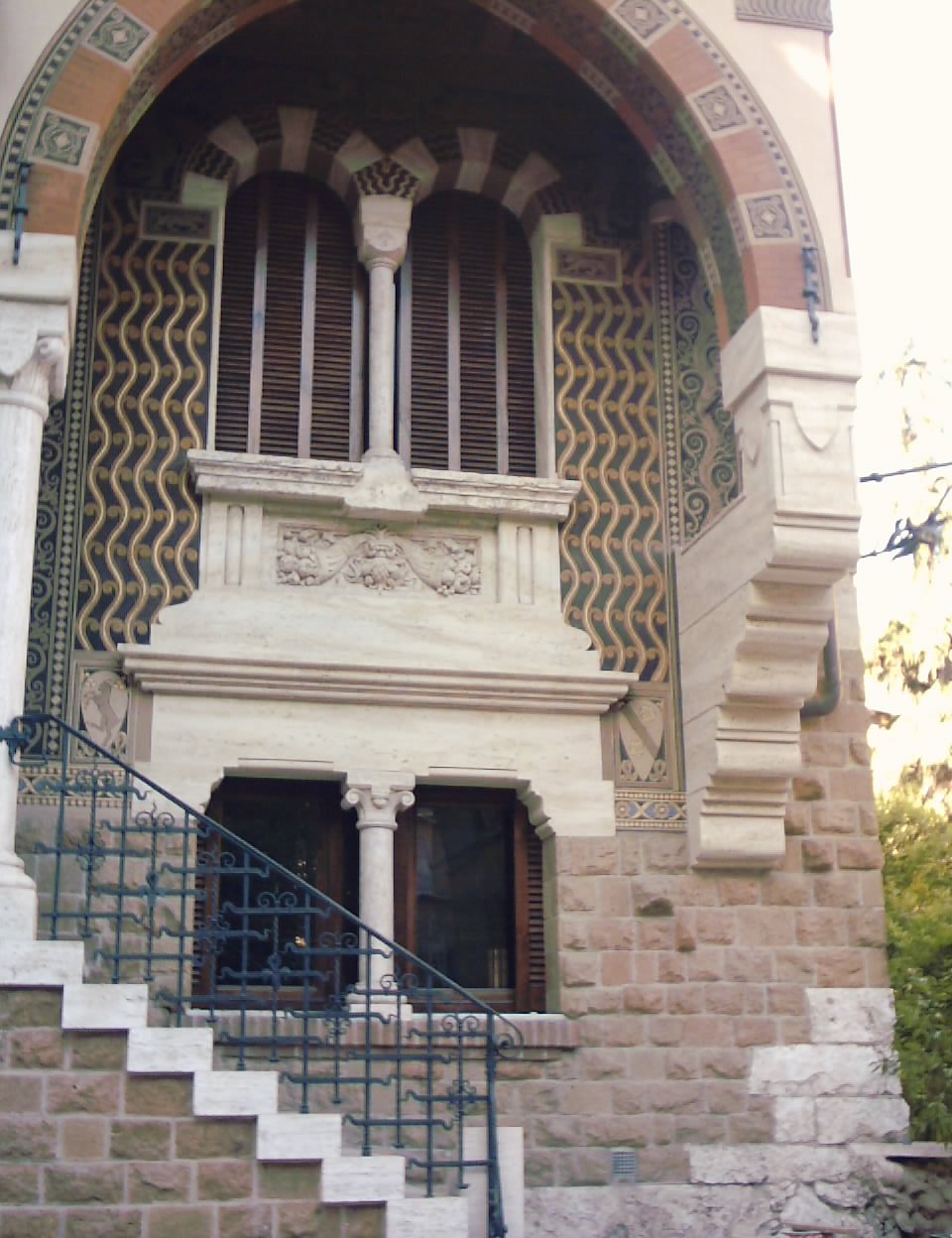
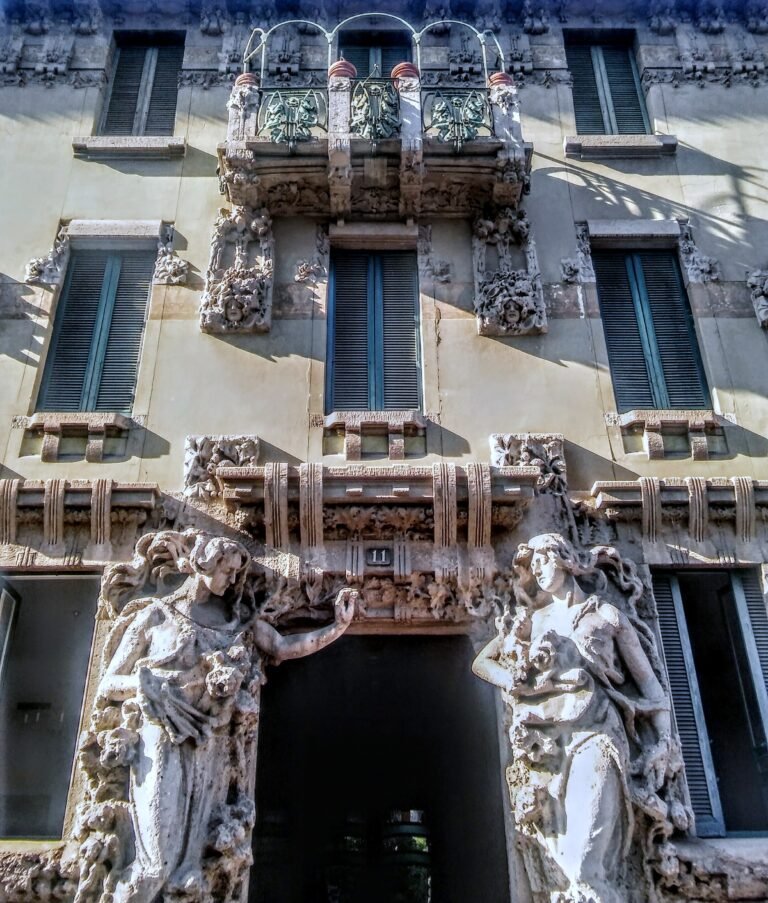
Two further views of the ensemble: the Fontana delle Rane in Piazza Mincio, and a facade detail of the Villino delle Fate.
Visit on the map
Piazza Mincio · 41.9244° N, 12.5008° E
Download for your navigator
A single waypoint, ready for GPS apps, navigators, and contacts.
After 1870 Rome grew rapidly as the capital of the new Italian state, and the Trieste-Salario area north-east of Villa Borghese was opened up to speculative residential building. In 1915 the Società Anonima Edilizia Moderna of the Cerruti brothers commissioned the Florentine architect Gino Coppedè (1866–1927) to design an entirely new residential enclave. He was already known in Genoa for Castello Mackenzie and his own Villa Coppedè. The new enclave was to occupy the triangle of streets around what would become Piazza Mincio, between Via Tagliamento and Via Po. Coppedè conceived it as a single unitary stage-set: a small autonomous quarter entered from Via Tagliamento through a monumental arch joining two palazzine. A large wrought-iron chandelier hung over the street as the threshold sign.
Piazza Mincio is the heart of the ensemble. At its centre stands the Fontana delle Rane, completed in 1924, a circular travertine basin with twelve frogs arranged around an upper bowl. It is a deliberate twentieth-century echo of Renaissance Roman fountains, rephrased in Liberty language. Around the piazza, Coppedè laid out the most striking buildings of the district. The Palazzo del Ragno is marked by a large spider on its facade and a Latin inscription. The Villino delle Fate has asymmetrical volumes that carry frescoes, mosaics and sculpted figures drawn from Italian medieval imagery, Dante, Petrarch and Florentine civic memory. Across the seventeen-or-so palazzine and twenty-six villini, Coppedè layered Italian Liberty and Art Nouveau over a base of Medieval revival, with quotations from Ancient Egyptian, Assyrian-Babylonian and Etruscan ornament. This eclectic vocabulary was held together by his workshop’s consistent craftsmanship in iron, stucco and glass.
Coppedè died in September 1927, before the quarter was complete; the remaining buildings were finished by his collaborators and workshop, with Paolo Emilio André taking over direction of the works. The ensemble has since been recognised as a protected piece of early twentieth-century Roman heritage and remains in active residential use. Its theatrical character has made it a recurring location for Italian and international cinema. These include Dario Argento’s L’uccello dalle piume di cristallo and Inferno, Richard Donner’s The Omen (1976), and, more recently, House of Gucci (2021). The district is freely accessible on foot and is normally visited from Via Tagliamento, walking under the arch and into Piazza Mincio.
Resources & References
Editorial picks across Wikipedia, photo archives, and the official portal.
All photographs Wikimedia Commons (CC-BY / CC-BY-SA / Public Domain) unless otherwise stated. Editorial text Cultural Heritage Online, OASIS Tech LLC USA.
See the place
Find it on the map
See this place and what’s around it →

📷 Become a Cultural Heritage Online photographer
Share your photos of places: they stay published under your name as the author. The more they're seen, the more you get noticed — and soon a contest will reward the most appreciated photos.
Log in or sign up free to add a photo