
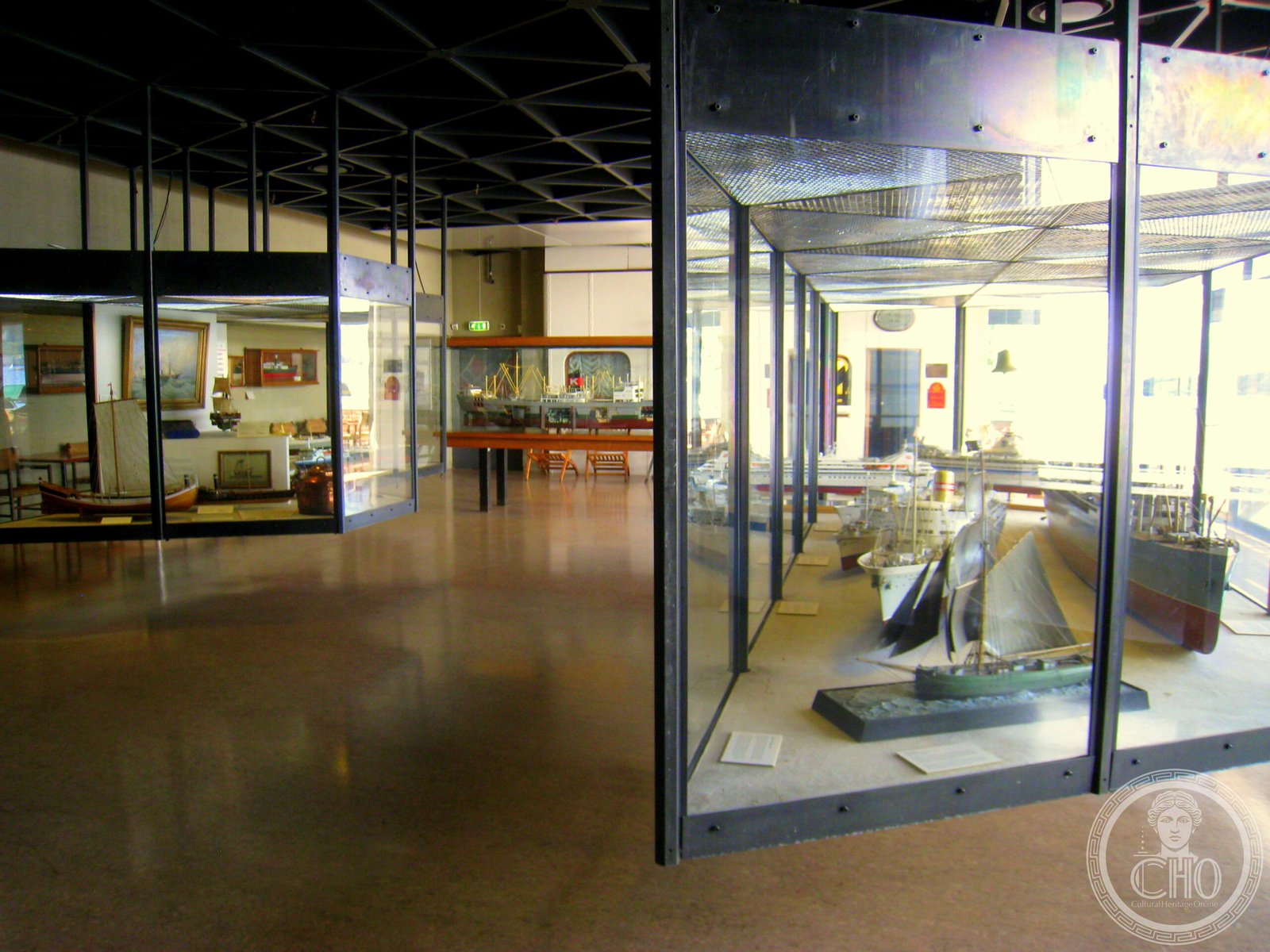
The Norwegian Maritime Museum — Norsk Maritimt Museum — is Norway’s national museum of seafaring and maritime heritage, located on the Bygdøy peninsula on the western edge of Oslo. Set among a remarkable cluster of specialist museums that includes the Viking Ship Museum, the Fram Museum, and the Kon-Tiki Museum, the Norwegian Maritime Museum documents Norway’s extraordinary relationship with the sea, from prehistoric boat-building through the age of sail, the whaling era, and into modern shipping and offshore oil. Its collections span vessels, navigational instruments, ship models, figureheads, charts, and maritime art.
At a glance
- Type
- National maritime museum
- Period
- Museum founded 1914; current building opened 1974
- Style
- Post-war Norwegian Functionalism (main museum building)
- Location
- Bygdøynesveien, Bygdøy peninsula, Oslo, Norway
- Coordinates
- 59.9028° N, 10.6987° E
Overview
The Norwegian Maritime Museum occupies a waterfront site on Bygdøy, with direct views across the Oslofjord, making the connection between the collections inside and the living maritime environment outside tangible and immediate. The museum administers Norway’s largest collection of maritime artefacts and operates in conjunction with the Norwegian Folk Museum. Its remit extends from prehistoric log boats to modern naval vessels, and from traditional coastal fishing communities to Norway’s position as one of the world’s leading shipping nations. Alongside its permanent collections, the museum offers a virtual 360-degree tour of its holdings.
History
The Norwegian Maritime Museum was established in 1914 as a dedicated institution to collect and preserve artefacts related to Norway’s seafaring traditions — at a time when the country was one of the world’s major maritime powers. The museum was initially housed in various Oslo locations before moving to a purpose-built building on Bygdøy in 1974, designed to accommodate its growing collections and vessel storage needs. Over subsequent decades the museum broadened its scope to encompass maritime archaeology, the history of the Norwegian Navy, whaling history, and the development of the North Sea oil industry, reflecting the full arc of Norway’s engagement with the sea.
What you see
The main galleries display an extensive collection of ship models spanning four centuries of Norwegian naval and commercial shipbuilding, alongside original figureheads, navigational instruments, charts, and maritime paintings. A highlight is the Gjøa, the small vessel in which Roald Amundsen completed the first navigated Northwest Passage (1903–1906), displayed in the museum’s boat hall. The collections also include a significant number of traditional Norwegian working boats — prams, faerings, and fishing vessels — representing the coastal communities whose livelihoods depended on the sea. Outdoor exhibits along the waterfront include historic vessels moored at the museum’s quay.
Cultural significance
For a country whose coastline stretches over 25,000 kilometres and whose economy has been defined for centuries by fishing, whaling, and merchant shipping, the Norwegian Maritime Museum plays a central role in preserving and communicating a defining strand of national identity. The museum’s location on Bygdøy — Norway’s premier heritage peninsula — places it within a group of institutions that together tell the story of Norwegian civilisation from the Viking age to the present day. Its virtual 360-degree tour extends this heritage communication to international audiences who cannot visit in person.
Practical information
- Address
- Bygdøynesveien 37, 0286 Oslo, Norway
- Opening hours
- Open year-round; extended summer hours (May–September); check marmuseum.no for current times
- Admission
- Ticketed; combined Bygdøy museum passes available
- Website
- marmuseum.no
Getting there
From Oslo city centre, take bus line 30 from Nationaltheatret towards Bygdøy; alight at Norsk Folkemuseum or Bygdøynes stops (the latter is closer, seasonal). Alternatively, the Bygdøy Ferry (Båt 91) runs from Aker Brygge to Bygdøynes pier during summer — a scenic 10-minute crossing of the Oslofjord. By car or bicycle, follow Bygdøy allé westward and continue to Bygdøynesveien; limited parking is available near the museum entrance.
Sources & resources
See the place
Find it on the map
See this place and what’s around it →📷 Become a Cultural Heritage Online photographer
Share your photos of places: they stay published under your name as the author. The more they're seen, the more you get noticed — and soon a contest will reward the most appreciated photos.
Log in or sign up free to add a photoIs this page about you?
This page is read by travellers and heritage enthusiasts who find it on Google. Tell us how you are connected to this place and we will take it from there.