

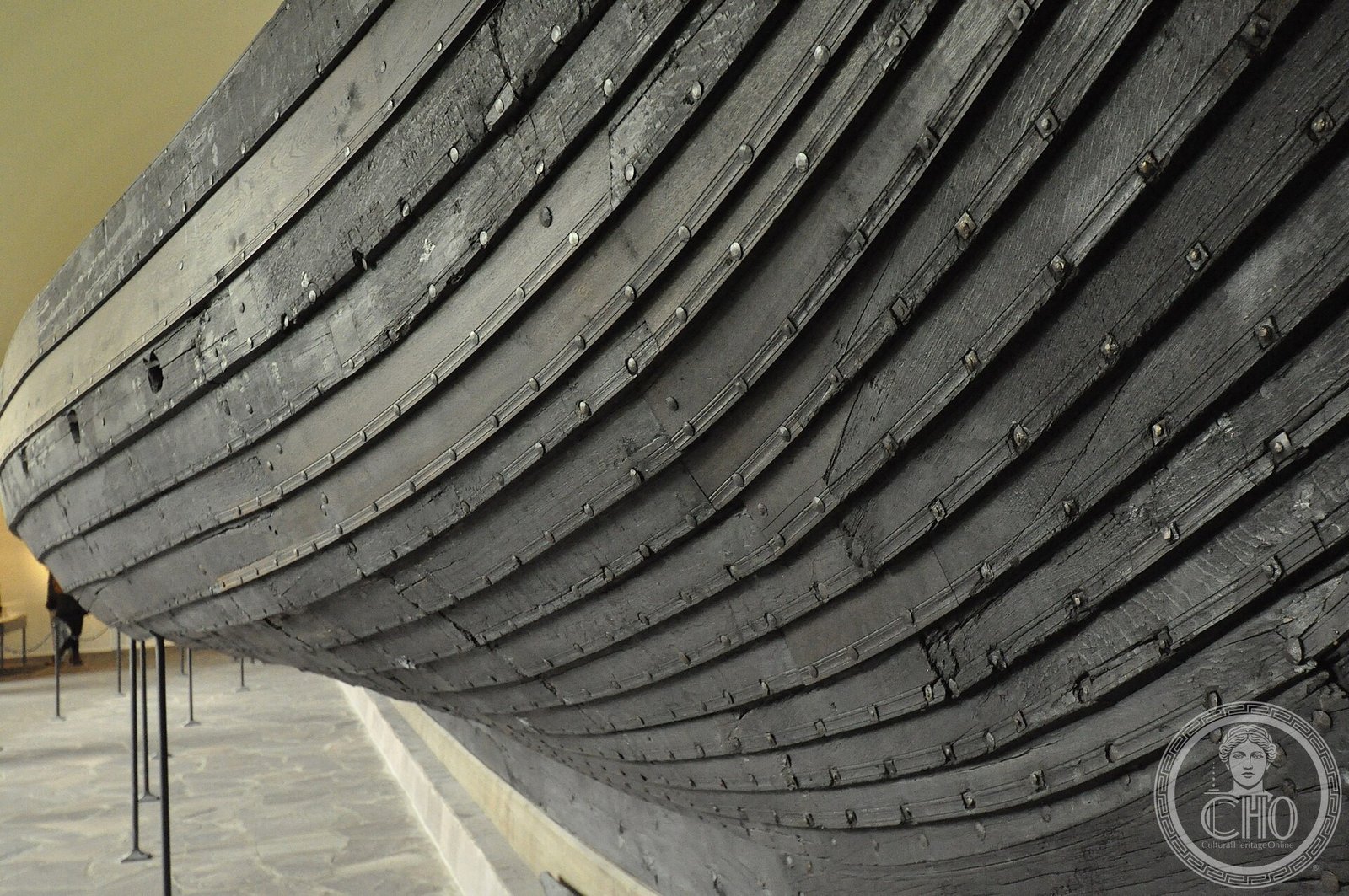
The Viking Ship Museum (Vikingskipshuset) on Bygdøy peninsula in Oslo houses three of the best-preserved Viking Age vessels in the world, along with associated grave goods, sledges, and textiles recovered from burial mounds in the Oslo Fjord region. Founded in 1913 and part of the Museum of Cultural History at the University of Oslo, it ranks among the most visited museums in Norway and offers a 360° virtual tour for remote visitors.
At a glance
- Type
- Archaeological and maritime museum
- Period
- Viking Age artefacts, c. 800–905 CE; building opened 1913
- Style
- Neo-Romanesque museum building; cross-shaped floor plan
- Location
- Huk Aveny 35, 0287 Oslo, Norway
- Coordinates
- 59.9048° N, 10.6841° E
Overview
The Viking Ship Museum holds three oak ships — the Oseberg (c. 820 CE), the Gokstad (c. 890 CE), and the Tune ship (c. 905 CE) — each excavated from burial mounds in Vestfold and Østfold counties in the late nineteenth and early twentieth centuries. The ships served as funerary vessels for high-status individuals and were packed with extraordinary grave goods including textiles, sleds, beds, tools, and horse harness. Together they form the most complete surviving record of Viking Age shipbuilding and material culture anywhere in the world.
History
The Tune ship, the earliest of the three, was excavated in 1867 at Haugen farm, Østfold. The Gokstad ship followed in 1880 near Sandefjord, revealing the skeleton of a powerfully built man in his forties along with twelve horses, six dogs, and a peacock. The Oseberg ship, considered the most ornate Viking vessel ever found, was unearthed in 1904–1905 at a farm in Vestfold and contained the remains of two women, one of whom may have been a queen or high priestess. The museum building, designed by architect Arnstein Arneberg, opened to the public in 1932 after years of careful conservation work on the fragile timbers.
What you see
The cross-shaped hall allows visitors to walk around all three ships at close range. The Oseberg ship dominates the main arm of the cross with its elaborately carved prow and stern; the richly decorated animal-head post from the same grave is displayed nearby. The Gokstad ship, larger and more seaworthy in design, fills a lateral arm. Surrounding cases present textiles, wooden carts, sledges, kitchen utensils, and personal items that together reconstruct life on a ninth-century Norwegian estate. A 360° virtual tour replicates this experience online for visitors unable to travel to Oslo.
Cultural significance
The Oseberg ship and its associated grave goods are recognised as masterpieces of Scandinavian Viking Age art and are central to Norwegian national identity. The museum’s collection has shaped modern understanding of Norse society, burial ritual, and long-distance seafaring. The planned new Viking Age Museum at Bygdøy will eventually house the three ships in a larger, climate-controlled facility designed to improve their long-term preservation.
Practical information
- Address
- Huk Aveny 35, 0287 Oslo, Norway
- Hours
- Check official website — seasonal hours apply; closed during renovation phases
- Virtual tour
- 360° tour available at the museum’s official website
Getting there
From central Oslo, take bus 30 (Bygdøy) or ferry from Rådhusbrygge pier (summer service) to the Bygdøy museum cluster. The museum is a short walk from the Norwegian Folk Museum and the Fram Museum. Journey time from Oslo city centre is approximately 15–20 minutes.
Sources & resources
Find it on the map
See this place and what’s around it →📷 Become a Cultural Heritage Online photographer
Share your photos of places: they stay published under your name as the author. The more they're seen, the more you get noticed — and soon a contest will reward the most appreciated photos.
Log in or sign up free to add a photoIs this page about you?
This page is read by travellers and heritage enthusiasts who find it on Google. Tell us how you are connected to this place and we will take it from there.