
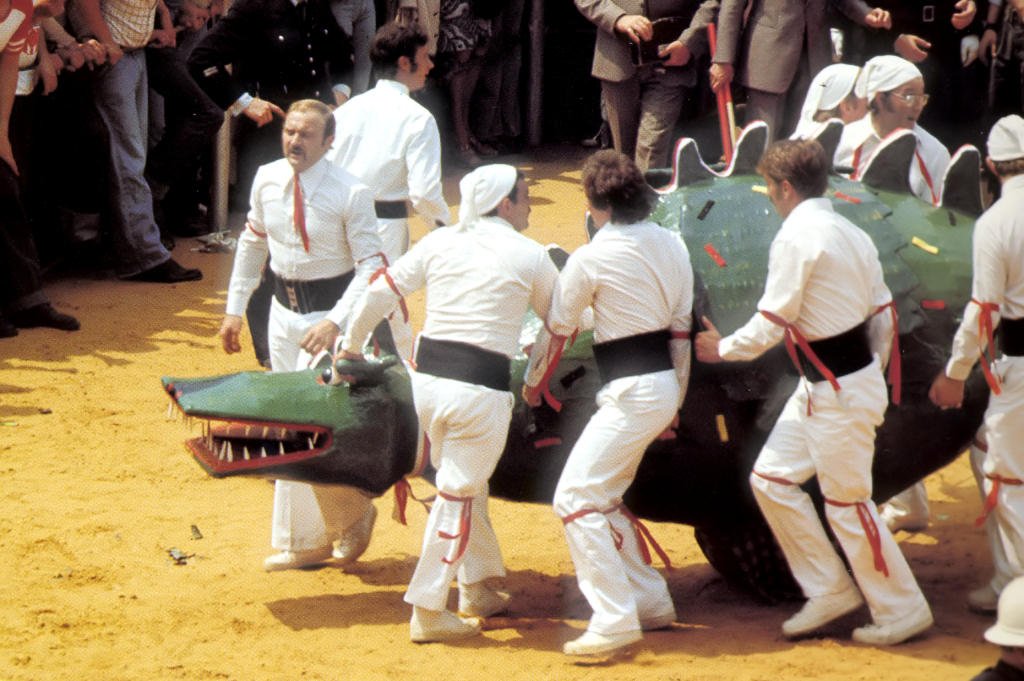
Processional Giants and Dragons
Colossal wooden figures parade through streets in Belgium and France, their movements choreographed by teams of bearers, in festivals that transform towns into stages for centuries-old ritual theatre.
At a glance
Each giant—sometimes reaching imposing heights and dressed in elaborate costume—is carried aloft by a hidden crew of performers who sway and dance in unison. The practice blends sculpture, music, and collective movement into a single folkloric event that draws entire communities into streets to witness giants and mythological creatures come to life through organized procession and ceremony.
Origins & history
These processional giants belong to an ancient tradition of folkloric manifestation specific to the Low Countries and northern France. The festivals have deep roots in local identity, with each town maintaining its own giants, stories, and ceremonial rhythms passed down through generations.
The practice
At the heart of each celebration stands the giant itself—a wooden construct, often towering and costumed in regional dress or mythological guise. Beneath the figure, a team of bearers coordinates intricate movements, swaying and dancing in synchronized patterns that animate the wooden colossus. Music accompanies the procession; crowds line streets to witness the creature’s passage.
Belgium’s anchor tradition thrives in towns like Ath (Ducasse d’Ath), Mons (Ducasse de Mons, featuring a combat known as the Lumeçon), Dendermonde, Mechelen, and Brussels (Meyboom). France maintains the practice in Douai (feasts of Gayant), Cassel (carnival), Tarascon, and Pézenas, where totemic animals and their processions mark Mardi Gras and summer celebrations.
Cultural significance
These festivals affirm local identity and continuity. They transform public space into theatre, activate neighborhood bonds, and transmit embodied knowledge—how to move, construct, costumed, and celebrate—from one generation to the next. The giants themselves are objects of civic pride, custodians of place-memory.
Key facts
- Shared by Belgium and France
- Anchor community: Ath, Belgium (50.61542, 3.76321)
- UNESCO Intangible Cultural Heritage inscription: 2008 (reference 00153)
- Major Belgian celebrations: Ath, Mons, Dendermonde, Mechelen, Brussels
- Major French celebrations: Douai, Cassel, Tarascon, Pézenas
Where to experience it
The heartland of the practice is Ath, Belgium, where the Ducasse d’Ath draws visitors to witness giants in procession. Each town maintains its own festival calendar; timing varies by location. Contact local tourism offices for current dates and celebration schedules.
Sources & resources
Find it on the map
See this place and what’s around it →📷 Diventa un fotografo di Cultural Heritage Online
Condividi le tue foto dei luoghi: restano pubblicate con la tua firma come autore. Più vengono viste, più ti fai conoscere — e presto un concorso premierà le foto più apprezzate.
Accedi o registrati gratis per aggiungere una foto