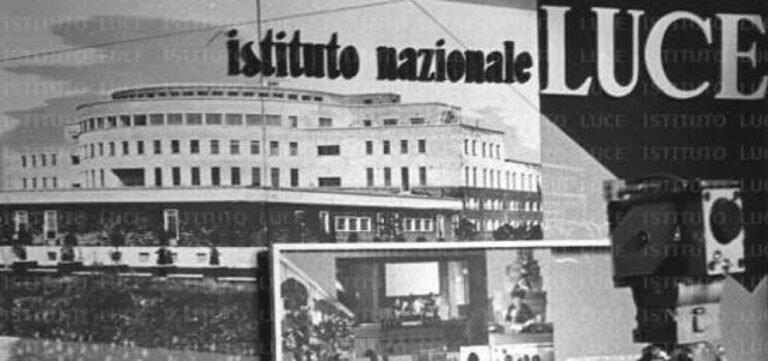
The casa del fascio was the local headquarters of the National Fascist Party, built to a fixed programme: a hall for meetings, offices for the branch, a balcony or forecourt for speeches. They went up across the whole country, from marble monuments to brick sheds, and after 1945 the network lost its purpose overnight. What happened next is the interesting part. This route gathers five that survive in the Cultural Heritage Online archive — in Como, Rubano, Predappio, Bolzano and Tirana — because together they show the full range of what the type was, and of what seventy years of the republic have done with it. The five are collected in the thematic itinerary Case del Fascio: a Route in Five Buildings; this is a chain to read across a map, not a day trip.
Como: the paradigm
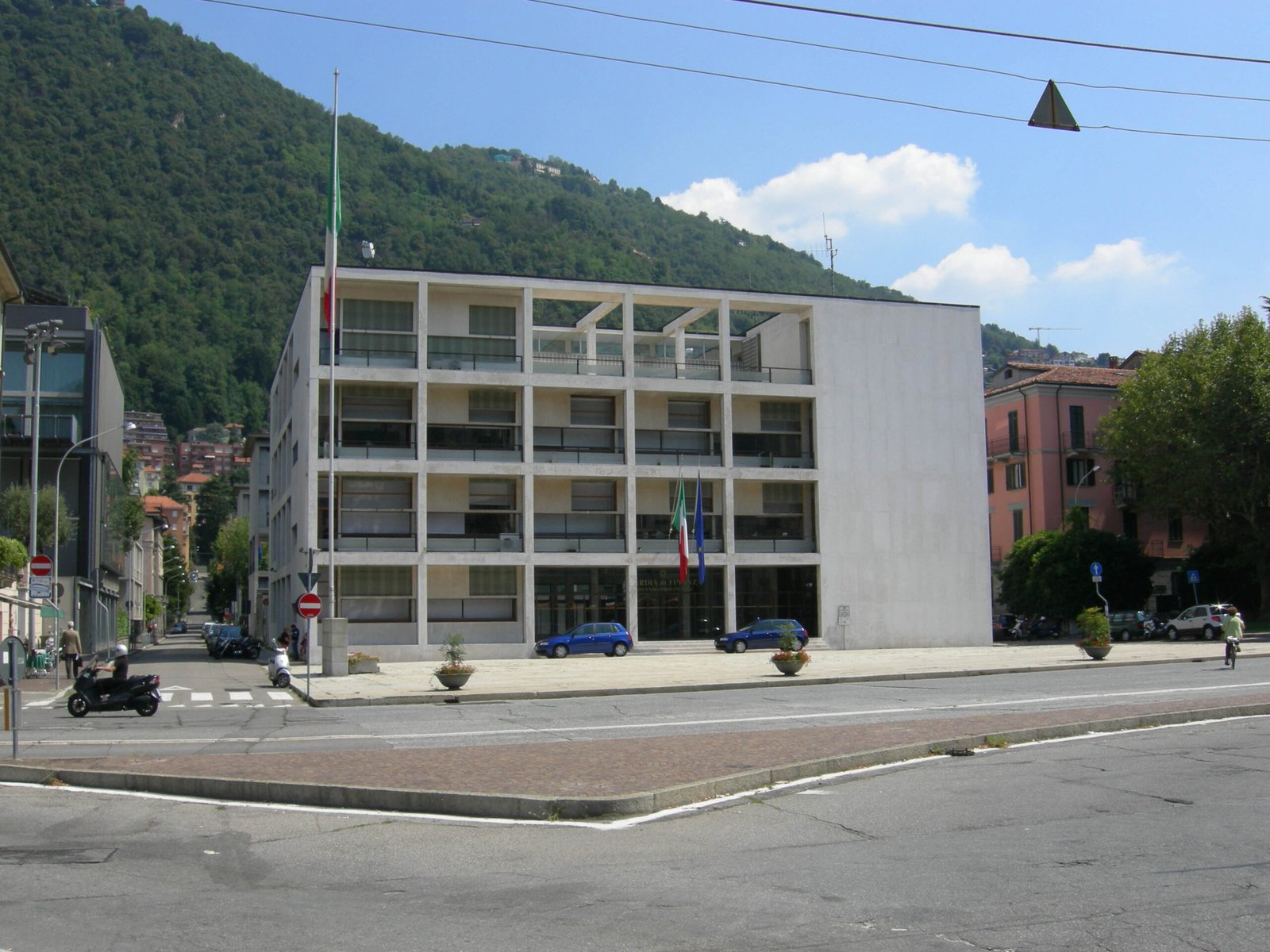
Giuseppe Terragni’s Casa del Fascio of Como, designed in 1932 and built between 1933 and 1936, is the single most studied building of Italian Rationalism. The geometry is absolute: a square plan of 33.20 metres per side rising to 16.60 metres, exactly half the width — a perfect half-cube of white Botticino marble facing Piazza del Popolo. Inside, a glass-roofed atrium and marbles in three colours carry the same discipline through every room. Listed as cultural heritage since 1986, it now houses the Guardia di Finanza, and architects still travel to Como to measure it.
Rubano: the series
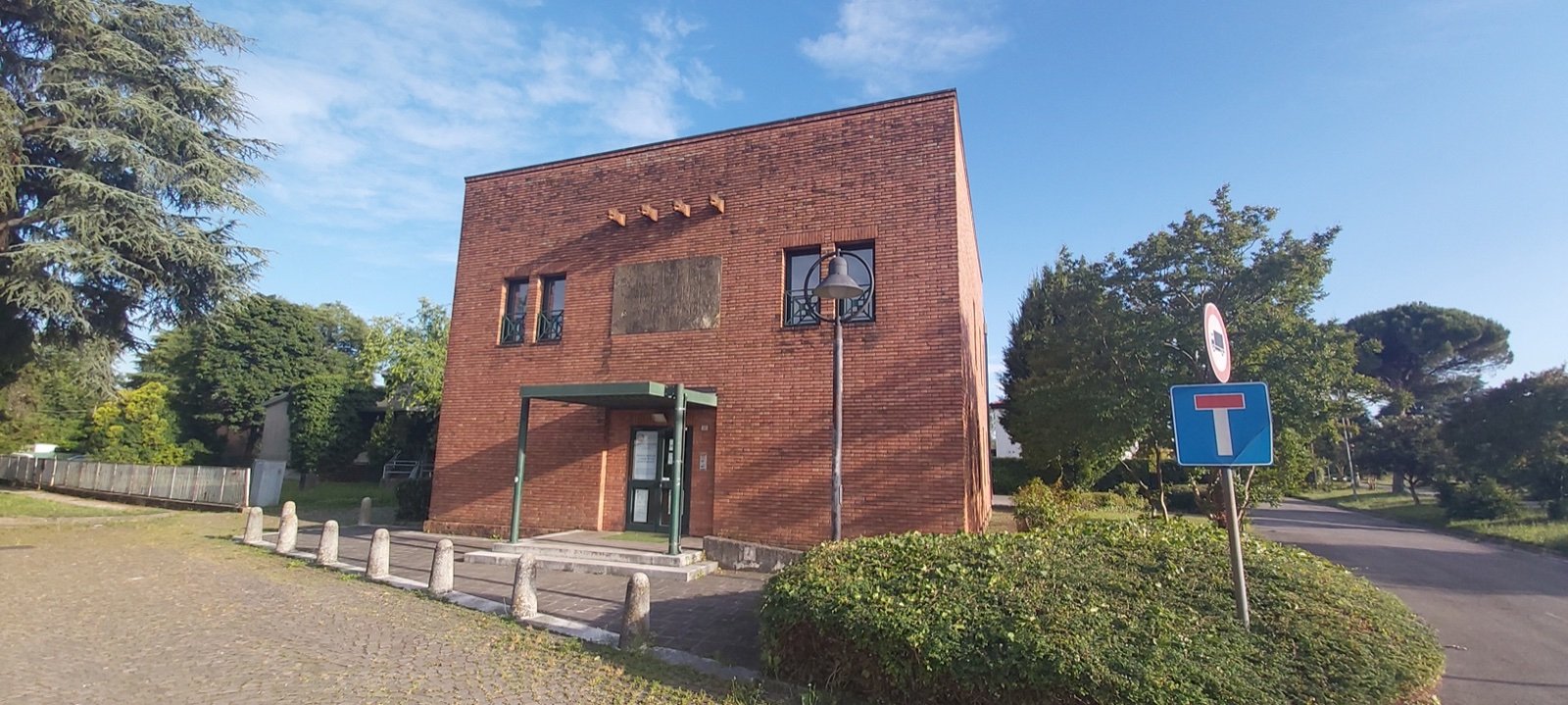
Most case del fascio were nothing like Como. In the countryside around Padua, Quirino De Giorgio produced a run of small rural party houses between 1937 and 1939 — at Vigonza, Sant’Urbano, Noventa Padovana, Pontelongo, Piazzola sul Brenta and Rubano. The Rubano building is a plain brick prism with four terracotta consoles carved as fasces and a weathered slab that still reads Credere, Obbedire, Combattere. It has been a council office for decades. It is also a stop on the Padua Rationalism RoadBook, which follows De Giorgio on both sides of the war.
Predappio: the model town
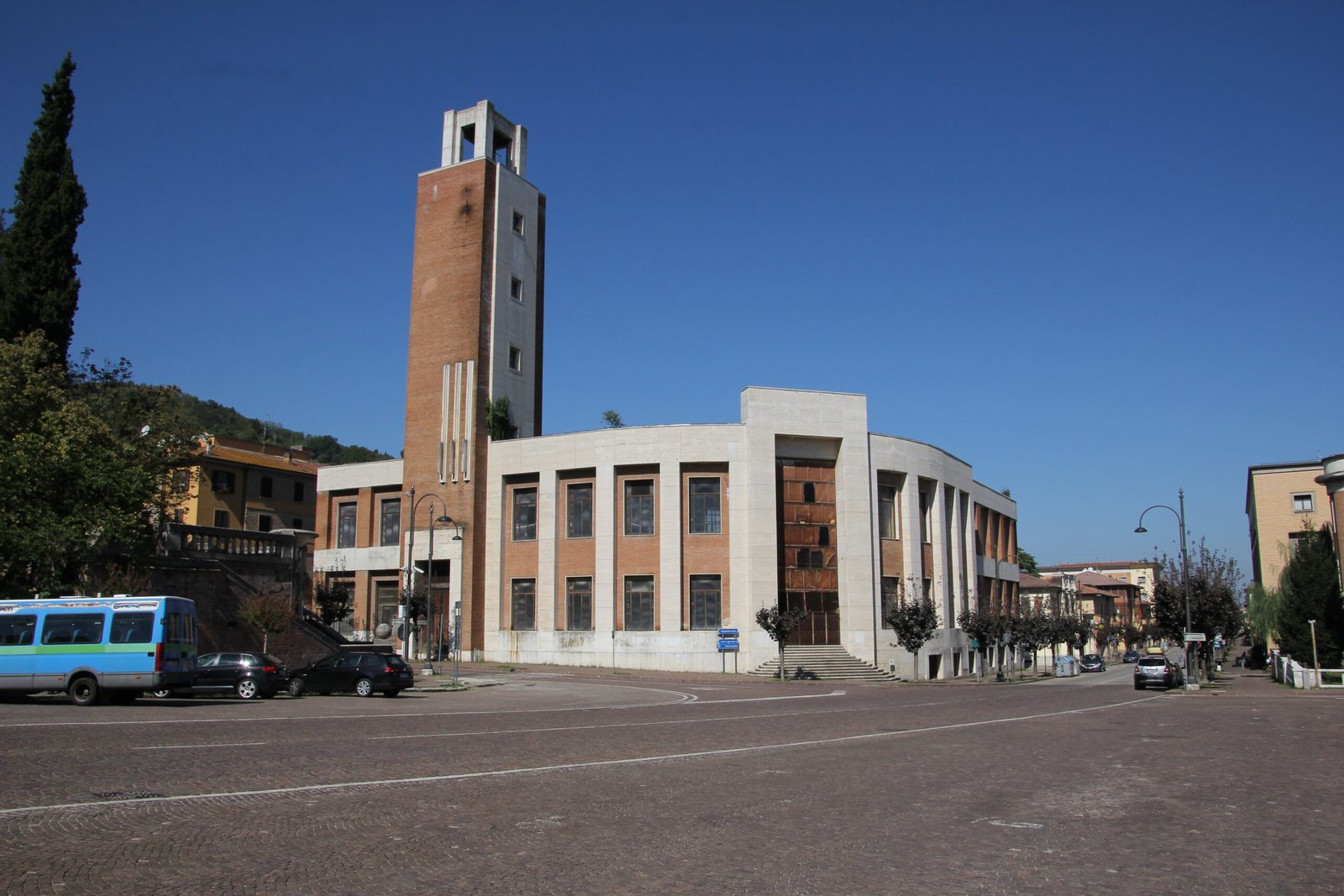
The ex Casa del Fascio of Predappio is the largest party headquarters built in any small Italian town: brick faced in Roman travertine, a tall littorio tower, inaugurated in 1937 at the crossing of the two main streets of the planned town of Predappio Nuova. Its attribution to Arnaldo Fuzzi is debated; its emptiness is not. State-owned and disused for decades, it waits on a project, announced in 2014 and still contested, to become a documentation centre on twentieth-century totalitarianism. It anchors the Forlì–Predappio RoadBook and sits on the European cultural route ATRIUM.
Bolzano: the annexed city
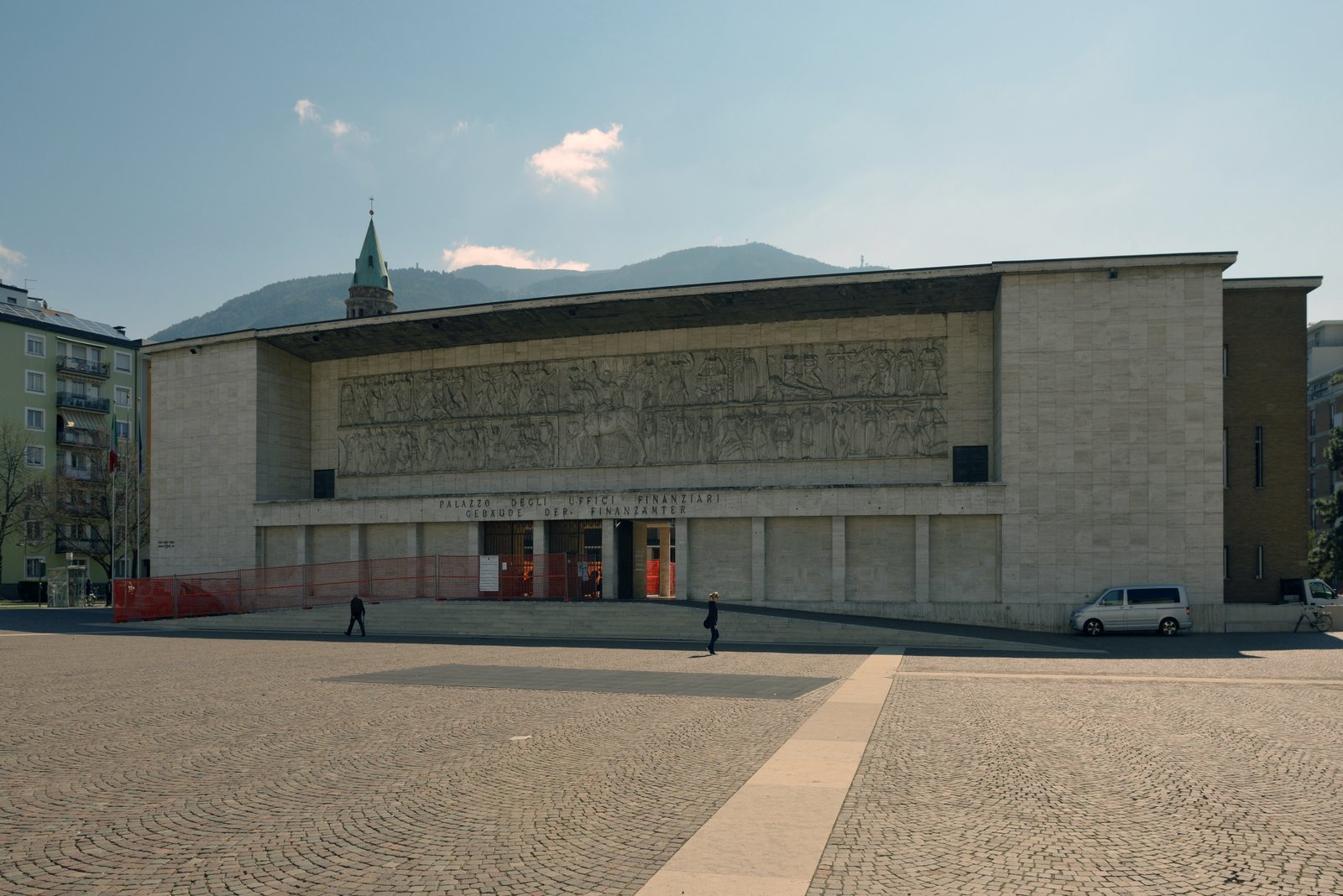
In Bolzano the type arrived late and loaded. The former party headquarters, built 1939–1942 by Guido Pelizzari, Francesco Rossi and Luis Plattner, carries the largest surviving figurative fascist bas-relief in Italy: Hans Piffrader’s 57 travertine panels, 36 metres long and roughly 95 tonnes, with Mussolini on horseback at the centre. Since 2017 the relief has been counterpointed by a neon installation quoting Hannah Arendt in Italian and German: No one has the right to obey. The building itself now holds the state’s fiscal offices, which means the most argued-over facade in the city fronts the tax administration.
Tirana: the export
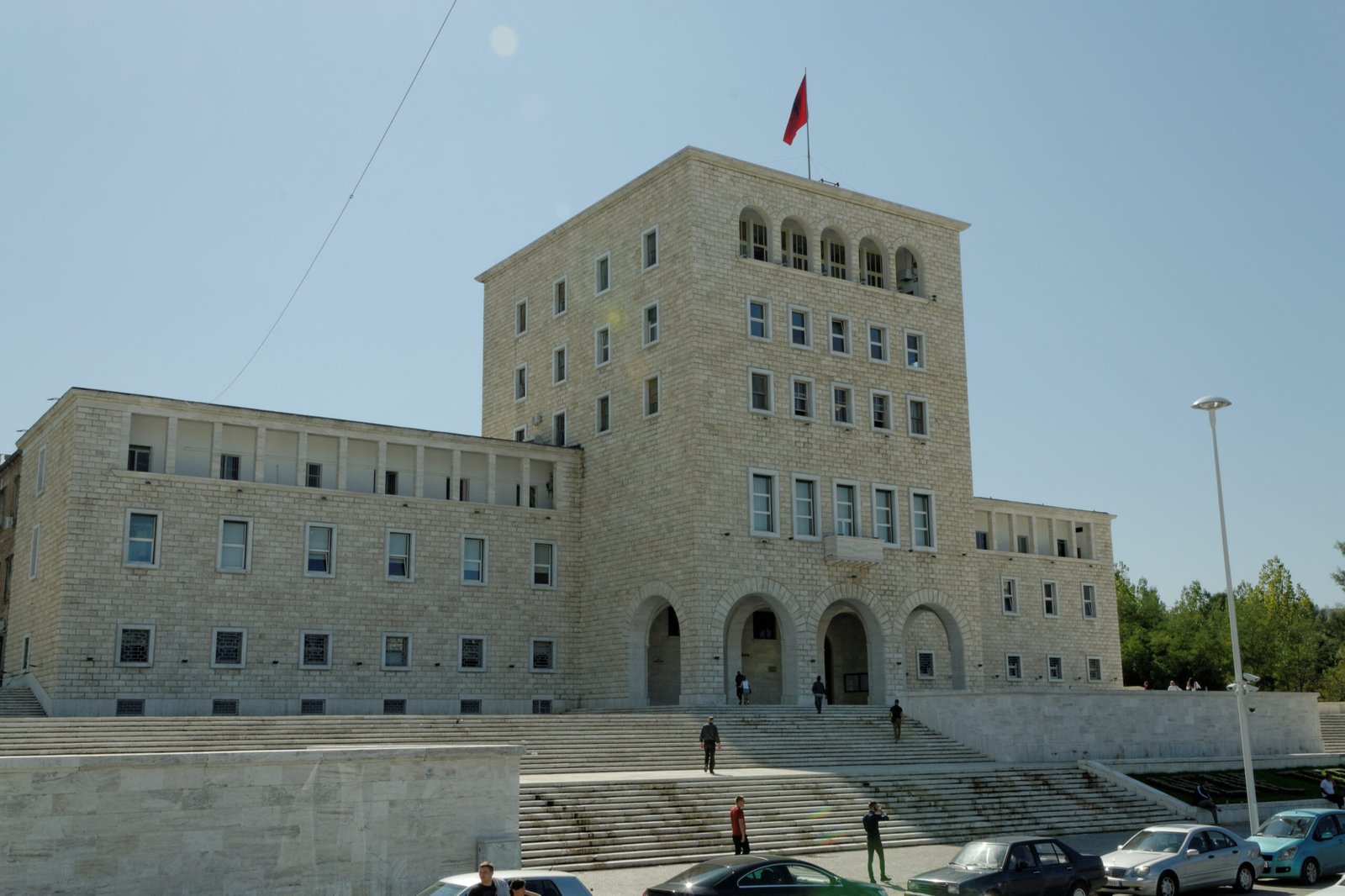
The type also travelled. At the head of Tirana’s kilometre-long boulevard — an axis begun on Armando Brasini’s 1925 plan and shaped by Florestano Di Fausto — Gherardo Bosio laid out the Piazza del Littorio ensemble in 1939–1941: a Casa del Fascio flanked by the Casa della Gioventù and the Dopolavoro Albanese. Bosio died in 1941; his square outlived every purpose it was given. Today it is Mother Teresa Square, and the Casa del Fascio is the Polytechnic University of Albania, with the Rectorate and the Academy of Arts in its flanking buildings — the governmental and academic heart of the country, on an Italian plan.
Follow the chain
The five buildings are gathered in the thematic itinerary Case del Fascio: a Route in Five Buildings, with an interactive map, a play-through tour and GPX/KML downloads. Nobody drives this in a day; it crosses northern Italy and the Adriatic. It is built for reading — and for adding a stop whenever travel brings you near one of the five.
Five fates
Set side by side, the five tell one story with unusual precision. The same commission — a headquarters for the same party — produced a marble half-cube, a brick shed, a travertine tower, a relief 36 metres long and a square in a foreign capital. The republic then made of them a financial-police headquarters, a council office, an empty shell, a tax office and a university. None was demolished; each was answered differently, from Como’s listing to Bolzano’s neon counter-quotation to Predappio’s unresolved museum. These pages record the type without celebration and without erasure, and the Italian Rationalism Grand Tour puts it back among the movement’s wider work.
Sources
- S1 — Ciucci, Giorgio. Gli architetti e il fascismo: Architettura e città 1922–1944. Einaudi, 1989. ISBN 978-88-06-11656-9.
- S2 — Danesi, Silvia, e Luciano Patetta. Il razionalismo e l'architettura in Italia durante il fascismo. La Biennale di Venezia, 1976. ISBN 978-88-208-0205-9.
Spotted an error? Write to editorial@culturalheritageonline.com and we correct it the same day.