The Newsreels and Photographs Fund (Fondo Cinegiornali e Fotografie) is the documentary core of the Archivio Storico Luce: newsreels, documentaries, stock footage and photographs that record the Italian twentieth century in images. Since 2013 it has been inscribed in UNESCO’s Memory of the World Register — the only Italian audiovisual archive on that list.
What the Fund is
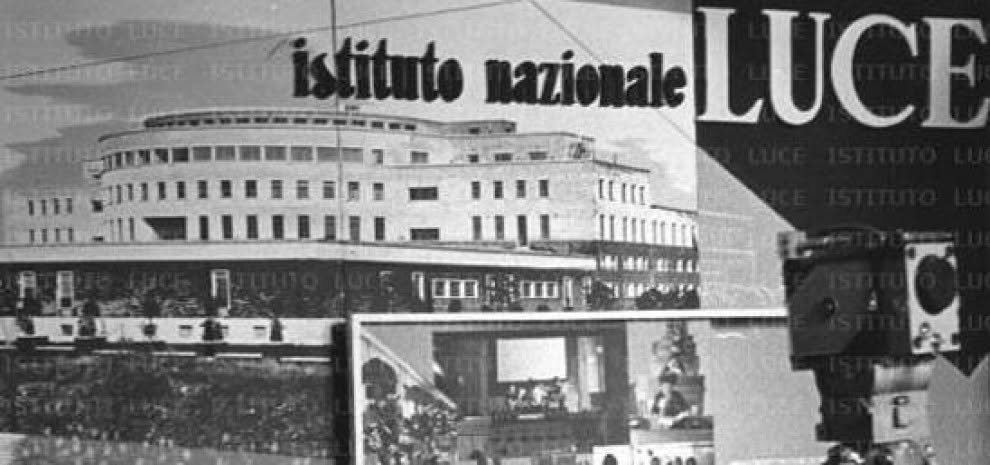
The Fund is the heart of the Archivio Storico Luce, the great audiovisual collection produced and conserved by the Istituto Nazionale L.U.C.E. It brings together, in one body, the two languages with which Luce recorded the life of the country: film — newsreels, documentaries, stock reels — and photography. It covers the whole twentieth century from the 1920s onward, and it is still growing through the acquisition of new collections.
The film collection holds frames from roughly seventy years of history, from the Twenties to the Nineties, and the photographic archive preserves millions of images. It is historical material in the fullest sense: it documents what was happening as it happened, with the means and the gaze of the time. The institution that today keeps this heritage — Archivio Luce Cinecittà — is Italy’s largest and oldest historical film archive: more than 77,000 films and around 5 million photographs, plus private photographic collections acquired over time. The story of the institution that produced it — the founding of 1924, the transformation into an organ of the State, the Giornale Luce, the passage to Cinecittà — is told in a dedicated piece, Istituto Luce: the Archive That Filmed Italy’s Twentieth Century; here the focus is the Fund itself, as an archival object.
Four kinds of material
The Fund gathers materials of different natures, each with its own documentary function: newsreels, the filmed bulletins screened in cinemas before the main feature — the backbone of the Fund, recording news, politics, public works, sport and daily life in weekly succession for decades; documentaries, single-subject films on a place, an industry, a scientific or educational theme; stock reels, unedited or reused footage that often preserves raw images richer than the finished product; and photographs, millions of still images that flank and complete the moving material.
This variety is what makes the Fund so dense a source. A newsreel may show a building’s inauguration; a photograph may fix a detail of its façade; a stock reel may keep the discarded takes, with the background of a square as it really was. For the historian, the architect or the local researcher, combining these materials means reconstructing a place or an era with a precision no single source would allow.
The UNESCO inscription (2013)
In 2013 the Fund entered UNESCO’s Memory of the World Register, the programme’s recognition of documentary heritage of world significance. The official motivation reads:
“The collection constitutes an inimitable documentary corpus for understanding the process of formation of totalitarian regimes, the mechanisms of creation and development of visual material, and the living conditions of Italian society. It is a unique source of information on Italy in the years of the Fascist regime, on the international context of Fascism (including East Africa and Albania, but also well beyond the areas occupied by Italy during Fascism, especially as regards the Second World War), and on mass society in the 1920s and 1930s.”
UNESCO Memory of the World Register, inscription motivation, 2013
The quotation is given verbatim because it is itself a document. The value recognised is double. On one side, the collection is a source on the mechanisms of mass visual communication — on how a regime constructs, produces and distributes images. On the other, it is a record of the concrete living conditions of the Italian population in those years. The two planes are distinct: one concerns how the images were manufactured; the other what, even inside those images, remains documented of the country’s real life.
What Memory of the World is
The Memory of the World Register is a UNESCO programme launched in 1992 to preserve and promote humanity’s documentary heritage: documents, archives, books, manuscripts, audiovisual recordings of universal value. Where UNESCO’s World Heritage lists protect places — monuments, sites, landscapes — Memory of the World protects documents: humanity’s written and recorded memory, often more fragile than stone because it lives on perishable supports such as paper, film and tape. In this frame, the Luce Fund’s inscription is not a prize; it is the recognition that the collection belongs to a heritage beyond national borders, which the international community takes responsibility for conserving.
A primary source, not a narrative
The correct way to approach this material is the one UNESCO itself suggests: treat it as a document. A newsreel of the Fascist years is two things at once — the news it wanted to give, and the reality it involuntarily recorded in the background. Behind an official ceremony you see the façades of buildings, people’s clothes, the vehicles, the state of a square. That unplanned surplus is what makes the Fund precious for anyone documenting heritage: visual confirmation of what places really looked like in the years when they were built or transformed. The facts an image documents — a building, a date, a place — are verified; the context is reconstructed from sources. That is the method by which, on Cultural Heritage Online, the period image is set against what stands today.
Consulting the Fund
A large share of this heritage is freely accessible online. The Archivio Storico Luce portal allows searches of films and photographs by date, place and theme, with a section dedicated to the newsreels; and more than 30,000 films can be viewed free on the archive’s official YouTube channel. For the wider context of the era that produced the Fund, see Architecture and Power in Fascist Italy.
Sources
- S1 — Minoia, Mino. Il cinema del regime: 1922–1943. Marsilio, 1998. / Argentieri, Mino. L'occhio del regime: Informazione e propaganda nel cinema del fascismo. Vallecchi, 1979. ISBN 978-88-252-0050-8.
- S2 — Brunetta, Gian Piero. Il cinema italiano di regime: Da «La canzone dell'amore» a «Ossessione». Laterza, 2009. ISBN 978-88-420-8944-5.
Spotted an error? Write to editorial@culturalheritageonline.com and we correct it the same day.