

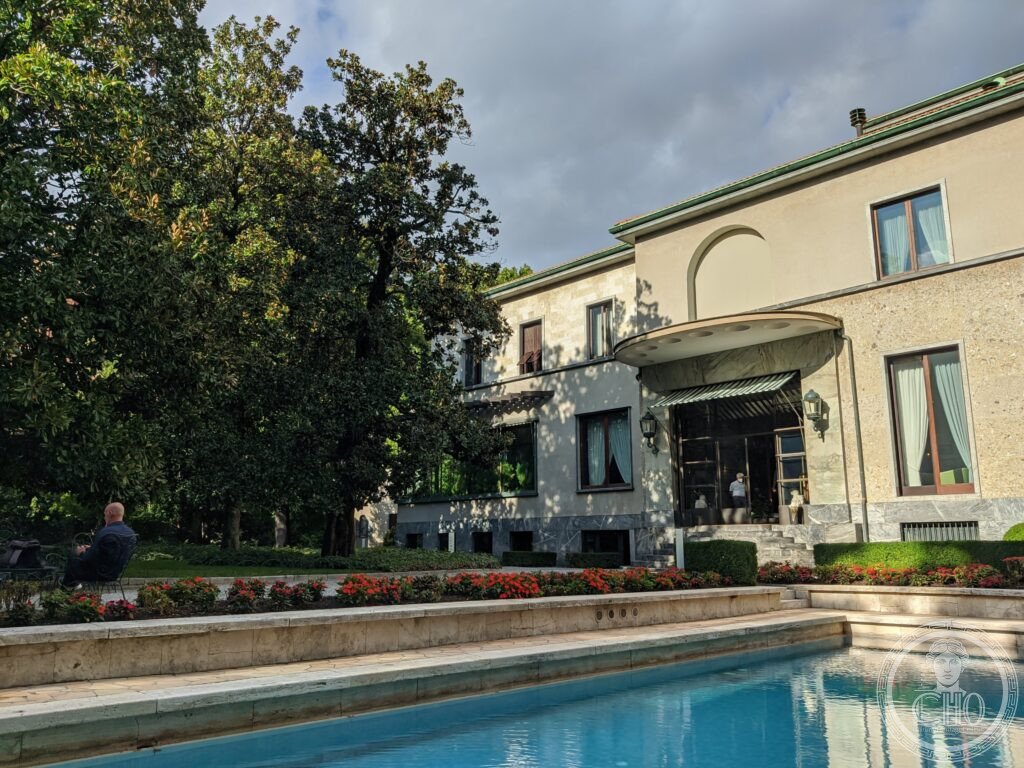
A Rationalist villa built for a Milanese industrial family, complete with the first private heated outdoor swimming pool the city had ever seen. Now cared for by FAI, it is also the house that became internationally recognisable as the setting of Luca Guadagnino’s film I Am Love.
At a glance
Villa Necchi Campiglio stands on Via Mozart in central Milan, built between 1932 and 1935 for the Necchi-Campiglio family, whose wealth came from the Necchi sewing-machine business. The architect Piero Portaluppi gave the house a classically proportioned exterior stripped of historicist ornament, pairing Rationalist restraint with an interior programme that was unusual for a Milanese villa of the period: a heated outdoor swimming pool, a tennis court, and a garden designed for entertaining as much as for private use.
The house passed to FAI, the Italian national trust, and is furnished throughout with the family’s original pieces and their collection of twentieth-century Italian art, including works by Sironi, Martini and Wildt. Its south facade, pool and garden were used by Luca Guadagnino as the principal setting for I Am Love, with Tilda Swinton, which introduced the villa’s particular visual character to audiences well beyond Italy.
Key facts
- Architect: Piero Portaluppi, built 1932–1935
- Commissioned by: the Necchi-Campiglio family, owners of the Necchi sewing-machine company founded in Pavia
- Notable feature: the first privately owned heated outdoor swimming pool in Milan
- Managed by: FAI, Fondo Ambiente Italiano, since the villa was donated in 2001
- Garden: restored to its 1935 planting scheme by landscape architect Paolo Pejrone
- Film location: principal setting of Luca Guadagnino’s I Am Love (2009)
History
The villa was commissioned after Nedda Necchi married Angelo Campiglio, bringing together two branches of a wealthy Pavia industrial family whose fortune rested on the Necchi sewing-machine company, a brand that still exists today. Construction, including the garden, pool and tennis court, was completed by 1935, and the family moved in and used the house for social and cultural gatherings, gradually assembling a collection of contemporary Italian art that included paintings donated by Sironi and Martini.
Nedda and Angelo had no children, and on their deaths the villa passed to Gigina Necchi Campiglio, their daughter-in-law, who in 2001 donated it to FAI. The trust carried out a restoration that included Paolo Pejrone’s work on the garden, returning it to its original planting plan, and the reinstatement of the swimming pool to its 1935 condition, with the original heating system made operational again.
In 2009 Luca Guadagnino used the villa’s exterior, pool, garden and principal interiors, including the staircase and dining room, as the main setting for his film I Am Love, starring Tilda Swinton. The film’s release brought the villa international recognition and is said to have significantly increased interest in visiting it.
What you see
The south facade, symmetrical and finished in stone without columns or pediments, faces the garden and the swimming pool, restored to its 1935 appearance with light-blue tiles and, in places, the original heating coils still visible. The exact corner of the garden from which Guadagnino filmed the exterior can still be located by visitors standing beside the pool and looking back at the house.
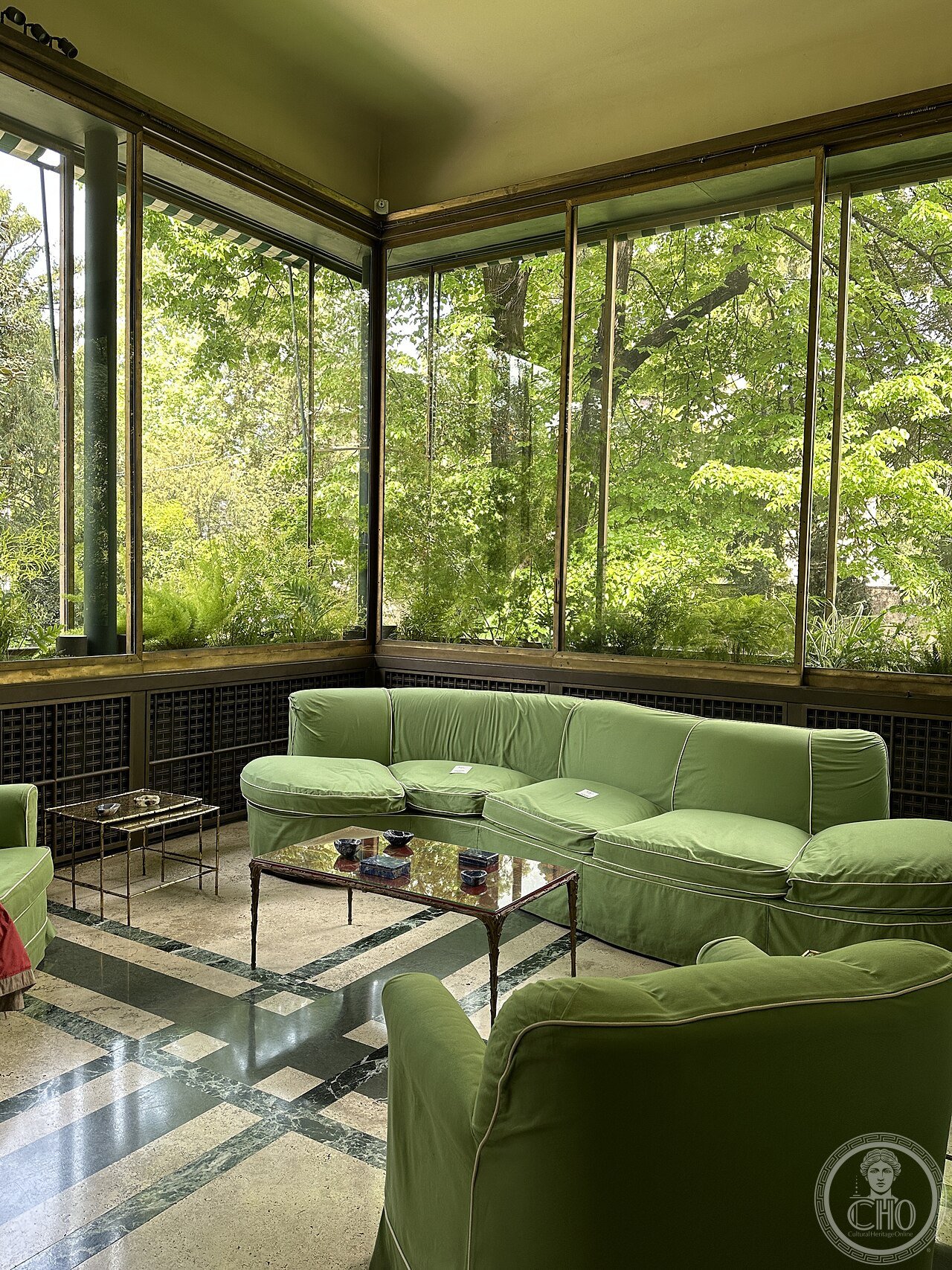
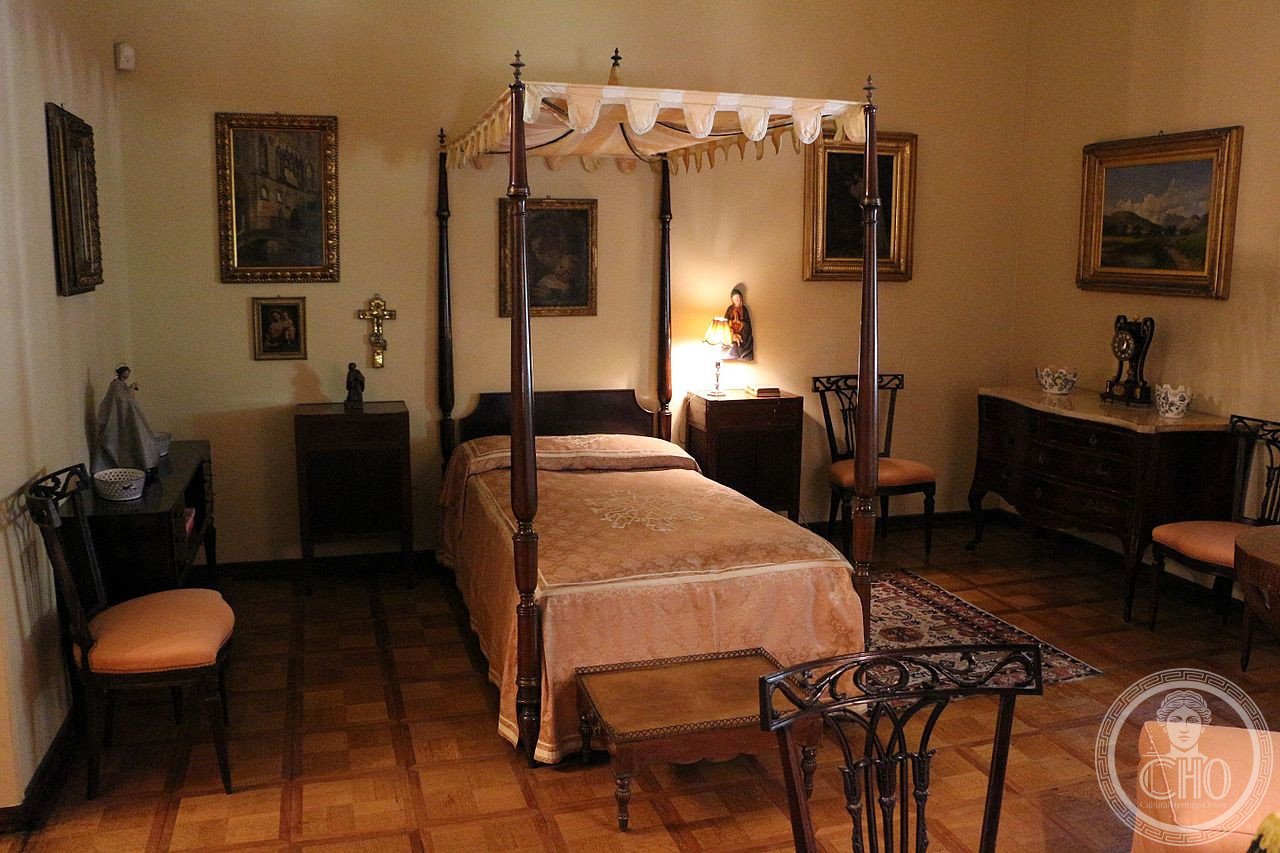
Inside, the entrance hall has terrazzo floors and the family’s original furniture, with a Sironi painting visible from the hall itself. The dining room is the most formally arranged space, laid with the original table service and hung with Sironi’s murals, including a large late work in his characteristic blue-grey palette. In the library, marble sculptures by Adolfo Wildt are shown alongside bronzes by Arturo Martini, a pairing that reflects the circle of Milanese modernist artists the family entertained at the villa in the 1930s and 1940s.
The garden, restored to its original planting plan, includes espaliered fruit trees, a rose garden and geometric parterres; the former tennis court is now laid to grass.
Practical information
- Visiting the interior: the art collection and principal rooms are shown on a guided tour; visitors exploring on their own can see the garden and exterior but not all interior rooms
- Booking: tickets and current opening arrangements are available through FAI’s own website, fondoambiente.it
- Best time to visit: the garden is at its best from spring into early summer, and autumn light suits the facades; weekday mornings in high summer tend to be busier with school groups
- Film tourism: staff can point out the specific locations used in I Am Love on request, notably the poolside and staircase scenes
Getting there
Villa Necchi Campiglio is at Via Mozart 14 in central Milan, reachable from the Porta Venezia stop on metro line M3 or by tram line 9, both followed by a short walk. It sits within the Quadrilatero della Moda, close to Via Montenapoleone and Milan’s principal shopping streets.
Nearby
- Pinacoteca di Brera — north-west of the villa, home to Andrea Mantegna’s Dead Christ, notable for its extreme foreshortening of the body seen from the feet
Sources
- FAI — Fondo Ambiente Italiano
Gallery
Find it on the map
See this place and what’s around it →
📷 Become a Cultural Heritage Online photographer
Share your photos of places: they stay published under your name as the author. The more they're seen, the more you get noticed — and soon a contest will reward the most appreciated photos.
Log in or sign up free to add a photoIs this page about you?
This page is read by travellers and heritage enthusiasts who find it on Google. Tell us how you are connected to this place and we will take it from there.