
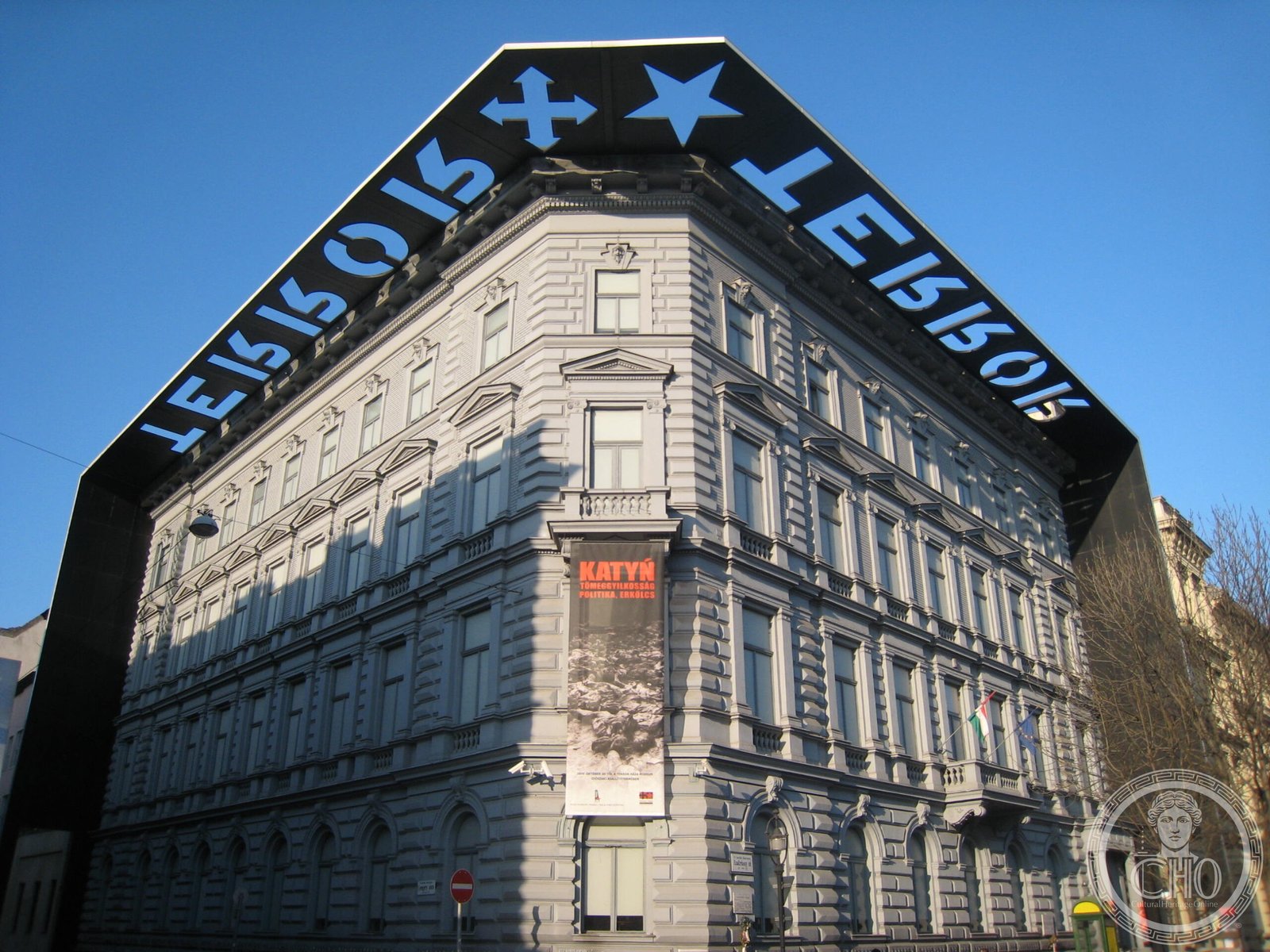
The House of Terror is a history museum and memorial at Andrássy Avenue 60 in Budapest, Hungary, dedicated to the victims of the fascist Arrow Cross and communist ÁVH secret police that used this same building as their headquarters during the mid-20th century. Opened in 2002, the museum presents immersive exhibits documenting Hungary’s occupation, terror, and totalitarian experience, and serves as one of the most powerful memorials to political violence in Central Europe.
At a glance
- Type
- History museum and memorial
- Period
- Building in use as terror headquarters 1944–1945 (Arrow Cross) and 1945–1956 (ÁVH); museum opened 2002
- Style
- Late 19th-century eclectic mansion; dramatic contemporary museum interior
- Location
- Andrássy út 60, 1062 Budapest, Hungary
- Coordinates
- 47.5069° N, 19.0629° E
Overview
The House of Terror occupies a grand 19th-century townhouse on Andrássy Avenue, a UNESCO World Heritage boulevard, that served successively as the Budapest headquarters of the Arrow Cross fascist militia and then the communist state security police (ÁVH). Its exhibits document the fascist occupation of 1944–1945, the Soviet-backed communist takeover, the show trials, forced collectivisation, and the crushing of the 1956 Revolution. The building’s basement cells, where prisoners were detained, interrogated, and executed, have been preserved as part of the memorial experience.
History
During the final months of World War II, the Hungarian Arrow Cross party — allied with Nazi Germany — used the building at Andrássy 60 as its operational centre, where thousands of Hungarian Jews and political opponents were tortured and murdered. After the Soviet liberation in 1945, the same address was taken over by the communist ÁVH secret police, which carried out mass arrests, deportations, and executions through the late 1940s and 1950s. The building became a symbol of unbroken state terror across two ideologically opposed regimes. The museum was inaugurated on 24 February 2002, the anniversary of the communist takeover of the Hungarian government.
What you see
The museum’s rooms progress thematically from the Nazi occupation through communist consolidation, collectivisation, and the 1956 uprising. Exhibits combine original artefacts — uniforms, documents, propaganda posters, weapons — with dramatic architectural installations and personal testimonies of survivors. A slow-moving elevator descent to the basement is a deliberately unsettling approach to the preserved detention cells and gallows. The striking black building exterior, with a blade-shaped steel canopy bearing the word TERROR cut into it, casts a shadow over the pavement below — a literal and symbolic gesture toward the building’s history.
Cultural significance
The House of Terror stands as one of the most important memorials in Central Europe to the dual experience of fascist and communist totalitarianism. Situated on a UNESCO World Heritage avenue, it confronts visitors with physical evidence of crimes committed in an unremarkable bourgeois address, reinforcing the lesson that political terror operates within ordinary urban fabric. The museum has been debated for its curatorial framing, but its documentary power and the authenticity of its location are undisputed.
Practical information
Address: Andrássy út 60, 1062 Budapest. Open Tuesday to Sunday; closed Mondays. Check the official website for current hours and ticket prices. Audio guides available in multiple languages including English. Photography is permitted in most areas of the museum.
Getting there
The museum is located on Andrássy Avenue, accessible directly from Vörösmarty utca Metro station (Line M1, the yellow line — the oldest underground railway in continental Europe). Alternatively, take Metro M1 to Oktogon and walk two blocks south on Andrássy. Numerous tram and bus lines serve the Oktogon intersection. The museum is approximately 15 minutes by foot from Deák Ferenc tér, Budapest’s main transport hub.
Sources & resources
See the place
Find it on the map
See this place and what’s around it →📷 Become a Cultural Heritage Online photographer
Share your photos of places: they stay published under your name as the author. The more they're seen, the more you get noticed — and soon a contest will reward the most appreciated photos.
Log in or sign up free to add a photo