
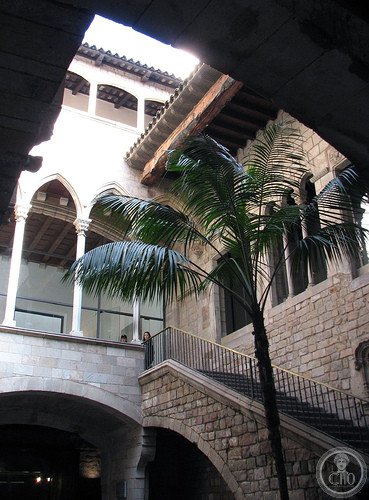
The Museu Picasso in Barcelona is the world’s first museum dedicated to Pablo Picasso, opened during the artist’s lifetime on 9 March 1963. Housed in five adjoining medieval palaces on Carrer Montcada in the La Ribera neighbourhood, it holds 4,251 works and offers an unrivalled panorama of Picasso’s formative years in Barcelona, from early academic exercises to his celebrated series of variations on Velázquez’s Las Meninas.
At a glance
- Type
- Single-artist art museum
- Period
- Buildings: 13th–15th century; museum opened 9 March 1963
- Style
- Gothic civil architecture (palaces); permanent collection spans 1890–1972
- Location
- Carrer Montcada 15–23, La Ribera, Barcelona, Catalonia, Spain
- Coordinates
- 41.3852° N, 2.1809° E
Overview
The Museu Picasso houses the most extensive collection of works from Picasso’s early career anywhere in the world, reflecting the decisive years he spent in Barcelona between 1895 and 1904. The collection of 4,251 works includes paintings, drawings, engravings, ceramics, and illustrated books donated or bequeathed by Picasso himself and by his secretary Jaume Sabartés, who initiated the project. The museum has been declared a museum of national interest by the Generalitat de Catalunya.
History
Picasso’s long friendship with Jaume Sabartés, a fellow Barcelonan writer, led to the idea of a dedicated museum in their shared city. Sabartés donated his personal collection to the city of Barcelona in 1960, and the museum opened in 1963 in the Palau Aguilar on Carrer Montcada. Picasso himself donated 58 paintings including the complete Las Meninas series in 1968, and further expanded the collection with gifts of ceramic works. The museum expanded progressively into four adjacent Gothic palaces, reaching its current configuration of five interconnected buildings.
What you see
Visitors move through late-Gothic courtyards and stairwells connecting five medieval palaces — Palau Aguilar, Palau del Baró de Castellet, Palau Meca, Casa Mauri, and Palau Finestres — each restored to reveal their original stonework and carved corbels. The permanent galleries trace a chronological path from Picasso’s earliest academic drawings made in Galicia in the 1890s through his Blue Period and the celebrated series of 58 canvases reworking Velázquez’s Las Meninas (1957). Ceramics, engravings, and sketches fill the upper floors.
Cultural significance
The museum occupies a unique place in the Picasso legacy as the institution created in the artist’s lifetime with his active participation, making it a primary source for understanding his artistic development rather than a posthumous institutional tribute. Its location in the Gothic heart of Barcelona also preserves one of the finest concentrations of medieval civic architecture in Catalonia.
Practical information
- Address
- Carrer Montcada 15–23, 08003 Barcelona, Spain
- Admission
- Paid entry; concessions and free days available — check official website
Getting there
Metro line L4 (yellow) stops at Jaume I, a two-minute walk from Carrer Montcada. Line L1 (red) stops at Arc de Triomf, about ten minutes on foot. The museum is within easy walking distance of Barcelona Cathedral, the Gothic Quarter, and the Santa Maria del Mar basilica.
Sources & resources
- Wikipedia — Museu Picasso
- Cultural Heritage Online — more heritage places
- Official Museu Picasso website
See the place
Find it on the map
See this place and what’s around it →📷 Become a Cultural Heritage Online photographer
Share your photos of places: they stay published under your name as the author. The more they're seen, the more you get noticed — and soon a contest will reward the most appreciated photos.
Log in or sign up free to add a photo