
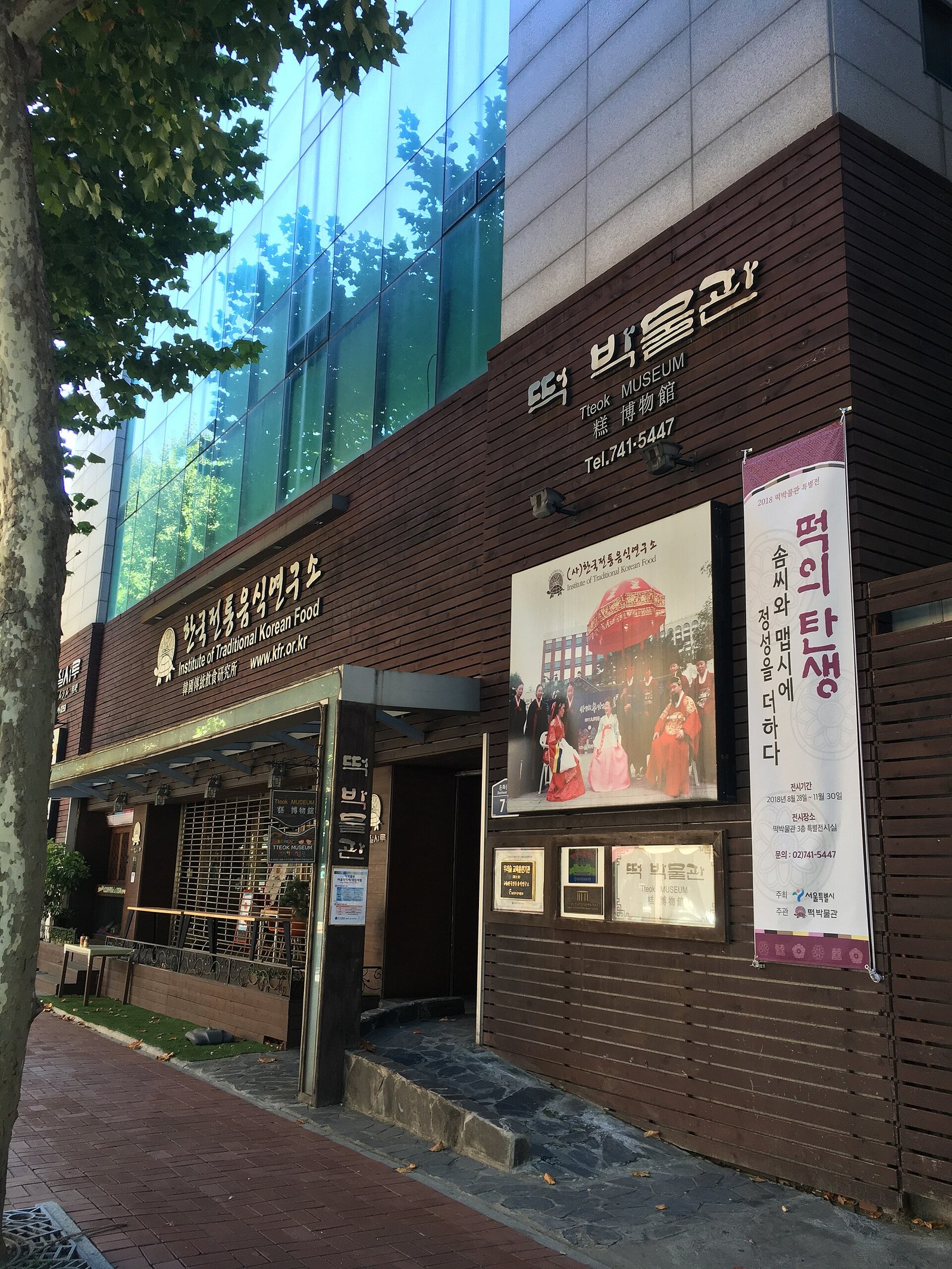
Tteok Museum
A specialist museum devoted to Korean rice cakes and traditional kitchen tools, preserving centuries of culinary heritage through carefully selected artifacts and living craft demonstration.
At a glance
The Tteok Museum holds one of Seoul’s most focused collections of Korean gastronomic heritage. Roughly 2,000 traditional kitchen implements—from ancient grinding stones to early 20th-century utensils—form the core display, while rotating exhibitions showcase approximately 50 varieties of tteok, Korea’s essential rice cake tradition.
History
Founded by Yoon Sookja, chief director of the Institute of Traditional Korean Food, the museum opened in December 2002. Its establishment reflected growing scholarly and public interest in preserving Korea’s distinctive food cultures at a moment when industrialization threatened traditional kitchen practices and craft knowledge.
What you see
The collection spans kitchen technology across centuries. Maetdol (grinding stones) represent the oldest category, while later pieces document the evolution of Korean cutlery and cookware into the modern era. Tteok displays rotate to present Korea’s nearly 200 distinct rice cake types, many associated with specific regions, seasons, and ceremonial occasions.
Cultural significance
Tteok occupies a central place in Korean culinary identity, appearing at celebrations, seasonal festivals, and daily meals. The museum preserves not merely objects but the technical and symbolic knowledge embedded in their use—a living archive of food traditions that define Korean cultural practice.
Key facts
- Located in Waryong-dong, Jongno District, Seoul
- Founded December 2002
- Approximately 2,000 kitchen utensils on display
- Exhibits roughly 50 of Korea’s nearly 200 tteok varieties
- Coordinates: 37.5749, 126.9906
Practical information & getting there
The museum is situated in Seoul’s historic Jongno District. For current opening hours, admission fees, and visiting guidelines, consult the museum directly or contact the Institute of Traditional Korean Food. Public transport connections to central Seoul are readily available.
Sources & resources
Find it on the map
See this place and what’s around it →📷 Diventa un fotografo di Cultural Heritage Online
Condividi le tue foto dei luoghi: restano pubblicate con la tua firma come autore. Più vengono viste, più ti fai conoscere — e presto un concorso premierà le foto più apprezzate.
Accedi o registrati gratis per aggiungere una fotoDo you manage this place?
This page is read by travellers and heritage enthusiasts who find it on Google. Keep it accurate — and make it work for you. Free for non-profit heritage institutions.