
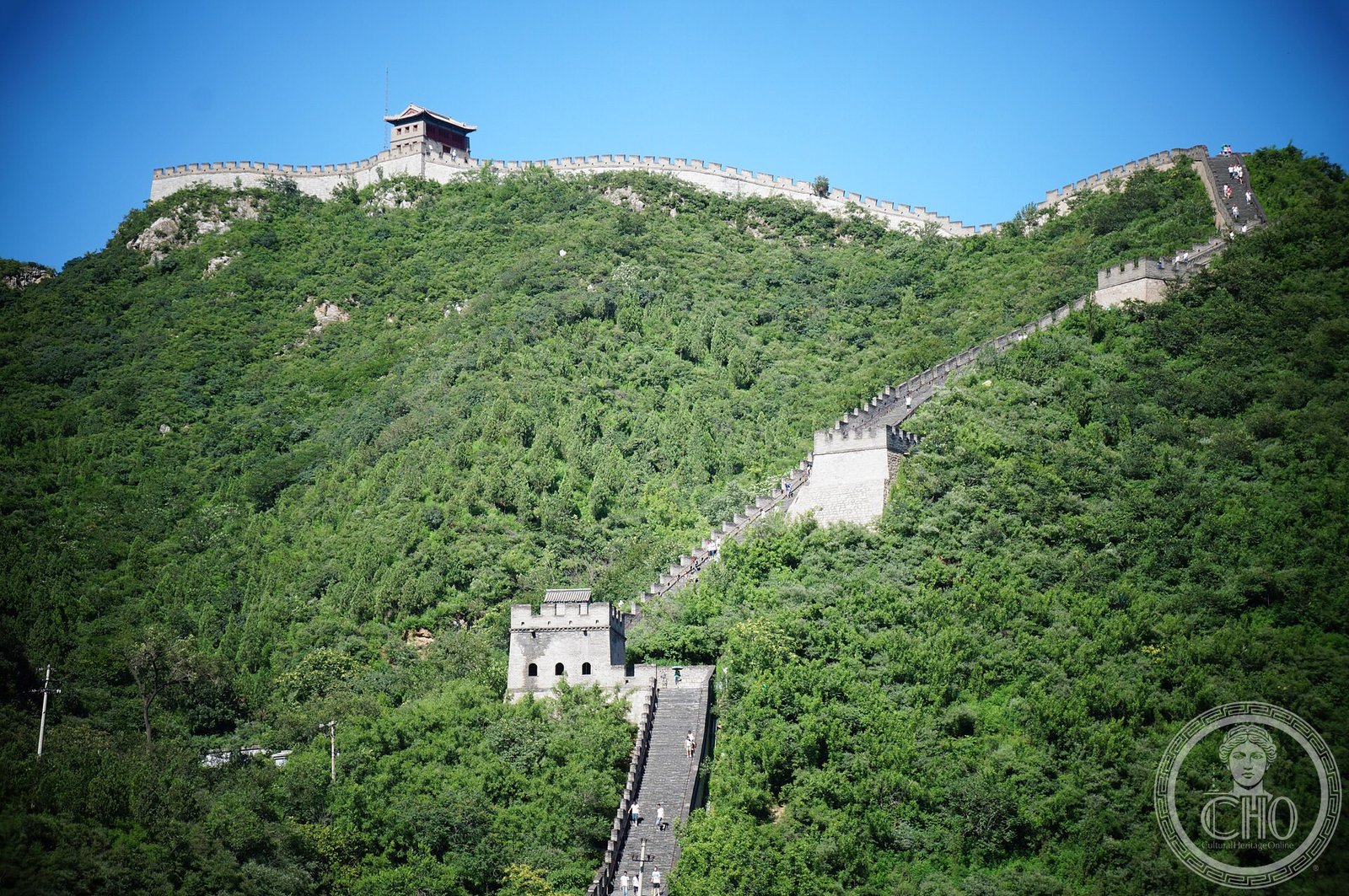
The Mutianyu section of the Great Wall of China, located approximately 70 kilometres north-east of Beijing in Huairou District, is one of the best-preserved and most visited stretches of the wall. Built on a continuous ridge of steep, forested mountains, the section was originally constructed during the Northern Qi dynasty (550–577) and substantially rebuilt and fortified during the Ming dynasty (1368–1644), when it served as a key defence line protecting the imperial capital.
At a glance
- Type
- Historic fortified wall; section of the Great Wall of China (UNESCO World Heritage Site)
- Period
- Originally Northern Qi dynasty (550–577); major Ming dynasty reconstruction 1368–1644; restored 1986
- Style
- Chinese military architecture; granite and kiln-fired brick construction
- Location
- Mutianyu Village, Huairou District, Beijing, China
- Coordinates
- 40.4331° N, 116.5642° E
Overview
Mutianyu stretches approximately 2.25 kilometres and is distinguished by its 22 watchtowers and crenellated battlements running along a dramatic ridgeline above dense deciduous forest. Unlike some other accessible sections of the wall, Mutianyu retains a high degree of historical integrity and is less crowded than the famous Badaling section. The surrounding valley fills with autumn foliage between late September and November, making it one of the most photographed landscapes in northern China during that season.
History
The earliest fortifications at Mutianyu date to the Northern Qi dynasty in the mid-6th century, when the first wall was constructed to guard against nomadic incursions from the north. The section was comprehensively rebuilt and strengthened during the Ming dynasty, particularly under General Xu Da in 1368 and again between 1569 and 1572 under the supervision of General Qi Jiguang, who oversaw major improvements including the characteristic watchtowers. After centuries of deterioration, the section underwent systematic restoration beginning in 1986, funded jointly by the Chinese government and international preservation organisations, and opened to tourists in the same year.
What you see
The walkable section of the wall at Mutianyu runs along a high ridge with steep drops on both sides, offering panoramic views over forested valleys and distant peaks. The 22 watchtowers are among the most intact on any section of the Ming-era wall; they vary in design between solid watch platforms and hollow two-storey towers with arrow slits. The wall’s surface, paved with large kiln-fired grey bricks, can be walked for the full 2.25 km length. Visitors reach the wall via cable car, ski-lift style gondola, or a stone stairway; a toboggan run provides a novel way to descend on the return.
Cultural significance
The Great Wall of China, inscribed as a UNESCO World Heritage Site in 1987, is among the most iconic symbols of human civilisation and one of the largest construction projects in history. The Mutianyu section represents the military engineering achievement of the Ming dynasty at its peak, designed to combine defensive firepower with rapid communication between towers. As a landscape, Mutianyu embodies the Chinese concept of nature and architecture in dialogue — the wall follows the natural topography of the mountains rather than imposing a straight line on the terrain.
Practical information
- Address
- Mutianyu Village, Huairou District, Beijing 101407, China
- Hours
- April–October: 07:30–18:00; November–March: 08:00–17:00
- Admission
- Ticketed; separate fees for wall entry, cable car and toboggan — check official website for current prices
- Note
- Book tickets in advance during Chinese national holidays (Golden Week, May and October)
Getting there
From Beijing, direct shuttle buses run from Dongzhimen Bus Station (about 2 hours). Alternatively, take metro line 15 to Huangtudian, then a local bus or taxi to Mutianyu. Private car hire or organised day tours from central Beijing are the most flexible option. Allow a full day for the round trip.
Sources & resources
See the place
Find it on the map
See this place and what’s around it →📷 Become a Cultural Heritage Online photographer
Share your photos of places: they stay published under your name as the author. The more they're seen, the more you get noticed — and soon a contest will reward the most appreciated photos.
Log in or sign up free to add a photo