
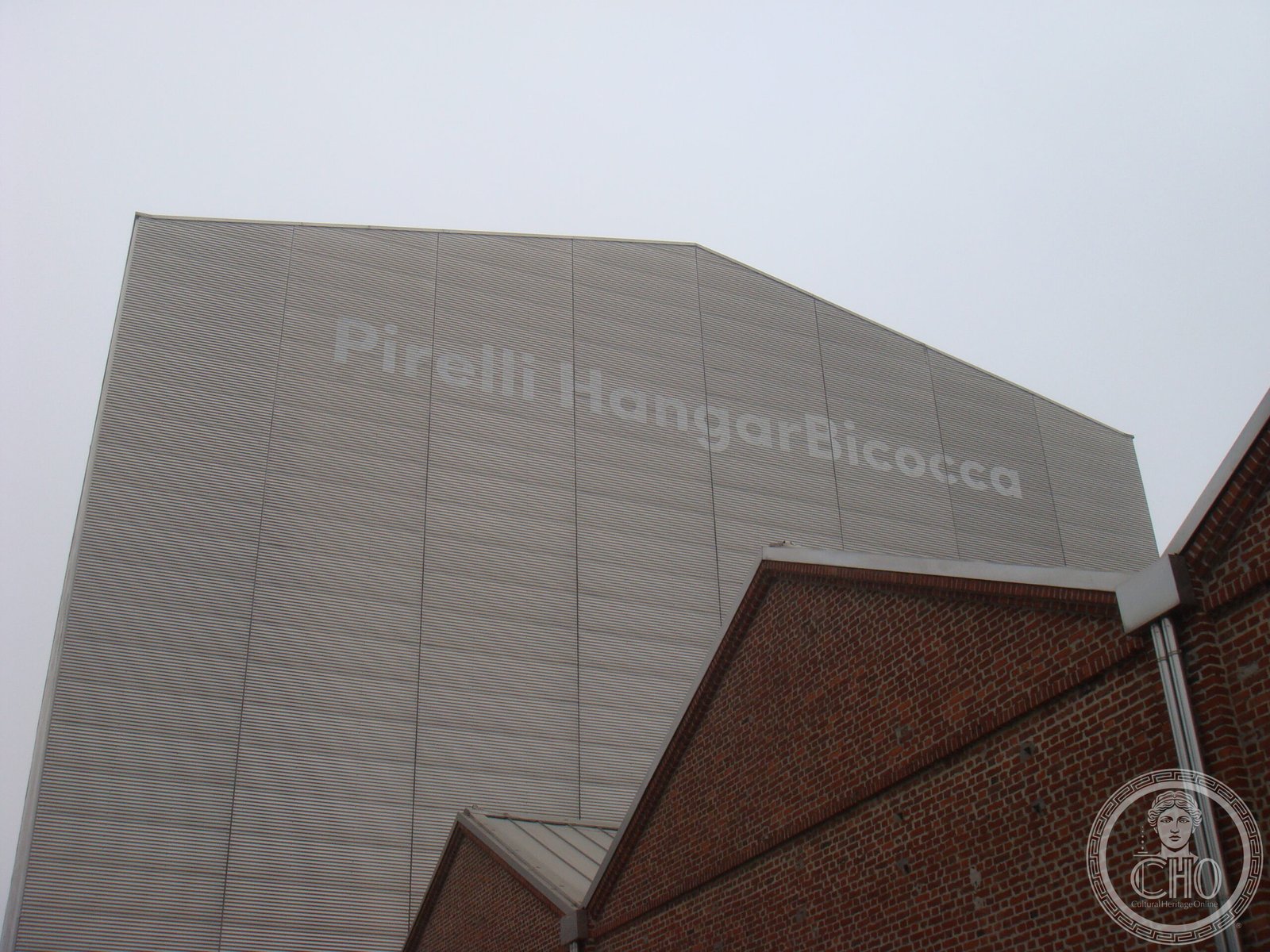
Pirelli HangarBicocca is one of the largest single-space contemporary art museums in Europe, occupying a 15,000-square-metre former industrial building in the Bicocca district of Milan. Established in 2004 by the Pirelli Group in a hangar originally built in 1932 to assemble railway locomotives, the institution presents ambitious large-scale installations and solo exhibitions by major international artists. The permanent installation The Seven Heavenly Palaces by Anselm Kiefer, a landmark of monumental contemporary sculpture, has been on display since the museum’s founding.
At a glance
- Type
- Contemporary art museum and exhibition space
- Period
- Industrial building constructed 1932; converted to art use and opened 2004
- Style
- Industrial architecture; adaptive reuse
- Location
- Via Chiese 2, Bicocca, Milan — 45.5203° N, 9.2166° E
Overview
HangarBicocca operates as a non-profit foundation supported by Pirelli SpA and runs free admission for all visitors, making it one of the most accessible major contemporary art venues in Italy. The vast uninterrupted floor area — originally designed to manoeuvre full-size train wagons — allows artists to conceive works at a scale impossible in conventional museums. The institution commissions new works, hosts retrospectives of living artists, and runs an extensive programme of educational activities for schools and the public.
History
The building was erected in 1932 by the Breda group as a heavy industrial assembly plant in the newly developed Bicocca quarter on Milan’s northeastern periphery. It produced locomotives, railway wagons, and during the Second World War, military equipment. After decades of industrial decline, Pirelli acquired the site as part of the broader Bicocca urban regeneration project — one of the largest post-industrial transformations in Italian urban history — which also included new university buildings, offices, and residential blocks. The hangar was converted for cultural use with minimal intervention to preserve its industrial character, and opened as HangarBicocca in 2004.
What you see
The permanent work by Anselm Kiefer — seven monumental lead-and-concrete towers up to 14 metres high — dominates the north section of the hangar floor, creating a sombre, mythological landscape that references Kabbalah and the aftermath of war. The southern exhibition halls, separated by rolling steel doors, host temporary exhibitions typically running for several months each. The raw industrial fabric — exposed steel trusses, brick walls, and polished concrete floors — forms a deliberately neutral backdrop that allows each artwork to command its own atmosphere. A small bar and bookshop are integrated near the entrance.
Cultural significance
HangarBicocca has established itself as a defining venue for monumental installation art in Europe, having presented landmark solo exhibitions by artists including Carsten Höller, Yoko Ono, Cai Guo-Qiang, and Joan Miró. Its model of corporate cultural philanthropy combined with free public access has been cited internationally as a successful template for urban post-industrial regeneration through the arts. The Kiefer permanent installation is widely considered one of the most important works of public art in Milan.
Practical information
HangarBicocca is open Thursday–Sunday (hours vary by season — check the official website at hangarbicocca.org). Admission is free. Photography is generally permitted in permanent areas; check signage for temporary exhibitions. Address: Via Chiese 2, 20126 Milan.
Getting there
The museum is served by Milan Metro Line 5 (Lilla) at Ponale station, a 5-minute walk away. Several surface tram and bus lines also connect Bicocca to central Milan. By car, the site is accessible from the Milan ring road (Tangenziale Nord) and has parking nearby. Journey time from Milan Centrale railway station is approximately 25 minutes by metro.
Sources & resources
- Wikipedia — Pirelli HangarBicocca
- Official website — hangarbicocca.org
- Cultural Heritage Online — Milan guides
See the place
Find it on the map
See this place and what’s around it →Historical events at this place (3)
📷 Become a Cultural Heritage Online photographer
Share your photos of places: they stay published under your name as the author. The more they're seen, the more you get noticed — and soon a contest will reward the most appreciated photos.
Log in or sign up free to add a photo