
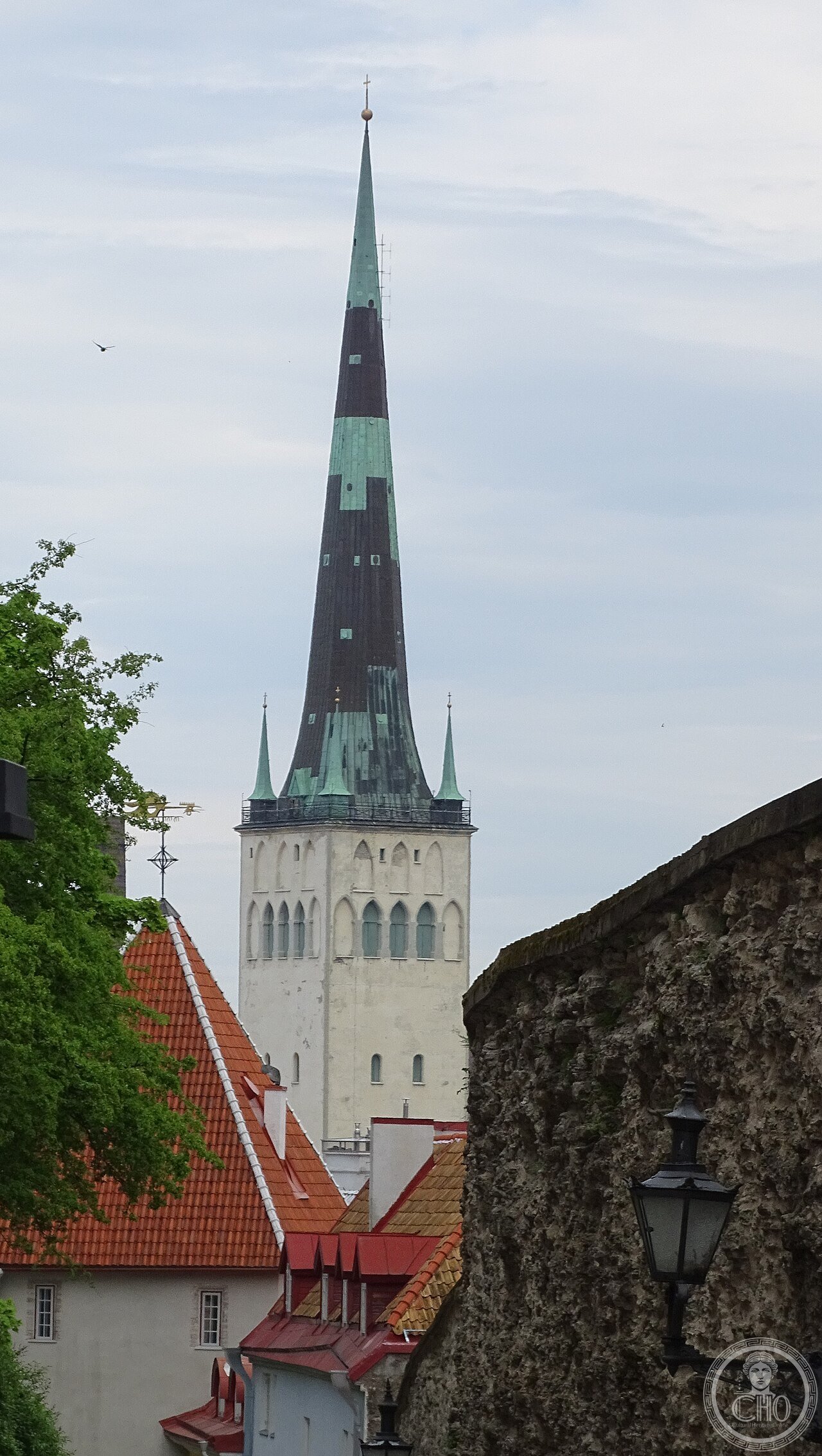
In Tallinn, Estonia, St. Olaf’s Church is first documented in a charter of 1267 by the Danish queen Margaret of Denmark. It is dedicated to Saint Olav II Haraldsson, the canonised Norwegian king and patron saint of seafarers, and for centuries it was the central church of Tallinn’s Scandinavian merchant community, the Norwegian one above all. After a rebuilding datable to about 1549, the spire is reported to have reached some 159 metres. That made it, according to a widely repeated historical tradition that is not entirely verifiable, possibly the tallest structure in the world from 1549 to 1625. Wikipedia itself notes that the figure comes from a period source describing the tower as «84 fathoms», a unit whose exact conversion into metres remains uncertain depending on the standard used. The tower was struck by lightning about ten times in its history. The church burned down completely at least three times. In 1625 the record-height spire was destroyed and the rebuilding dragged on until 1651. In 1820 lightning destroyed the cupola and the turrets, and about two decades of rebuilding followed, which fixed the building at its present height for reasons of stability. Smaller fires, quickly put out, are documented in the seventeenth and eighteenth centuries as well. A well-known local legend tells of a mysterious builder named Olev, said to have raised the spire under a curse: whoever finished it would die. Called by name by the townspeople just as he was setting the last piece, he is said to have fallen to his death in fright, and from his mouth, the story goes, came a toad and a snake, the sign of demonic possession. A carved stone face on the building is popularly identified with him, but this is folklore, not documented history. From 1944 to 1991, during the Soviet occupation of Estonia, the Estonian KGB used the tower as a post for radio surveillance and for jamming foreign broadcasts, Finnish ones in particular, with antennas connected to KGB headquarters in Pagari Street. Some sources suggest that this use may paradoxically have helped to preserve the building. Today the spire reaches about 123-124 metres, lower than its historic peak. The church is used by the Estonian Christian Baptist congregation, and has a public viewing platform at about 60 metres, reached by a narrow spiral staircase.
About St. Olaf’s Church
In Tallinn, Estonia, St. Olaf’s Church is first documented in a 1267 charter by Danish Queen Margaret of Denmark, dedicated to Saint Olaf II Haraldsson, the canonized Norwegian king and patron saint of seafarers, and served for centuries as the central church of Tallinn’s Scandinavian, particularly Norwegian, merchant community. After a rebuild datable to around 1549, the spire reportedly reached about 159 metres, making it, according to a widely repeated but not entirely verifiable historical tradition, possibly the tallest structure in the world from 1549 to 1625; Wikipedia itself notes the figure derives from a period source describing the tower as “84 fathoms,” a unit whose exact conversion to metres remains uncertain depending on which fathom standard was used. The tower was struck by lightning roughly ten times over its history, and the church burned down completely at least three times: in 1625, when the record-height spire was destroyed and reconstruction dragged on until 1651, and in 1820, when lightning destroyed the cupola and turrets, followed by roughly two decades of rebuilding that fixed the structure at its present height for stability; smaller, quickly extinguished fires are also documented across the 17th and 18th centuries. A well-known local legend tells of a mysterious builder named Olev, said to have raised the spire under a curse that whoever finished it would die: called out by name by the townspeople just as he placed the final piece, he fell to his death in fright, and a toad and a snake reportedly emerged from his mouth, symbolizing demonic possession; a carved stone face on the building is popularly identified with him, though this remains folklore, not documented history. From 1944 to 1991, during the Soviet occupation of Estonia, the Estonian KGB used the tower as a radio surveillance and jamming post for foreign broadcasts, particularly Finnish ones, with antennas connected to KGB headquarters on Pagari Street, a use some sources suggest may have paradoxically helped preserve the building. Today the spire reaches roughly 123-124 metres, lower than its historic peak, and the church is used by the Estonian Christian Baptist congregation, with a public viewing platform at around 60 metres reached by a narrow spiral staircase.
Key facts
- 1267: first documentary mention, dedicated to St. Olaf II of Norway.
- 1549-1625: the spire possibly the tallest structure in the world, a widely repeated but unverifiable claim.
- 1625 and 1820: the two best-documented major fires destroying the spire.
- The legend of Olev, the builder said to have fallen to his death upon completion.
- 1944-1991: the tower used by the Soviet KGB as a radio surveillance post.
- Today’s spire, roughly 123-124 metres, houses the Estonian Christian Baptist congregation.
History
Few churches anywhere combine a genuinely disputed claim to having once been the tallest building on Earth with a documented Cold War role as a KGB listening post, but St. Olaf’s holds both distinctions within a single continuous structure. Its repeated destruction by lightning and fire across five centuries, followed each time by rebuilding, mirrors the church’s broader role as a landmark that successive eras of Tallinn’s history — Hanseatic trade, imperial rule, Soviet occupation, and independence — each left their mark on.
What you see
A tall Gothic spire, rebuilt after repeated fires and now standing at roughly 123-124 metres, rises above Tallinn’s Old Town, its narrow spiral staircase leading to a viewing platform at around 60 metres. A carved stone face on the exterior is popularly linked to the legend of Olev, the spire’s ill-fated builder, while the tower’s Soviet-era antenna mounts, now removed, once served a very different purpose.
Practical information
- Opening hours: generally open daily with seasonal variation; admission fee applies for the tower viewing platform; check current hours before visiting.
- Address: Lai tänav 50, Tallinn, Estonia.
Getting there
St. Olaf’s Church stands in Tallinn’s Old Town, easily reached on foot within the historic centre. GPS: 59°26′29″N, 24°44′52″E.
Nearby
- Historic Centre of Tallinn — the surrounding UNESCO World Heritage old town.
- Toompea Hill — the historic hilltop district overlooking the Old Town.
Sources
- Wikipedia — “St. Olaf’s Church, Tallinn” (en.wikipedia.org).
- Visit Tallinn — official tourism site, “St. Olaf’s Church Tower and Observation Platform” (visittallinn.ee).
- Medieval Heritage — “Tallinn – St Olaf’s Church” (medievalheritage.eu).
Find it on the map
See this place and what’s around it →📷 Become a Cultural Heritage Online photographer
Share your photos of places: they stay published under your name as the author. The more they're seen, the more you get noticed — and soon a contest will reward the most appreciated photos.
Log in or sign up free to add a photo