


The confraternity of the Battuti was founded in 1260; its hall burned down in one night in 1485 and was rebuilt by Pietro Lombardo and Mauro Codussi. It is now the entrance to the city hospital — and a museum with its own door on the campo.
At a glance
- Founded
- 1260, as the Scuola dei Battuti, near the vanished church of Santa Croce
- Moved here
- 1437, taking the name of the city’s patron
- Fire
- 31 March 1485
- Rebuilt by
- Pietro Lombardo from 1485; Mauro Codussi and Antonio Rizzo from 1490
- Today
- Museum and historic library, and the main entrance of the Ospedale Civile
- Tickets
- Full €10, reduced €6 (under 26 and over 65)
Overview
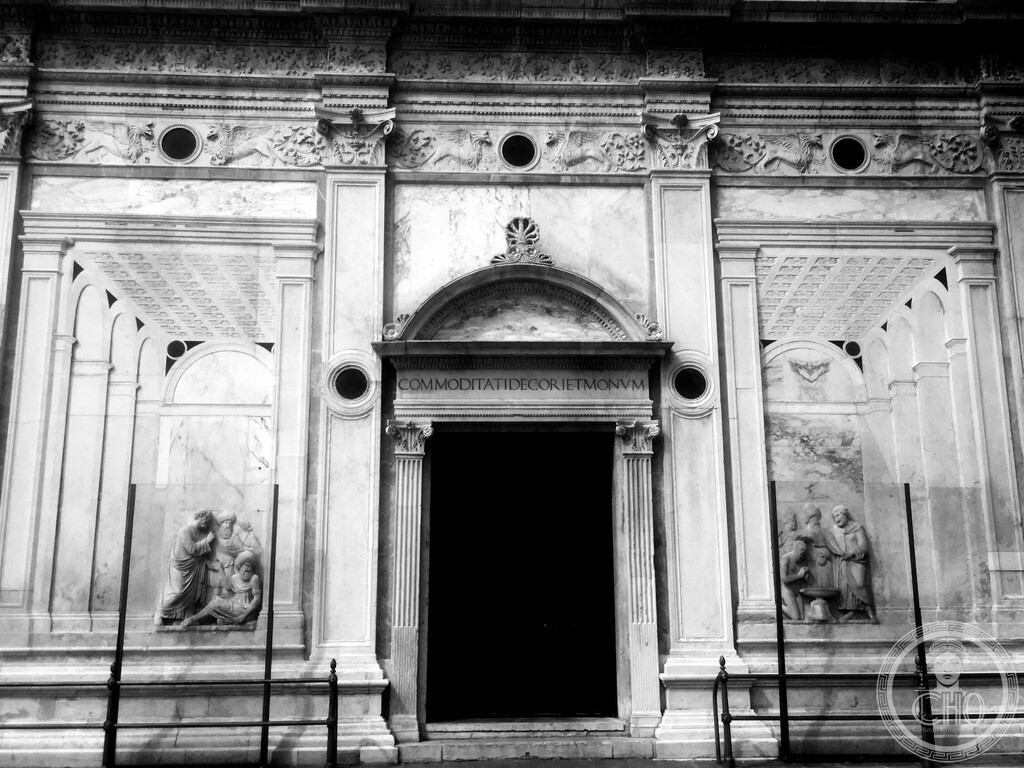
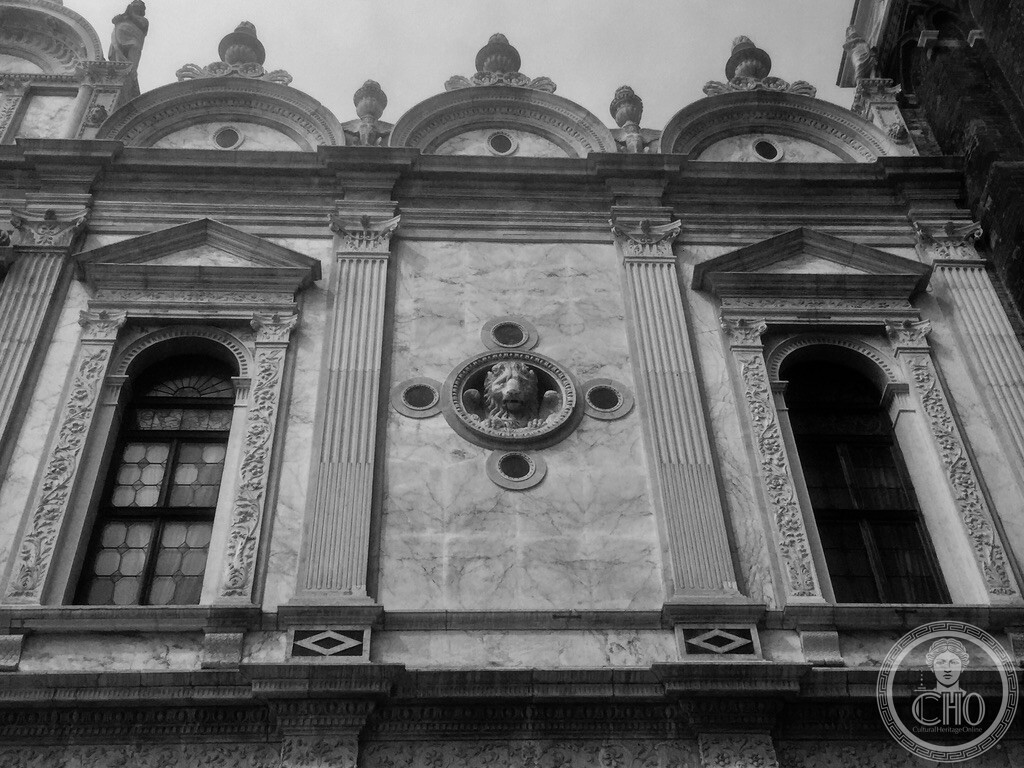
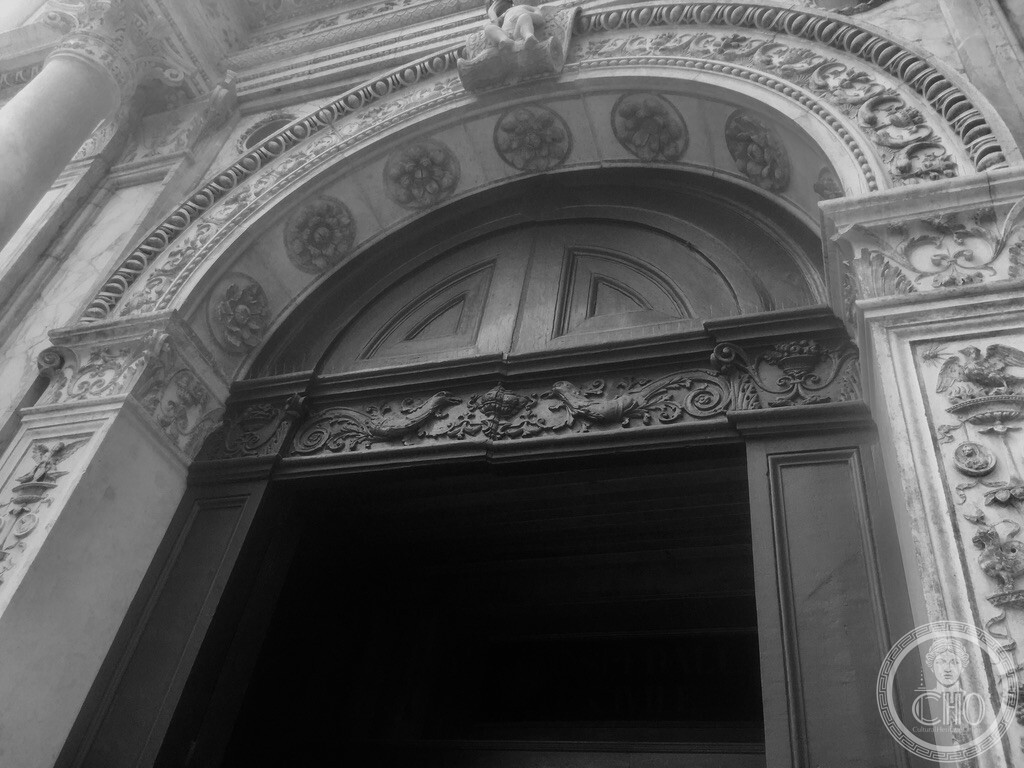
Of the six great confraternities of Venice, this one built the most conspicuous house. It faces Campo Santi Giovanni e Paolo beside the Dominican basilica, and its marble front, with panels cut in false perspective, is one of the set pieces of the early Venetian Renaissance.
Its later fate is unusual and often puts visitors off: since the Napoleonic suppressions the complex has been a hospital, and the Scuola is the door you walk through to reach it. That is not a reason to stay outside. The museum has a dedicated entrance from the campo, and you do not pass through any ward to see it.
History
The Scuola dei Battuti was founded in 1260 with a small meeting room near the church of Santa Croce, since demolished. By 1437 it had grown rich and influential enough to take the name of Saint Mark and to raise, beside the Dominican convent, the most imposing of the Venetian scuole.
On 31 March 1485 someone left candles burning on the altar of the chapter hall. A draught moved a curtain into the flame, and the fire burned all night and levelled the building. Reconstruction began at once under Pietro Lombardo, with Gentile and Giovanni Bellini consulted on the sculptural facing of the facade; in 1490 Lombardo was replaced by Mauro Codussi and Antonio Rizzo. Codussi’s portals and the great staircase date from 1495.
The paintings that once hung in the Sala dell’Albergo — the cycle by Gentile Bellini, Mansueti, Bordon and Palma il Vecchio — were dispersed in the Napoleonic sack and now hang in the Accademia and the Brera. The room shows digital reproductions in their place.
The building is run today by the Fondazione Museo della Scuola Grande di San Marco e della Sanità, constituted at the end of 2023 by the local health authority and the Veneto region.
What you see
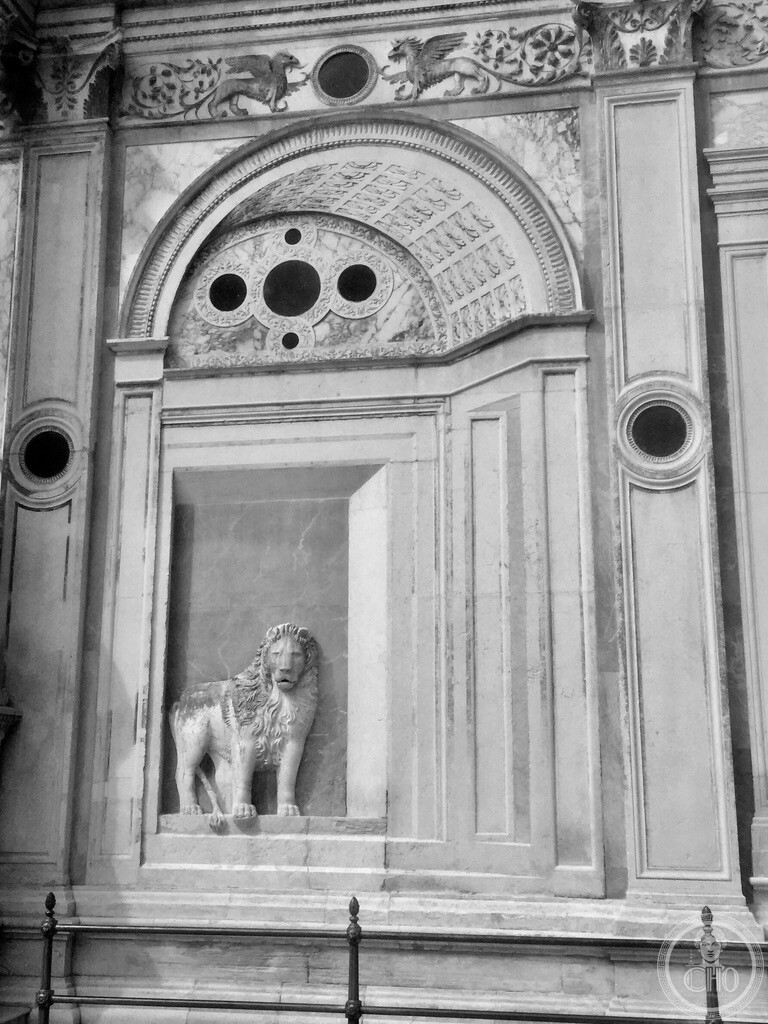
On the facade, the two great perspectival reliefs are by Tullio Lombardo, son of Pietro: they show the healing and the conversion of Anianus, set in a false Alexandrian arcade that appears to recede far behind the marble. The lion panels flanking the main portal are not his: the originals were destroyed in 1797 at the fall of the Republic, and what stands there now are replacements. From the earlier facade there survive Bartolomeo Bon’s Saint Mark with the members of the confraternity and a Charity attributed to Nicolò di Pietro Lamberti.
Inside, the Sala Capitolare keeps the carved and gilded ceiling commissioned in 1495 from Pietro and Biagio da Faenza, with Palma il Giovane’s Christ in glory with Saints Mark, Peter and Paul of 1614 still in place as its altarpiece, four canvases on the legend of Saint Mark by Domenico Tintoretto, a Crucifixion by Alvise Donato and a Wedding at Cana by Padovanino.
Practical information
- Museum and Biblioteca dell’Impossibile: dedicated entrance at Campo Santi Giovanni e Paolo 6777, Tuesday to Saturday 10:00–18:00, and the first Sunday of each month.
- Tickets: full €10, reduced €6 for under 26 and over 65, through Venezia Unica.
- Historic pharmacy and the Andrea Vesalio museum of pathological anatomy: Monday, Wednesday and Friday 10:00–18:00.
- Library of the history of medicine: Monday to Friday 10:00–16:00, by reservation, with more than 13,000 volumes, two incunabula and 267 sixteenth-century editions.
- Guided visits by booking at least 24 hours ahead; on Thursday mornings the tour is given in Venetian.
Nearby
- Basilica dei Santi Giovanni e Paolo — 36 m away, next door.
- El Magazen, risto-bacaro — Bar, 30 m away.
- Palazzo Widmann Rezzonico Foscari — 63 m away.
- Teatro Malibran — 121 m away.
Sources
- Scuola Grande di San Marco, official history and visiting pages — scuolagrandesanmarco.it.
- Venezia Unica, official ticketing of the Comune di Venezia, for admission prices.
- Fondazione Museo della Scuola Grande di San Marco e della Sanità, constituted 29 December 2023 by ULSS 3 Serenissima and Regione Veneto.
Photo gallery
Photograph contributed by a Cultural Heritage Online member.
See the place
Find it on the map
See this place and what’s around it →
📷 Become a Cultural Heritage Online photographer
Share your photos of places: they stay published under your name as the author. The more they're seen, the more you get noticed — and soon a contest will reward the most appreciated photos.
Log in or sign up free to add a photo