
On the south-western coast of the peninsula of Mount Athos, in Greece, the monastery of Docheiariou was founded between the end of the 10th and the beginning of the 11th century by the monk Euthymios. He served the community as its cellarer, docheiaris in Greek, which gave the monastery its name. After the first pirate raids the community moved to the present coastal site around 1046. Docheiariou ranks tenth in the hierarchy of the twenty ruling monasteries of Mount Athos. Its most celebrated treasure is the miracle-working icon of the Virgin known as «Gorgoepikoos», «She Who Is Quick to Hear». According to the legend, a monk who repeatedly walked past the icon carrying a smoking torch, ignoring a warning that came from the image itself, was struck blind after disobeying a second time. On the third occasion the voice of the icon restored his sight, declaring «from now on my name is Gorgoepikoos». The icon is also credited with healing illness and with finding lost objects. The katholikon, dedicated to the Archangels Michael and Gabriel, preserves wall paintings attributed to the Cretan painter Tzortzis, dated to 1568. Since 1988 the monastery has formed part of the UNESCO World Heritage Site of Mount Athos.
About Docheiariou Monastery
Docheiariou Monastery, on the southwestern coast of the Mount Athos peninsula in Greece, was founded in the late 10th or early 11th century by the monk Euthymios, who served the community as its docheiaris, or cellarer, giving the monastery its name; following early pirate raids, the community relocated to its present coastal site around 1046. Docheiariou ranks tenth in the hierarchy of Mount Athos’s twenty ruling monasteries. Its most celebrated treasure is the miracle-working icon of the Virgin known as “Gorgoepikoos,” meaning “She Who Is Quick to Hear”: according to tradition, a monk repeatedly passed the icon carrying a smoking torch despite hearing a warning voice from the image itself, and after disobeying a second time was struck blind; on a third encounter, the icon’s voice restored his sight and declared, “from now on my name is Gorgoepikoos.” The icon is also credited with healing illness and revealing the location of lost objects, and remains a focus of pilgrim devotion at the monastery today. The katholikon, dedicated to the Archangels Michael and Gabriel, preserves wall paintings attributed to the Cretan painter Tzortzis, dated to 1568. Since 1988, Docheiariou has formed part of the UNESCO World Heritage Site “Mount Athos.”
Key facts
- Late 10th-early 11th century: founding by the monk Euthymios, cellarer of the community.
- c. 1046: relocation to the present coastal site after pirate raids.
- 10th in the hierarchy of Mount Athos’s twenty ruling monasteries.
- Gorgoepikoos icon: the miracle-working Virgin icon central to the monastery’s identity.
- 1568: katholikon frescoes attributed to the Cretan painter Tzortzis.
- 1988: becomes part of the UNESCO World Heritage Site “Mount Athos”
History
Docheiariou’s relocation to its present coastal site following early pirate attacks reflects a pattern common to several Mount Athos monasteries, whose vulnerable early foundations often had to be reestablished on more defensible or practical ground. The enduring devotion surrounding the Gorgoepikoos icon, still central to the monastery’s identity today, illustrates how individual miracle traditions could come to define an entire Athonite community’s spiritual reputation across the centuries.
What you see
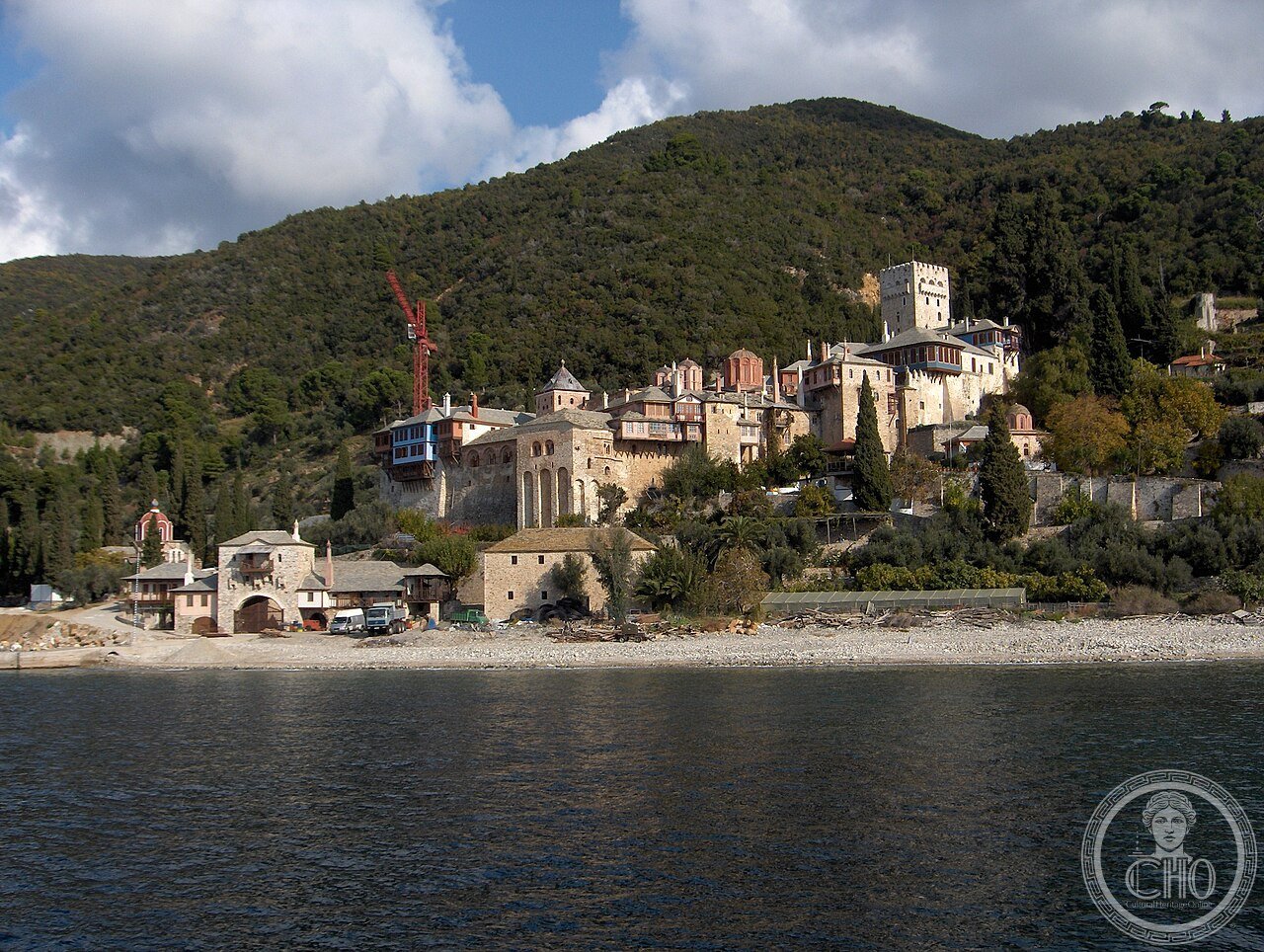
The monastery’s fortified walls rise directly above the coastline, enclosing the katholikon dedicated to the Archangels Michael and Gabriel, its interior covered with 1568 frescoes attributed to the Cretan painter Tzortzis. The Gorgoepikoos icon, housed within the church, remains the focal point for visiting pilgrims, its story recounted to every visitor who venerates it.
Practical information
- Access: Mount Athos requires a special entry permit (diamonitirion); open only to men, following traditional Athonite restrictions; the Julian calendar is observed.
- Address: Mount Athos peninsula, Chalkidiki, Greece.
Getting there
Docheiariou Monastery lies on the southwestern coast of the Mount Athos peninsula, reachable by boat along the coastline from Daphni, the peninsula’s port. GPS: 40.2664° N, 24.1733° E.
Nearby
- Xenophontos Monastery — another Athonite monastery along the same coastline.
- Daphni — the port serving Mount Athos, reachable by boat.
- Karyes — the administrative capital of Mount Athos, inland.
Sources
- Wikipedia — “Dochiariou monastery” (en.wikipedia.org).
- OrthodoxWiki — “Dochiariou Monastery (Athos)” (orthodoxwiki.org).
- UNESCO World Heritage Centre — “Mount Athos” (whc.unesco.org).
Find it on the map
See this place and what’s around it →📷 Become a Cultural Heritage Online photographer
Share your photos of places: they stay published under your name as the author. The more they're seen, the more you get noticed — and soon a contest will reward the most appreciated photos.
Log in or sign up free to add a photo