
Nel 1534, il conquistador Hernán Cortés consegnò alcuni semi di cacao a fra Jerónimo de Aguilar, che li inviò all’abate del Monasterio de Piedra insieme a una ricetta per preparare una bevanda a base di cacao, zucchero, cannella e vaniglia. I monaci, entusiasti, presero l’abitudine di berla anche durante i digiuni liturgici, sostenendo che non essendo menzionata nell’Antico Testamento non violasse le regole del digiuno: fu così che questo monastero divenne, secondo la tradizione, il primo luogo in Europa dove si preparò e si bevve cioccolata.
About Monasterio de Piedra
Monasterio de Piedra — literally “the Stone Monastery” — was founded in 1194, when King Alfonso II of Aragon donated a former castle and its surrounding land, previously a Muslim defensive stronghold dating to the era of the Caliphate of Córdoba (929-1031), to thirteen Cistercian monks. The monastery’s church was consecrated in 1218, and the complex went on to develop Gothic-Baroque cloisters, a chapter house, kitchen, refectory, and the fortified Torre del Homenaje inherited from the site’s earlier military use. According to a well-documented tradition, in 1534 the conquistador Hernán Cortés gave a quantity of cacao beans to Jerónimo de Aguilar, a friar accompanying him in Mexico; Aguilar sent the beans back to the abbot of Monasterio de Piedra, together with a recipe for preparing a hot drink from cacao mixed with sugar, cinnamon, and vanilla. The monks embraced the new beverage enthusiastically, even during periods of liturgical fasting, reasoning that since chocolate was not mentioned anywhere in the Old Testament, drinking it did not technically break their fast — making Monasterio de Piedra, by this account, the first place in Europe where chocolate was prepared and consumed, well before its wider adoption across the continent. The monastery, 28 kilometres southwest of Calatayud in the province of Zaragoza, was closed by Spanish government order during the ecclesiastical disentailment of the 1830s. Its extensive grounds, crossed by streams, caves, and a series of dramatic waterfalls, were subsequently converted by private owners into a landscaped natural park, and the complex today combines the historic monastic buildings — including an exhibition on the monastery’s chocolate history housed in the monks’ old kitchen — with a hotel, spa, and restaurants set within the surrounding parkland.
Key facts
- 1194: founded when King Alfonso II of Aragon donates a former Muslim castle to 13 Cistercian monks
- 1218: monastery church consecrated
- 1534: Hernán Cortés’s cacao and recipe, sent via friar Jerónimo de Aguilar, reportedly produce Europe’s first chocolate drink here
- 1830s: monastery closed by Spanish government order during ecclesiastical disentailment
- Later 19th-20th century: grounds converted into a landscaped park with waterfalls, caves, and streams
- Today: combines historic monastery buildings, a chocolate history exhibition, hotel, spa, and restaurants
History
The tradition crediting Monasterio de Piedra as the site of Europe’s first prepared chocolate drink, arriving via a direct chain from Hernán Cortés’s own conquest of Mexico through a specific named friar, gives this Cistercian monastery an outsized claim within the global history of one of the New World’s most consequential culinary exports — a claim the monastery itself has formalised through the dedicated exhibition now housed in its historic kitchen. The monks’ own theological justification for drinking chocolate during fasts, reasoning from its absence in the Old Testament, reflects a genuinely creative example of medieval and early modern monastic communities adapting doctrinal interpretation to accommodate genuinely novel foreign substances entering Europe for the first time.
The monastery’s transformation, following its 1830s closure, from an active Cistercian community into a privately developed natural park built around its dramatic waterfalls and caves represents an unusually successful adaptive reuse among Spain’s many disentailed monastic properties — few former monasteries anywhere in Europe combine surviving Gothic-Baroque cloisters with a functioning modern hotel and landscaped park in quite the same integrated way.
What you see
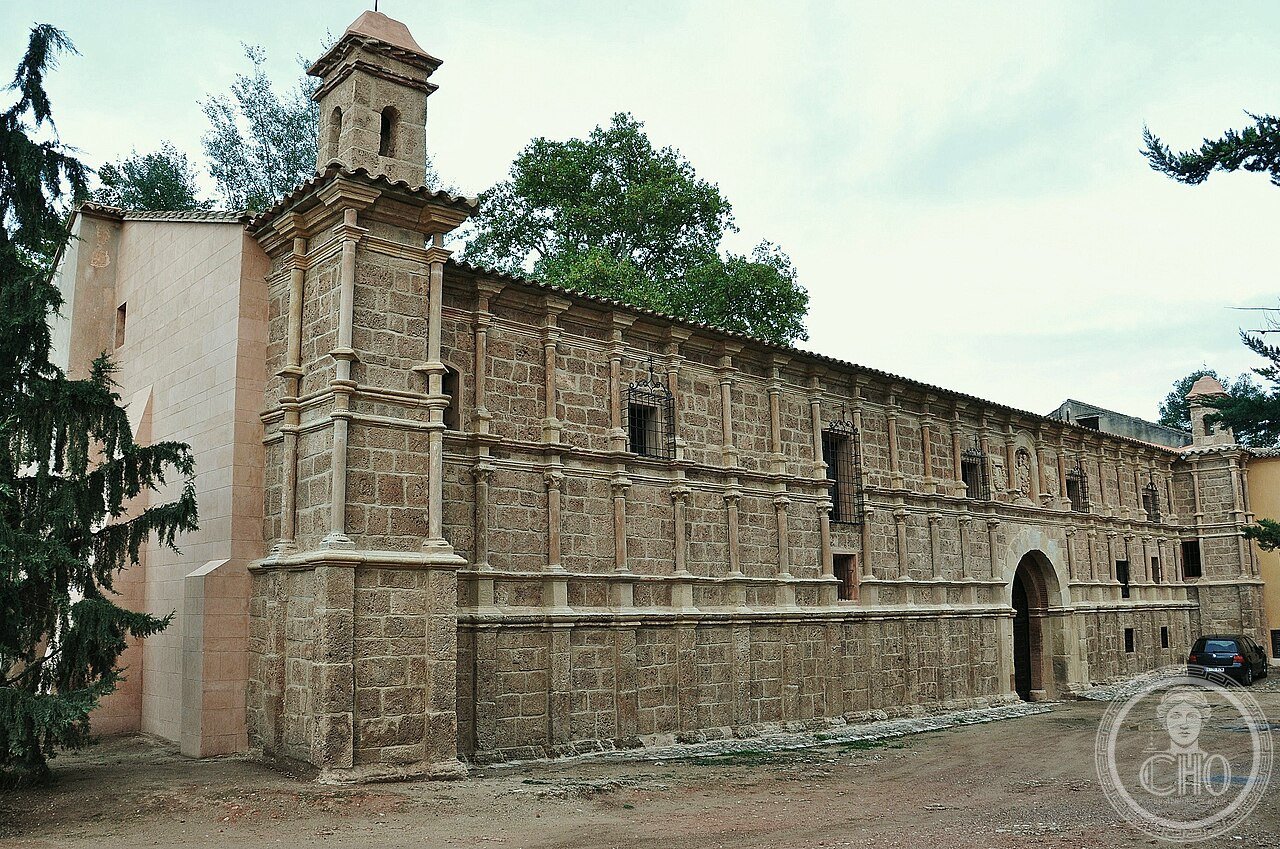
The monastic complex preserves Gothic-Baroque cloisters, a chapter house, kitchen, refectory, and the fortified Torre del Homenaje, a legacy of the site’s earlier use as a Muslim defensive stronghold. The former kitchen now houses an exhibition documenting the monastery’s chocolate history. Beyond the historic buildings, the surrounding parkland — crossed by streams, caves, and numerous waterfalls — forms one of the most visited natural landscapes in Aragón, integrated today with a hotel, spa, and restaurants occupying parts of the former monastic grounds.
Practical information
- Opening hours: generally open daily with seasonal variation; check current hours before visiting; admission fee applies
- Address: Plaza San Martín, Monasterio de Piedra, 50210 Nuévalos, Zaragoza, Spain
Getting there
Monasterio de Piedra is reachable by car from Calatayud (approximately 30 minutes) in the province of Zaragoza, Aragón. GPS: 41.1933° N, -1.7823° E.
Nearby
- Nuévalos — the nearby town where the monastery is located
- Calatayud — approximately 30 minutes away; historic town with its own Mudéjar heritage
- Sistema Ibérico — the mountain range surrounding the monastery’s park
Sources
- Wikipedia — “Monasterio de Piedra” (en.wikipedia.org)
- Monasterio de Piedra — official site, “800 Years of History” (monasteriopiedra.com)
- NZ Herald — “Monasterio de Piedra: The Spanish monastery where the world’s chocolate love began” (nzherald.co.nz)
Find it on the map
See this place and what’s around it →📷 Become a Cultural Heritage Online photographer
Share your photos of places: they stay published under your name as the author. The more they're seen, the more you get noticed — and soon a contest will reward the most appreciated photos.
Log in or sign up free to add a photo