

Expelled from France by the anticlerical laws of 1905, the monks left Fontgombault empty for more than forty years. The buildings served first as a button factory, then as a military hospital during the First World War, and finally as a diocesan seminary. Only in 1948 did twenty-two monks from Solesmes refound the Benedictine community, which today numbers more than a hundred and is the largest of all the Solesmes foundations.
About Fontgombault Abbey
Fontgombault Abbey (Abbaye Notre-Dame de Fontgombault) was founded in 1091 by Pierre de l’Étoile, a hermit who settled with companions on the right bank of the Creuse river, near the spring or “fount” of Gombaud from which the abbey takes its name. Pierre began construction of the abbey church but died of ergotism in 1114, only a few years into the project. Despite his early death, the abbey flourished across the 12th and 13th centuries, founding around twenty priories and becoming one of the most influential Benedictine houses in the Berry region. Its fortunes turned sharply in 1569, when Calvinist forces sacked and laid waste to the abbey during the Wars of Religion; restoration was not completed until the late 17th century, under Dom Andrieu. By 1741 the Benedictine community had shrunk to just five monks, and the abbey was handed to the Lazarists, who converted it into a seminary. In 1849 the Trappists purchased the property, redeveloping the surrounding agricultural land and establishing a kirsch distillery, before French anticlerical laws expelled the community again in 1905. The empty buildings were then repurposed as a button factory, then as a military hospital during the First World War (1914-1918), and finally as a diocesan seminary from 1919 to 1948. In 1948, twenty-two monks from Solesmes Abbey resettled the site, refounding it as a Benedictine community that has since grown to more than a hundred monks — the most populous of all Solesmes’ foundations — and has itself established daughter houses at Randol Abbey (1971), Triors Abbey (1984), Gaussan Priory (1994), and Clear Creek Abbey in the United States (1999). The community today celebrates Mass according to the pre-Vatican II Tridentine rite and is internationally known for its recordings of Gregorian chant.
Key facts
- Foundation: 1091, by the hermit Pierre de l’Étoile, who died of ergotism in 1114 during construction
- 12th-13th centuries: the abbey founded around twenty priories across the Berry region
- 1569: sacked and laid waste by Calvinist forces during the Wars of Religion
- 1741-1849: reduced to five monks, then run successively by Lazarists and Trappists
- 1905-1948: monks expelled; building used as a button factory, WWI military hospital, then diocesan seminary
- 1948: refounded by 22 monks from Solesmes Abbey; today over 100 monks, the largest Solesmes foundation
- Architecture: Romanesque abbey church, Poitevin style, with ambulatory and five radiating chapels
History
Fontgombault’s four-decade absence of monastic life between 1905 and 1948 — during which its Romanesque church and conventual buildings served in turn as a button factory, a military hospital, and a diocesan seminary — makes the abbey a striking case study in how consecrated monastic architecture can survive long periods of profane secular use without losing its capacity to be reactivated for its original purpose. The scale of the 1948 refoundation, with twenty-two monks from Solesmes settling the site at once and the community subsequently growing to become the largest of all Solesmes’ daughter houses, reflects the broader 20th-century revival of traditional Benedictine monasticism in France following the disruptions of the anticlerical laws of the early 1900s.
The abbey’s role as the mother house for four further monastic foundations — Randol, Triors, Gaussan, and Clear Creek in the United States — situates Fontgombault as a genuine centre of ongoing Benedictine expansion in the 20th and early 21st centuries, extending its influence across two continents from a single Romanesque church on the banks of the Creuse.
What you see
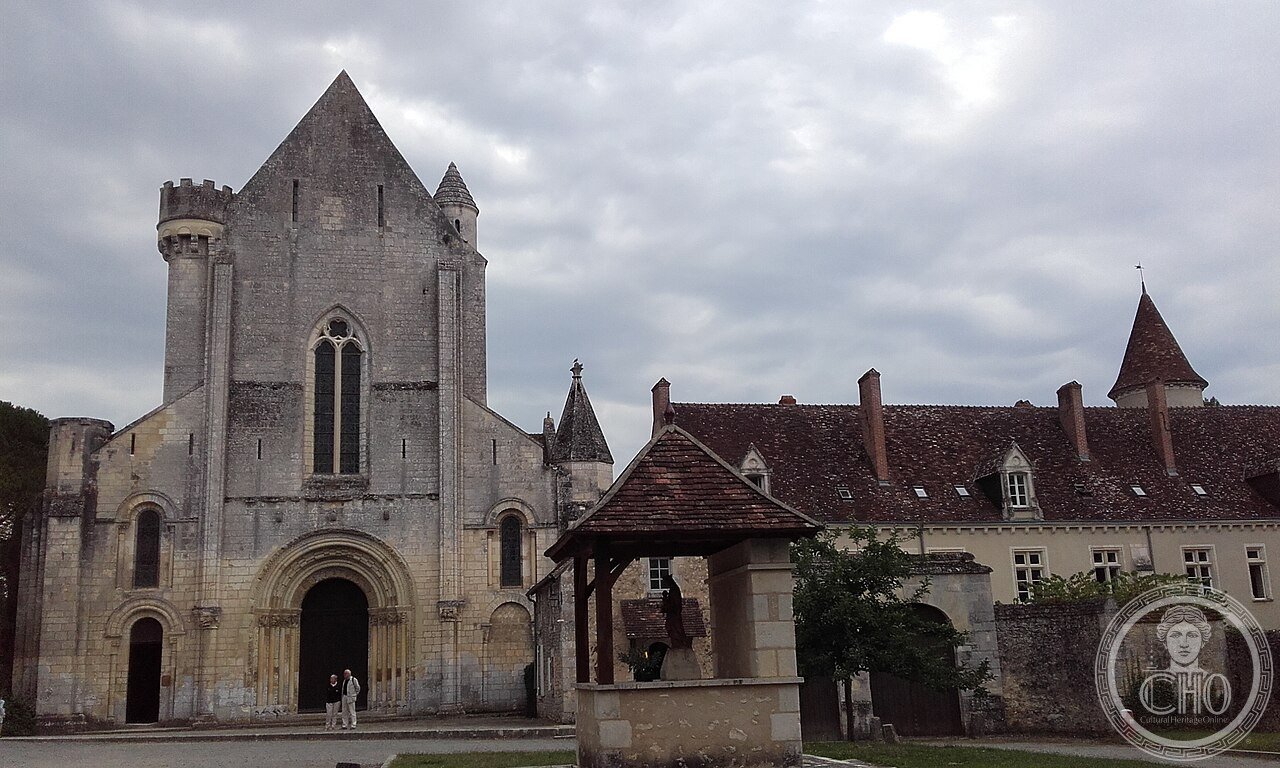
The abbey church follows a Latin cross plan oriented to the southeast, with its choir set slightly off-axis. Built using the most advanced techniques of 12th-century construction — comparable to those employed at the great Cluny church built under Saint Hugh — the design combines the “Benedictine plan,” adding supplementary bays before the apsidioles grafted onto the transept arms, with a layout typical of pilgrimage churches, including an ambulatory and five radiating apsidal chapels around a double-aisled choir. The original western facade survives, its rounded portal framed by four rows of archivolts but, in keeping with Poitevin Romanesque tradition, lacking a sculpted tympanum. The overall sculptural decoration remains deliberately austere, reflecting the “new monasticism” ideals of simplicity even as the building’s engineering anticipates the Gothic passion for light.
Practical information
- Opening hours: the church is generally open daily for visitors respecting monastic silence; check current hours before visiting
- Address: Abbaye Notre-Dame de Fontgombault, 36220 Fontgombault, France
Getting there
Fontgombault is reachable by car from Poitiers or Châteauroux (both approximately 50 minutes) in the Indre department, Centre-Val de Loire, on the banks of the Creuse river. GPS: 46.6763° N, 0.9797° E.
Nearby
- Parc naturel régional de la Brenne — the nearby regional nature park, known for its ponds originally developed by the abbey’s own abbots
- Angles-sur-l’Anglin — a nearby historic village along the Anglin river
- Le Blanc — the closest town, on the Creuse river
Sources
- Wikipedia — “Fontgombault Abbey” (en.wikipedia.org)
- Wikipédia — “Abbaye Notre-Dame de Fontgombault” (fr.wikipedia.org)
- Abbaye de Fontgombault — official site, “L’église abbatiale” (abbaye-fontgombault.fr)
Find it on the map
See this place and what’s around it →📷 Become a Cultural Heritage Online photographer
Share your photos of places: they stay published under your name as the author. The more they're seen, the more you get noticed — and soon a contest will reward the most appreciated photos.
Log in or sign up free to add a photo