
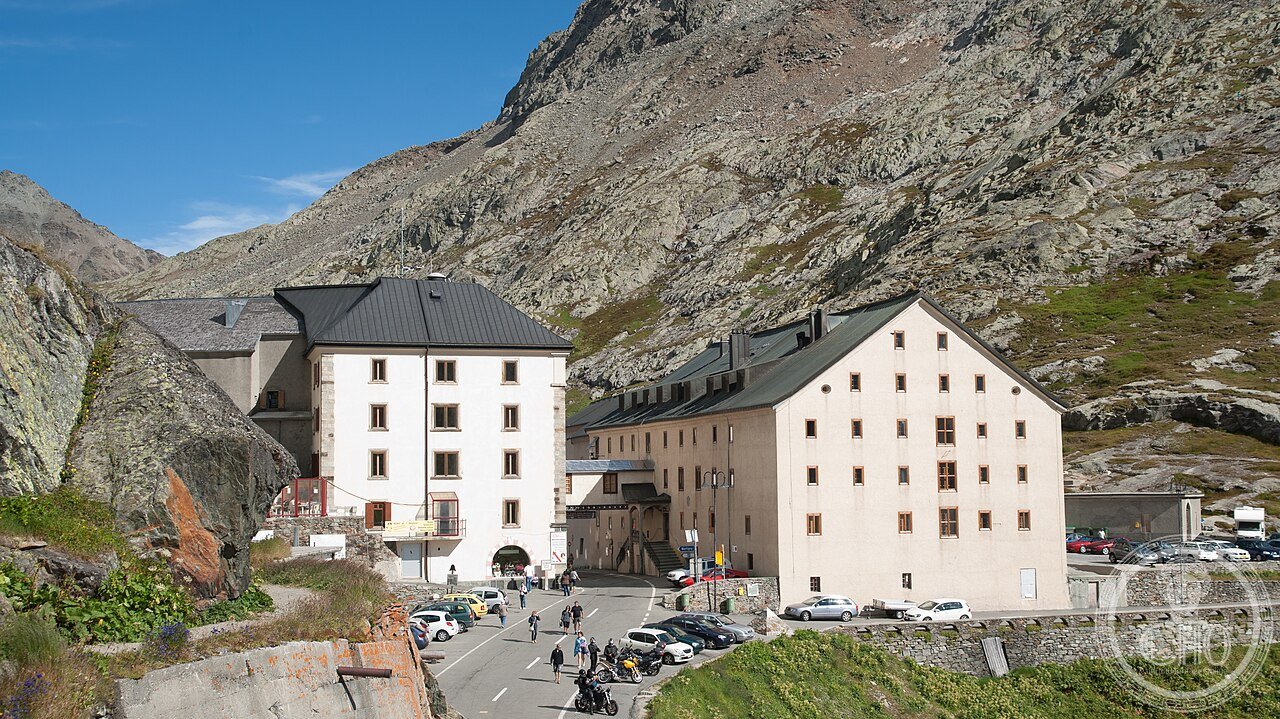
Intorno al 1050, l’arcidiacono Bernardo di Mentone fondò l’ospizio sul valico per mettere fine alle rapine ai danni dei viaggiatori terrorizzati che lo attraversavano. Dagli anni 1660-1670, i canonici incrociarono i cani offerti dalle famiglie vallesane, dando origine alla razza San Bernardo: nell’arco di quasi due secoli, questi cani salvarono circa duemila persone, dai bambini smarriti ai soldati di Napoleone.
About Great St Bernard Hospice
Around 1050, Bernard of Menthon, archdeacon of Aosta, founded the hospice at what would become the Great St Bernard Pass, originally dedicated to St Nicholas, specifically to put an end to the mountain brigandage that regularly terrorised travellers crossing this dangerous Alpine route between Italy and Switzerland. The hostel has been continuously operated by a community of canons regular since its founding, making it one of the highest inhabited year-round sites in the Alps. The hospice’s most celebrated legacy is the St Bernard dog breed, developed there through cross-breeding — probably involving dogs offered by Valais families during the 1660s and 1670s — originally raised simply as guard dogs before becoming the pass’s legendary mountain rescue animals from the early 18th century onward. The monks, known as marroniers, discovered the dogs’ extraordinary sense of smell and their ability to locate people buried deep in snow, sending them out in pairs or small packs to search for lost or injured travellers; a dog finding a buried traveller would dig through the snow and lie atop the victim to provide warmth while a companion animal returned to alert the monks. Over nearly two centuries, roughly 2,000 people — from lost children to stranded soldiers from Napoleon’s army — owed their survival to the dogs’ uncanny direction-finding ability and remarkable cold resistance. The last recorded rescue by one of the hospice’s dogs came in 1955; as late as 2004, eighteen St Bernards were still kept there for sentimental and traditional reasons before the breeding programme was transferred to the Barry Foundation in Martigny.
Key facts
- Foundation: c. 1050, by Bernard of Menthon, archdeacon of Aosta, originally dedicated to St Nicholas
- Purpose: to end brigandage against travellers crossing the Alpine pass
- Community: continuously operated by canons regular since its founding
- St Bernard dog breed: developed at the hospice from the 1660s-1670s; guard dogs that became mountain rescue animals from the early 18th century
- Rescue record: roughly 2,000 people saved over nearly two centuries, including Napoleon’s stranded soldiers
- Last rescue: 1955; dogs kept at the hospice until 2004, when breeding transferred to the Barry Foundation, Martigny
History
Bernard of Menthon’s mid-11th-century decision to found a hospice specifically to counter organised brigandage against Alpine travellers reflects the genuinely dangerous, lawless conditions that could prevail on major medieval trans-Alpine trade and pilgrimage routes before institutional religious or secular authorities established reliable protection — the Great St Bernard Pass’s status as one of the most direct routes between Italy and the rest of Western Europe made it a particularly attractive target for robbers preying on merchants and pilgrims alike. The eventual development of the St Bernard dog breed from the hospice’s guard dogs into internationally celebrated rescue animals represents a genuinely rare case of a working animal breed’s specific practical function — cold resistance, scent-tracking ability, and calm temperament under extreme conditions — becoming so renowned that the breed itself took its common name directly from the specific institution that developed it.
The documented rescue of stranded soldiers from Napoleon’s army, whose famous 1800 crossing of the Great St Bernard Pass en route to the Italian campaign remains one of the most celebrated logistical feats of the Napoleonic Wars, situates the hospice and its dogs within a genuinely significant moment of European military history, the monks’ hospitality and rescue operations providing critical support to a military operation whose success depended heavily on safely moving thousands of soldiers through one of the Alps’ most hazardous passes. The eventual 2004 transfer of the breeding programme to the Barry Foundation, named after the most famous individual St Bernard rescue dog in the breed’s history, reflects the continuing institutional effort to preserve and formalise the breed’s heritage even after its practical rescue function had been superseded by modern mountain rescue technology.
What you see
The hospice building itself, standing at 2,469 metres and continuously operated for nearly a millennium, offers visitors a rare opportunity to experience one of the highest year-round inhabited religious institutions in the Alps. The site’s historic association with the St Bernard dog breed, though the animals themselves have since relocated to the Barry Foundation in Martigny, remains a central part of any visit. The pass itself, with its dramatic Alpine scenery and historical significance as a major trans-Alpine route since antiquity, rewards visitors regardless of season.
Practical information
- Opening hours: the pass road is typically closed in winter (approximately November to May); the hospice itself offers accommodation and is accessible via the road tunnel year-round
- Address: Col du Gd-St-Bernard 2, 1946 Bourg-Saint-Pierre, Switzerland
Getting there
The Great St Bernard Pass is reachable by road from Martigny, Switzerland (summer only) or year-round via the Great St Bernard Tunnel connecting to Aosta, Italy. GPS: 45.8688° N, 7.1705° E.
Nearby
- Barry Foundation, Martigny — where the St Bernard dogs are now bred and can be visited
- Aosta, Italy — on the Italian side of the pass, reachable via the road tunnel
- Martigny, Switzerland — the Swiss valley town at the base of the pass road
Sources
- Wikipedia — “Great St Bernard Hospice” (en.wikipedia.org)
- Smithsonian Magazine — “A Brief History of the St. Bernard Rescue Dog” (smithsonianmag.com)
- House of Switzerland — “The St Bernard: the making of an Alpine legend” (houseofswitzerland.org)
Find it on the map
See this place and what’s around it →📷 Become a Cultural Heritage Online photographer
Share your photos of places: they stay published under your name as the author. The more they're seen, the more you get noticed — and soon a contest will reward the most appreciated photos.
Log in or sign up free to add a photo