
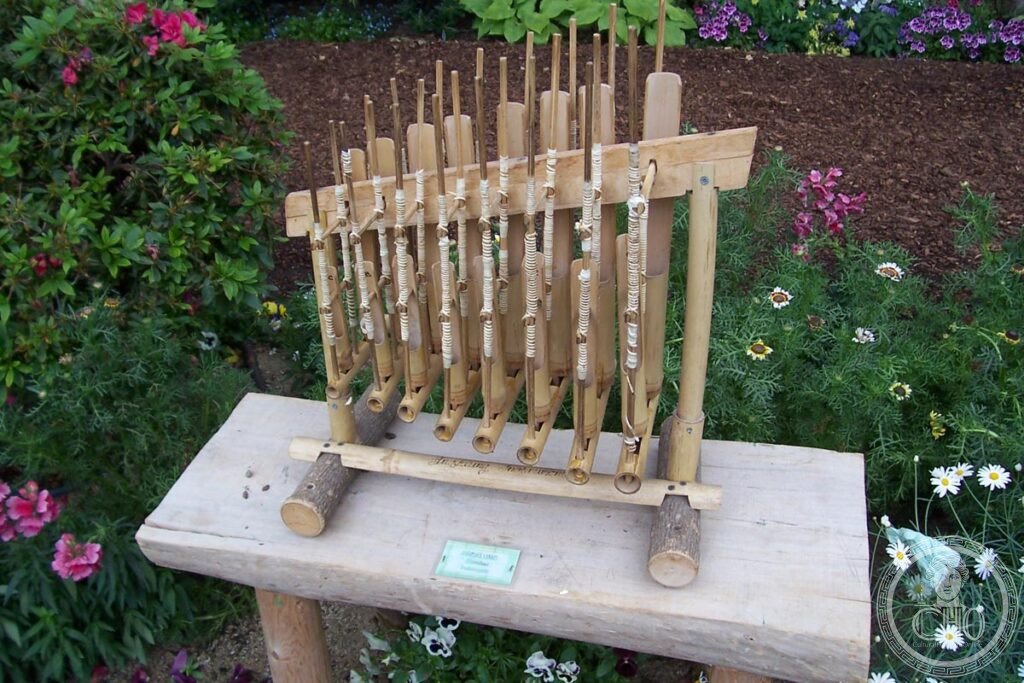
A Sundanese bamboo instrument played in ensembles where each performer sounds a single pitch to create melody through collective timing and coordination.
At a glance
The angklung is a tuned percussion instrument consisting of bamboo tubes fastened to a bamboo frame. Held in one hand and shaken with the other, it produces a resonant pitch—typically one note per performer. An angklung ensemble creates complete melodies through synchronized ensemble playing, with each musician contributing their assigned pitch at precise moments. The practice embodies Sundanese values of cooperation and social harmony.
Origins & history
The angklung originated in what is now West Java and Banten provinces, where the Sundanese people have played it for many centuries. The instrument and its music have become integral to Sundanese cultural identity. In 2010, UNESCO recognized the angklung as part of the cultural heritage of humanity, urging Indonesia to protect the practice and support its craftspeople.
The practice
Each angklung consists of bamboo tubes carved to produce a resonant pitch and tuned to octaves, similar in principle to Western handbells. A performer grips the bamboo frame at its base with one hand, then shakes the entire instrument with the other, causing the tubes to strike in rhythm and produce a repeating note.
In ensemble performance, individual musicians stand ready with their assigned angklung, each responsible for one or two pitches. The ensemble sound emerges not from soloists but from disciplined collective timing—each player strikes their note at the exact moment required to build a complete melody. This musical texture depends utterly on attention, respect, and coordination among performers.
Cultural significance
Playing the angklung as an orchestra is believed to promote teamwork, mutual respect, and social harmony—values central to Sundanese life. The practice links individual agency (one pitch, one voice) to collective purpose (a complete song), making it both a musical and a social act.
Key facts
- Instrument type: tuned bamboo percussion
- Anchor community: Bandung, West Java, Indonesia
- UNESCO Intangible Cultural Heritage: 2010 (reference 00393)
- Playing method: one performer per pitch; ensemble coordination required
Where to experience it
Bandung and the Sundanese heartland of West Java remain the living center of angklung practice. The instrument continues to be played, crafted, and transmitted within Sundanese communities. For current performance schedules and venues, consult local cultural organizations in Bandung.
Sources & resources
- Angklung — Wikipedia
- Indonesian Angklung — UNESCO Intangible Cultural Heritage
- Cultural Heritage Online
Find it on the map
See this place and what’s around it →📷 Become a Cultural Heritage Online photographer
Share your photos of places: they stay published under your name as the author. The more they're seen, the more you get noticed — and soon a contest will reward the most appreciated photos.
Log in or sign up free to add a photo