
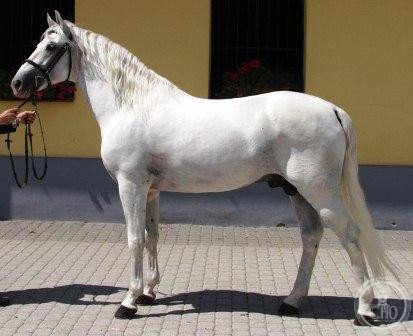
A Habsburg tradition of selective breeding and classical horsemanship, sustained across eight European nations for nearly five centuries, the Lipizzan represents the living art of haute école dressage and the resilience of cultural practice through war and displacement.
At a glance
Lipizzan horse breeding is the collective knowledge, skill, and selective practice of raising and training a distinctive European riding horse. Developed in the sixteenth century across the Habsburg territories, it unites breeders, trainers, and riders across Slovenia, Austria, Bosnia and Herzegovina, Croatia, Hungary, Italy, Romania, and Slovakia. The practice encompasses centuries-old methods of classical dressage, passed down through families and state studs, culminating in the celebrated haute école performances of the Spanish Riding School in Vienna.
Origins & history
The breed emerged in the sixteenth century within the Habsburg Empire, taking its name from the village of Lipica (now in Slovenia), where one of the earliest stud farms was established and remains active today. Eight stallions, foaled in the late eighteenth and early nineteenth centuries, became the recognized foundation bloodstock; all modern Lipizzans trace their lineage to these eight sires, whose names are preserved in every breeding stallion that follows.
The tradition survived multiple catastrophes. Wars of the First Coalition, World War I, and World War II threatened the breed’s survival; the Allied rescue of Lipizzans during World War II entered popular memory through the Disney film Miracle of the White Stallions. Recovery and continuation have made this one of Europe’s most resilient cultural practices.
The practice
Lipizzan breeding combines rigorous selection for conformation with classical training methods developed over centuries. Breeders assess bloodlines, coat color (typically gray), muscular structure, and temperament—the horses mature slowly and live exceptionally long lives, allowing trainers years to develop their talents.
At the Spanish Riding School of Vienna and other training centers, riders guide stallions through haute école or “high school” movements: highly controlled, stylized dressage including the celebrated “airs above the ground”—leaps and elevated gaits that demand extraordinary strength, balance, and obedience. These performances are the visible expression of an invisible inheritance: knowledge encoded in position, pressure, rhythm, and the rider’s subtle communication with the horse. Training follows traditional methods unchanged in their fundamentals for centuries.
Cultural significance
Lipizzan breeding embodies the European tradition of horsemanship as both practical skill and artistic discipline. The practice has remained a vehicle for transmitting cultural identity across generations and borders—even during occupation and war, breeders and trainers maintained the bloodlines and the classical methods, ensuring that knowledge itself survived.
The breed’s association with imperial Vienna and the Spanish Riding School has made it a symbol of aristocratic refinement; yet the practice itself is democratic in scope, maintained by state studs, private breeders, and riding academies across nine countries. Every Lipizzan carries history in its bloodline.
Key facts
- Developed in the sixteenth century in the Habsburg Empire; Lipica stud farm established and still active in present-day Slovenia
- Shared across eight countries: Slovenia (anchor community), Austria, Bosnia and Herzegovina, Croatia, Hungary, Italy, Romania, Slovakia
- Approximately 11,000 horses registered through the Lipizzan International Federation, maintained at 9 state studs in Europe and private breeding centers worldwide
- All modern Lipizzans descend from eight foundation stallions foaled in the late eighteenth and early nineteenth centuries
- Primary training and performance venue: Spanish Riding School, Vienna, Austria
- Horses are muscular, slow to mature, long-lived; coat typically gray
- UNESCO Intangible Cultural Heritage inscription: 2015 (Reference 01687)
Where to experience it
Lipica, Slovenia, remains the heartland of Lipizzan breeding tradition. The original stud farm—still in operation—offers visitors the chance to witness horses and breeders engaged in the daily work of the practice. The Spanish Riding School in Vienna, Austria, presents the refined outcome of Lipizzan training through performances of haute école and classical dressage. Breeding centers and riding academies throughout the eight countries maintain the tradition year-round, though specific performance schedules and public access vary.
Sources & resources
- Lipizzan — Wikipedia
- Lipizzan Horse Breeding Traditions — UNESCO Intangible Cultural Heritage
- Cultural Heritage Online
Find it on the map
See this place and what’s around it →📷 Become a Cultural Heritage Online photographer
Share your photos of places: they stay published under your name as the author. The more they're seen, the more you get noticed — and soon a contest will reward the most appreciated photos.
Log in or sign up free to add a photo