
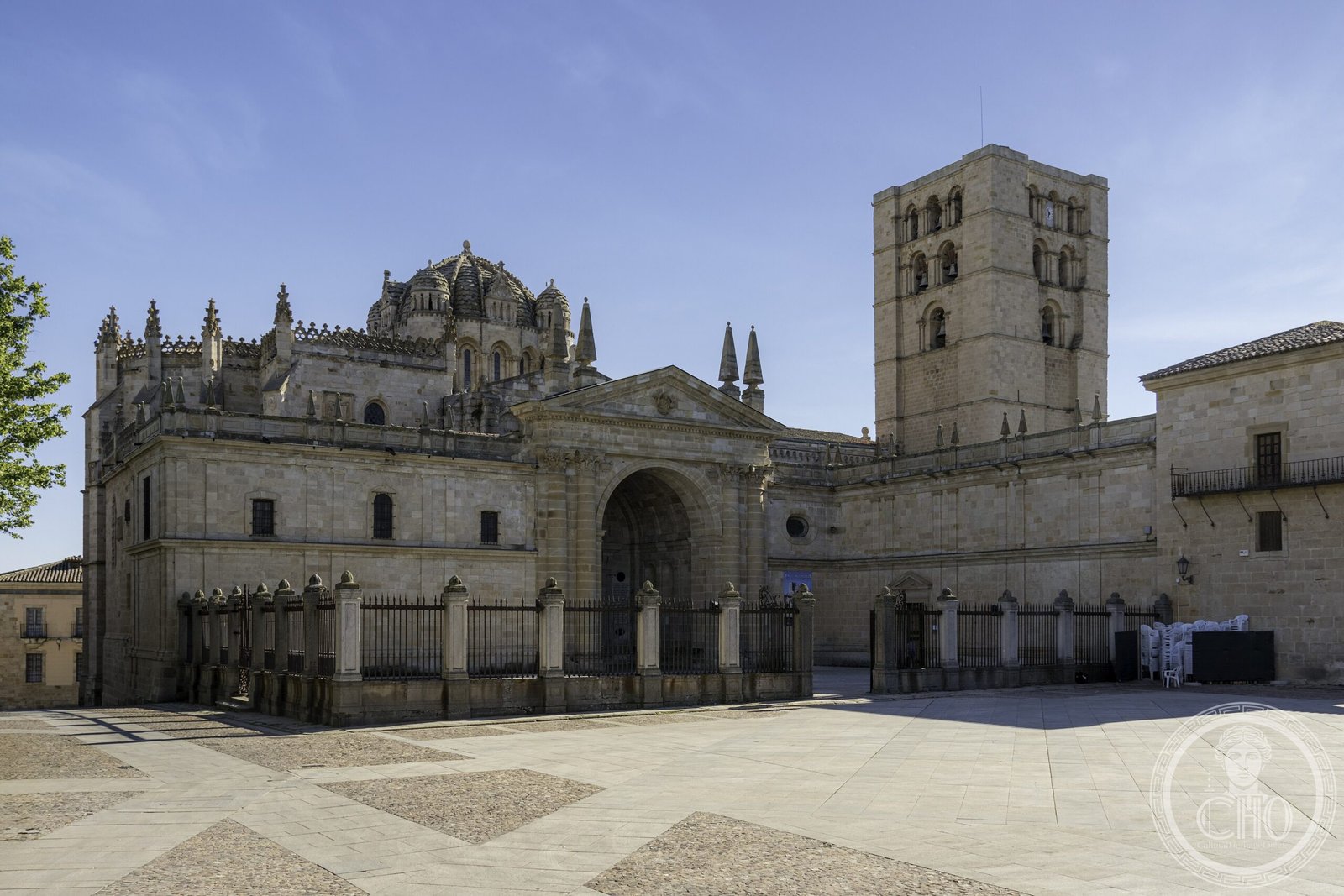
A masterpiece of Spanish Romanesque architecture, this cathedral crowns the right bank of the Duero River within Zamora’s medieval walls.
At a glance
Zamora Cathedral stands as one of Spain’s finest expressions of Romanesque design. Constructed over two decades in the mid-12th century, it remains framed by the city’s ancient fortifications and gates, anchoring the historic urban landscape.
History
Construction began in 1151 and concluded in 1174, a deliberate period of architectural refinement. The cathedral emerged during a transformative era for the Iberian peninsula, when Romanesque principles were reshaping sacred architecture across the region.
What you see
The cathedral exemplifies Spanish Romanesque at its zenith. Positioned prominently above the Duero’s right bank, its forms and detailing reflect the sophisticated mastery of 12th-century builders. The structure integrates seamlessly with Zamora’s surrounding medieval walls and gateways, creating a unified architectural ensemble.
Cultural significance
Zamora Cathedral represents a pivotal moment in Spanish architectural history. Its successful synthesis of Romanesque principles established a model that influenced sacred building practices throughout Castile and León. The cathedral’s preservation within its original urban context—still ringed by medieval fortifications—underscores its importance as both spiritual center and civic landmark.
Key facts
- Country: Spain
- City: Zamora
- Coordinates: 41.49898, -5.75464
- Construction period: 1151–1174
- Architectural style: Spanish Romanesque
Practical information & getting there
Zamora Cathedral is located in the historic center of Zamora, Castile and León. You can access it via the city’s medieval streets within the preserved walls. Contact the cathedral directly or consult local tourism resources for current visiting hours and any access information.
Sources & resources
Find it on the map
See this place and what’s around it →📷 Diventa un fotografo di Cultural Heritage Online
Condividi le tue foto dei luoghi: restano pubblicate con la tua firma come autore. Più vengono viste, più ti fai conoscere — e presto un concorso premierà le foto più apprezzate.
Accedi o registrati gratis per aggiungere una fotoDo you manage this place?
This page is read by travellers and heritage enthusiasts who find it on Google. Keep it accurate — and make it work for you. Free for non-profit heritage institutions.