
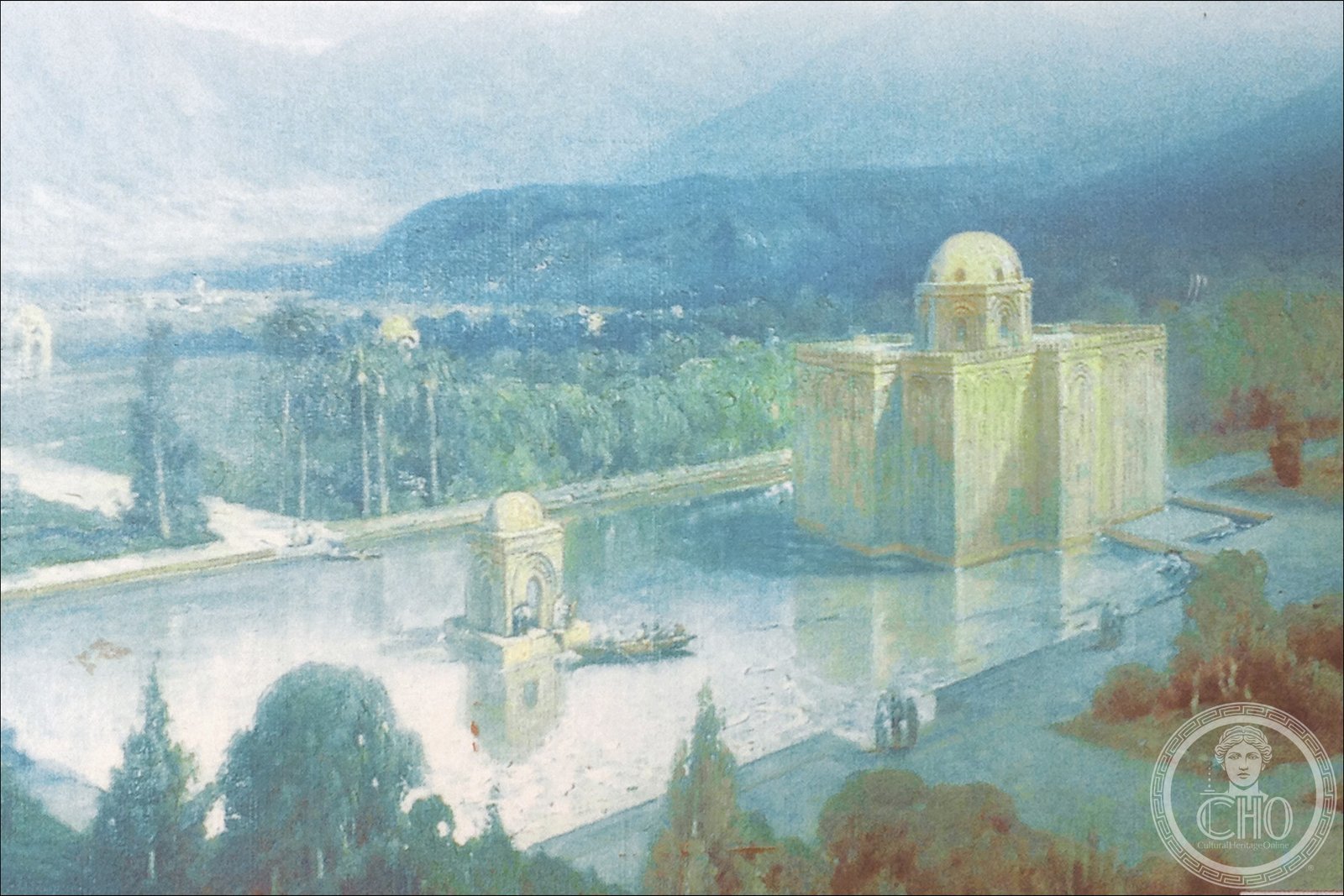
The Cuba is a Norman recreational palace in Palermo, Sicily, built in 1180 by William II of Sicily as part of the Sollazzi Regi — a royal pleasure complex set within a vast walled park. Originally surrounded by an artificial lake, the palace was conceived as a retreat combining Islamic architectural influences with Norman royal ambition. Its Arabic-influenced cubic form and the name “Cuba” — derived either from its shape or the Arabic word qubba meaning dome — mark it as one of the finest surviving examples of Sicilian Arab-Norman architecture.
At a glance
- Type
- Royal Norman palace (recreational)
- Period
- Built 1180 AD
- Style
- Arab-Norman (Sicilian Romanesque)
- Location
- Corso Calatafimi 100, 90129 Palermo, Sicily, Italy
- Coordinates
- 38.1075° N, 13.3426° E
Overview
The Cuba palace stands as one of Palermo’s most evocative Norman monuments, a compact square structure rising with slender blind arcading and decorative inlay work characteristic of the Arab-Norman synthesis that flourished under Sicily’s 12th-century rulers. It formed part of the Sollazzi Regi (“royal pleasures”) — a group of palaces, gardens and lakes maintained for the exclusive recreation of the Norman court. The palace was immortalised in literature by Boccaccio, who set the fifth tale of the fifth day of the Decameron within its gardens.
History
William II of Sicily commissioned the Cuba in 1180 alongside an artificial lake that once filled much of the surrounding park, creating a water garden in the Islamic tradition. After the Norman dynasty ended, the complex passed through successive rulers — Hohenstaufens, Angevins, Aragonese — each adapting it to new functions. By the early modern period the lake had been drained and the palace converted into various uses including a leper colony and military barracks. The surrounding area was progressively urbanised through the 19th and 20th centuries, and today the Cuba stands within a carabinieri compound along Corso Calatafimi.
What you see
The Cuba is an almost square block measuring roughly 32 by 26 metres, rising to about 15 metres in height. Its exterior walls are decorated with interlaced blind arcading and Kufic inscriptions typical of the Arab-Norman style that also adorns the nearby Zisa palace. The interior once featured a large rectangular hall with a vaulted ceiling, and decorative elements in the Islamic stucco tradition. The building bears an Arabic dedicatory inscription on its facade recording the date of construction and the name of its royal patron.
Cultural significance
The Cuba is part of the UNESCO World Heritage Site “Arab-Norman Palermo and the Cathedral Churches of Cefalù and Monreale,” inscribed in 2015 as testimony to the exceptional multicultural synthesis achieved in Norman Sicily. Together with the Zisa and the Palermo Royal Palace, it demonstrates how Norman rulers absorbed Arab aesthetics and spatial concepts into a distinctly Sicilian royal culture. Its literary fame through the Decameron adds a further layer of European cultural resonance.
Practical information
- Address
- Corso Calatafimi 100, 90129 Palermo, Sicily
- Access
- The Cuba is situated within a carabinieri (military police) compound; access is subject to official arrangements — check with local tourism offices or the Regional Centre for the Design of Public Space
- Nearby
- Zisa Palace (0.6 km), Palermo Cathedral (2.5 km)
Getting there
The Cuba is located on Corso Calatafimi in western Palermo. From Palermo Centrale railway station, take bus line 109 or 389 toward Corso Calatafimi; journey time is approximately 20 minutes. By car, follow signs toward Monreale from the city centre; the site is on the right-hand side of Corso Calatafimi roughly 3 km from the historic centre.
Sources & resources
See the place
Find it on the map
See this place and what’s around it →📷 Become a Cultural Heritage Online photographer
Share your photos of places: they stay published under your name as the author. The more they're seen, the more you get noticed — and soon a contest will reward the most appreciated photos.
Log in or sign up free to add a photoIs this page about you?
This page is read by travellers and heritage enthusiasts who find it on Google. Tell us how you are connected to this place and we will take it from there.