
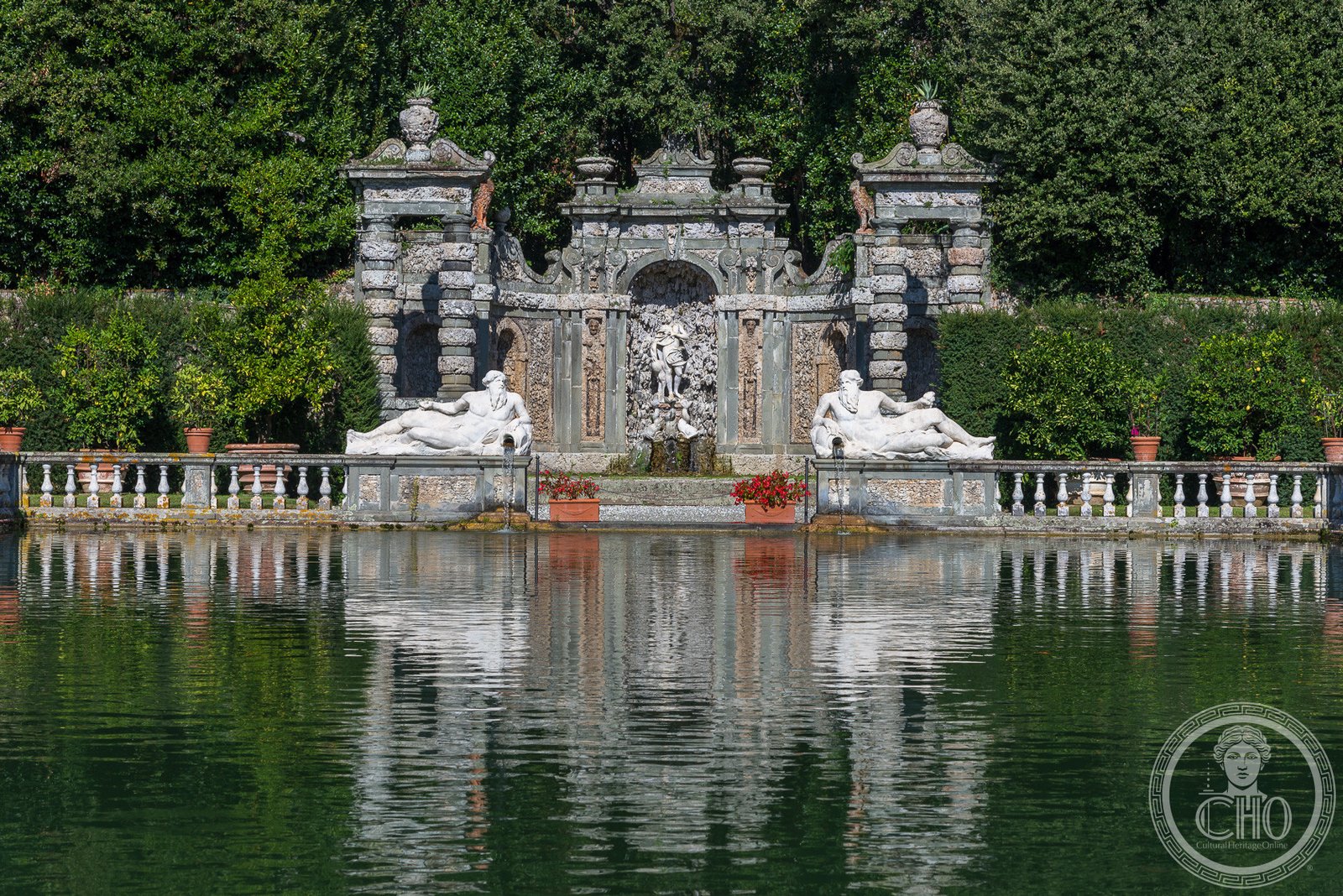
Villa Reale di Marlia — also known as Villa Marlia — is a late-Renaissance country villa and estate in Capannori, in the Province of Lucca, northern Tuscany. Its celebrated gardens, enlarged and redesigned for Elisa Bonaparte Baciocchi between 1811 and 1814, rank among the finest surviving examples of Italian formal garden art in the region.
At a glance
- Type
- Historic villa and garden estate
- Period
- Late Renaissance origins; significantly remodelled in the early 19th century under Elisa Bonaparte
- Style
- Late Renaissance palazzo; Italian formal gardens with Baroque and Neoclassical elements
- Location
- Capannori, Province of Lucca, Tuscany, Italy
- Coordinates
- 43.8999° N, 10.5562° E
Overview
Villa Reale di Marlia is a substantial villa complex west of Florence, set within an estate that encompasses renowned gardens, secondary villas, and decorative follies. The property sits in the gentle hills of the Lucchese countryside, within easy reach of the historic city of Lucca. Today it is recognised as one of the most important historic garden ensembles in Tuscany.
History
The villa has late-Renaissance origins, developed over successive centuries by a series of noble owners from the Lucca region. Its most transformative phase came when Napoleon’s sister Elisa Bonaparte Baciocchi, then ruler of the Principality of Lucca and Piombino, acquired the estate and commissioned an ambitious redesign of the gardens between 1811 and 1814. After the fall of the Napoleonic regime the estate passed through several aristocratic hands before entering private ownership, which continues to this day.
What you see
The villa itself is a dignified late-Renaissance palazzo surrounded by an extensive park. The gardens are the chief attraction: a series of outdoor rooms enclosed by tall hedges, incorporating a theatre of greenery, a lemon garden, a fishpond, and ornamental fountains. Scattered across the estate are several smaller auxiliary villas and garden pavilions that together form a cohesive historic landscape. Centuries-old trees and topiary elements contribute to an atmosphere of cultivated grandeur.
Cultural significance
Villa Reale di Marlia holds a notable place in the history of Italian garden design and in Napoleonic-era cultural patronage. The Elisa Bonaparte-era interventions represent a rare surviving example of Empire-period landscape remodelling in Tuscany. The estate is regularly cited in scholarly literature on historic Italian gardens and receives visitors as part of Tuscany’s heritage tourism circuit.
Practical information
- Address
- Via Fraga Alta 2, Marlia, 55014 Capannori LU, Italy
- Admission
- Ticketed entry; concessions available — check official website for current prices
Getting there
Marlia lies approximately 5 km north-east of Lucca city centre. By car, take the SP445 from Lucca towards Marlia; parking is available near the estate. By bus, local CTT Nord services connect Lucca with Capannori and the surrounding villages; check current timetables at the Lucca bus terminal. The nearest railway station is Lucca, from which a taxi or local bus provides onward connection.
Sources & resources
See the place
Find it on the map
See this place and what’s around it →📷 Become a Cultural Heritage Online photographer
Share your photos of places: they stay published under your name as the author. The more they're seen, the more you get noticed — and soon a contest will reward the most appreciated photos.
Log in or sign up free to add a photoIs this page about you?
This page is read by travellers and heritage enthusiasts who find it on Google. Tell us how you are connected to this place and we will take it from there.