
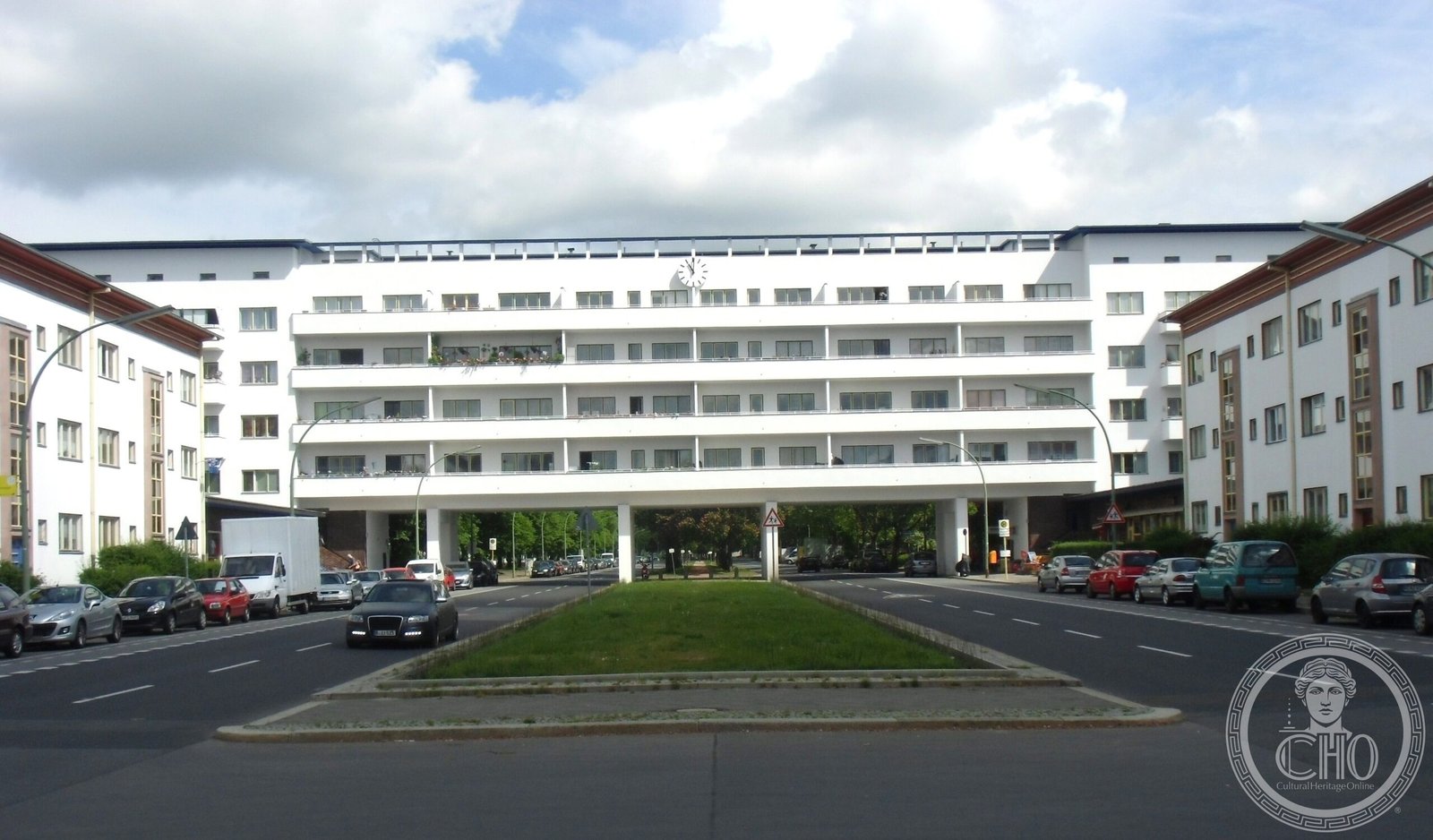
White City
A pioneering modernist housing estate of 1,268 apartments, the White City represents a decisive moment in twentieth-century urban design—when architects and planners deployed new materials and collective strategies to solve the housing crisis of Weimar Germany.
At a glance
Built between 1928 and 1931 in Berlin’s Reinickendorf district, the White City is one of six Berlin Modernism Housing Estates and has been a UNESCO World Heritage Site since 2008. Designed by Otto Rudolf Salvisberg, Bruno Ahrends, and Wilhelm Büning, it remains the last of these estates rooted in modernist architectural principles.
History
The estate was commissioned by Primus, a non-profit housing association, to address Berlin’s acute housing shortage in the late 1920s. Construction proceeded from 1928 to 1931, employing smaller craft businesses to keep costs minimal. At 14 Deutsche Marks per square meter, the project delivered approximately 1,600 apartments at unprecedented affordability. Ludwig Lesser served as town and country planner.
A revolutionary feature for its time: the White City was the first large housing complex in Germany to include central heating throughout. A block-type thermal power station installed along Aroser Allee in 2012 continues to serve this function.
What you see
The estate’s design prioritizes open internal circulation and green space. Terrace buildings dominate the layout, their white façades accentuated by unexpected chromatic details—coloured drainpipes, doors, window frames, and roof overhangs create visual rhythm across the complex.
The architectural centerpiece is the bridge house at Aroser Allee, a defining landmark. Within the estate, planners integrated a kindergarten and twenty shops, making it a self-contained neighbourhood rather than merely residential.
Cultural significance
The White City embodies the idealism of Weimar modernism, when architects believed design could improve daily life for working families. Its recognition as UNESCO World Heritage reflects its influence on housing policy and urban design across Europe. The estate demonstrates how collective investment and rational planning addressed social need.
Key facts
- Country: Germany
- City: Berlin, Reinickendorf district
- Coordinates: 52.568978, 13.352503
- Built: 1928–1931
- Architects: Otto Rudolf Salvisberg (lead), Bruno Ahrends, Wilhelm Büning
- Town planner: Ludwig Lesser
- Apartments: Approximately 1,600
- UNESCO World Heritage Site: since 2008
Practical information & getting there
The White City is located in Reinickendorf, in the northwest of Berlin. Public transport connects the district to the city centre. The estate remains a residential neighbourhood; visitors should respect residents’ privacy and observe local customs when exploring the grounds.
Sources & resources
Find it on the map
See this place and what’s around it →📷 Diventa un fotografo di Cultural Heritage Online
Condividi le tue foto dei luoghi: restano pubblicate con la tua firma come autore. Più vengono viste, più ti fai conoscere — e presto un concorso premierà le foto più apprezzate.
Accedi o registrati gratis per aggiungere una fotoDo you manage this place?
This page is read by travellers and heritage enthusiasts who find it on Google. Keep it accurate — and make it work for you. Free for non-profit heritage institutions.