
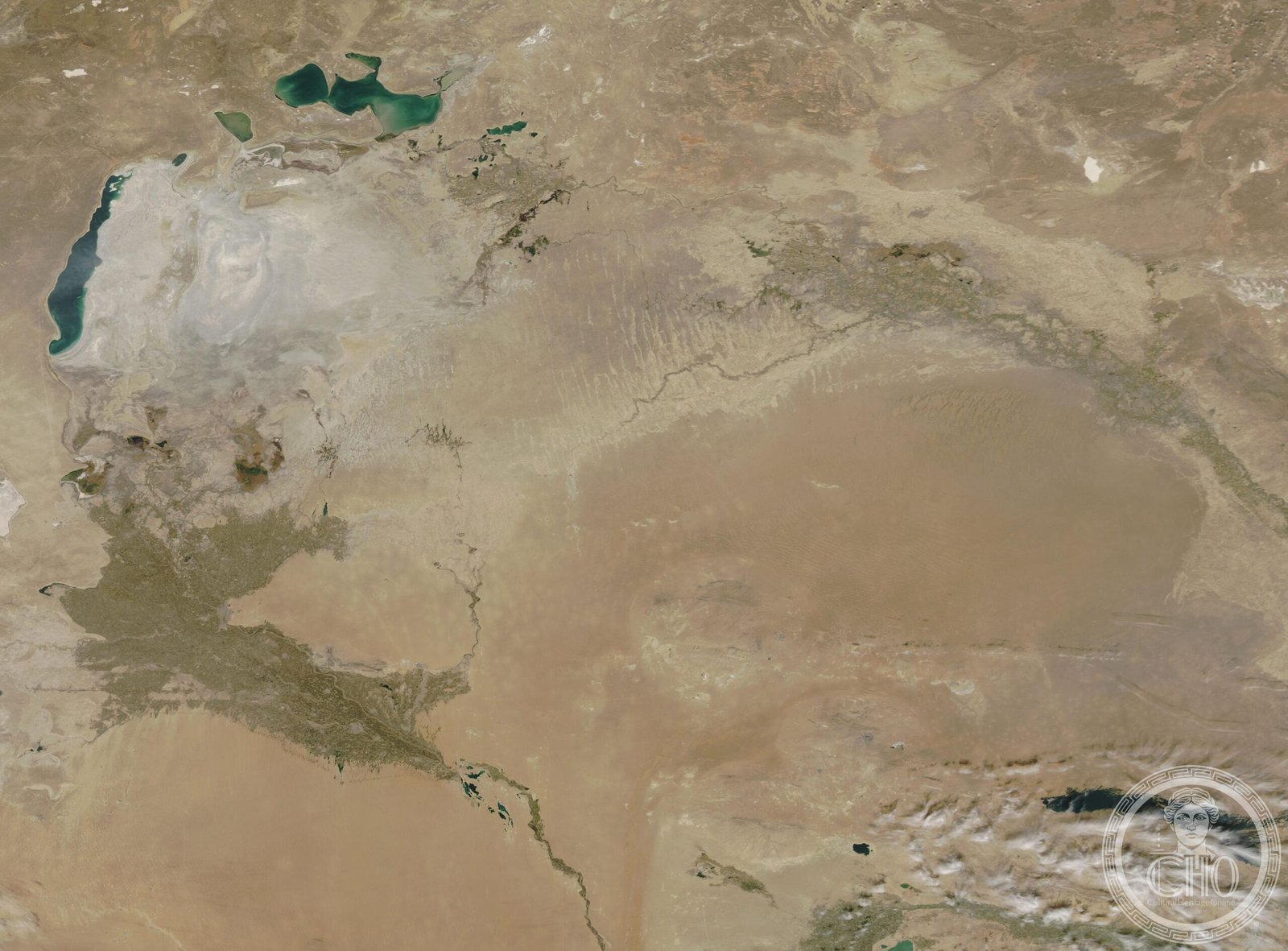
A Desert of Continental Scale
The Cold Winter Deserts of Turan cover an immense territory across Kazakhstan, Uzbekistan, and Turkmenistan, encompassing the Kyzylkum (“Red Sand”), Karakum (“Black Sand”), and Betpak-Dala deserts. Unlike subtropical deserts, the Turan undergoes extreme seasonal swings — frigid winters below −20°C, blazing summers above 45°C — creating a biome unlike any other on Earth.
The Saiga Antelope Migration
The Turan is the last stronghold of the critically endangered saiga antelope (Saiga tatarica), an Ice Age relic whose distinctive bulbous nose filters dust and warms arctic air before it enters the lungs. Each spring, hundreds of thousands of saiga cross the steppes and desert margins in one of the world’s last great mammal migrations — a spectacle comparable to the Serengeti wildebeest movement in scale and ecological significance.
Desert Ecosystems
The serial site encompasses sand desert, clay desert, and rocky semi-desert habitats, each with distinct flora adapted to extreme aridity and cold. The saxaul tree (Haloxylon) dominates vast areas, providing critical shelter and food for desert fauna. Oases and seasonal waterbodies within the desert attract vast congregations of migratory birds along the Central Asian Flyway.
Biodiversity
Beyond the saiga, the Turan shelters Central Asian tortoise, Caspian cobra, striped hyena, and caracal. The Ustyurt plateau — a clay desert of haunting flatness between Kazakhstan and Uzbekistan — is home to the goitered gazelle and the migratory populations of Central Asian steppe eagle. The Amudarya floodplains within the site support endemic fish species.
UNESCO Recognition
Inscribed in 2024 under natural criteria ix and x, the Cold Winter Deserts of Turan were recognised as the world’s most extensive and best-preserved cold-winter desert ecosystem and for their outstanding importance for biodiversity, including saiga migration routes that cross multiple national boundaries.
Visiting the Desert
The most accessible entry points are from Nukus in Uzbekistan (gateway to the Ustyurt plateau), Turkmenabat in Turkmenistan (Karakum desert), and Kyzylorda in Kazakhstan (Betpak-Dala). Ecotourism infrastructure is still developing; guided expeditions with specialist operators are the most reliable access mode.
Getting There
International flights reach Tashkent (Uzbekistan), Ashgabat (Turkmenistan), and Almaty or Nur-Sultan/Astana (Kazakhstan). Domestic flights connect to Nukus and Turkmenabat. Road access into the desert requires 4WD vehicles and water self-sufficiency.
Conservation Significance
The Turan serial site represents a landmark in transboundary conservation — three Central Asian republics coordinating protected-area management across borders that were once part of the Soviet Union. The inscription builds on longstanding IUCN concern about saiga poaching, which nearly drove the species to extinction in the 1990s.
Find it on the map
See this place and what’s around it →📷 Become a Cultural Heritage Online photographer
Share your photos of places: they stay published under your name as the author. The more they're seen, the more you get noticed — and soon a contest will reward the most appreciated photos.
Log in or sign up free to add a photo