

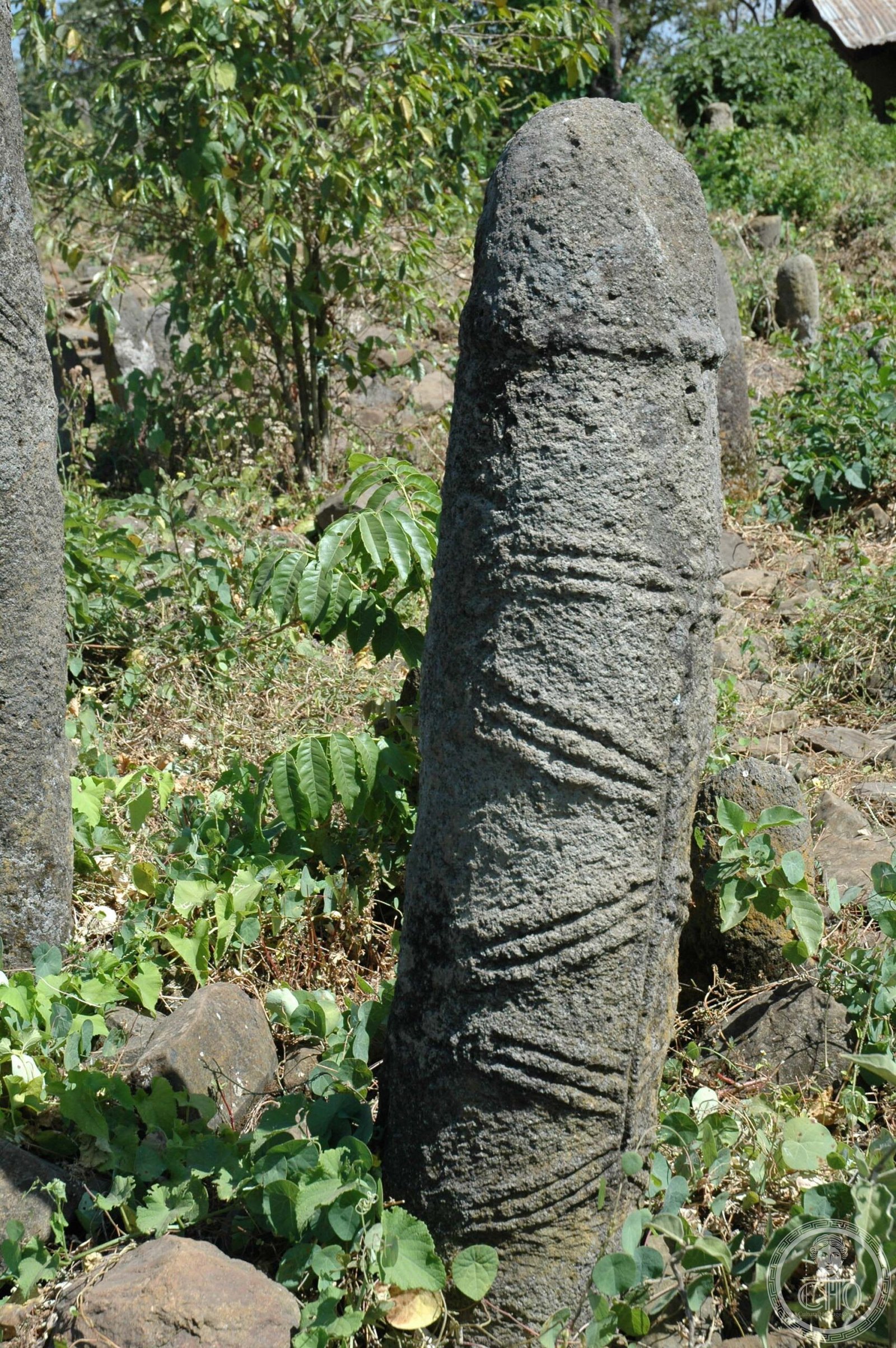
On the deep green slopes of the Sidama Highlands, west of the Great Rift Valley, the Gedeo Cultural Landscape is one of the most compelling demonstrations of how a people can cultivate the forest without destroying it. The Gedeo agroforestry system interweaves wild fruit trees, wild coffee, enset (the “bread of Ethiopia”), cereal crops and medicinal plants in overlapping layers that imitate the structure of a tropical forest. The result is a continuous tree cover over a territory densely inhabited by more than a million people — a marvel of human ecology. Within this living landscape, the megalithic sites of Tuto Fela hold hundreds of funerary stelae thousands of years old. A UNESCO World Heritage site since 2023.
At a glance
The Gedeo Cultural Landscape covers approximately 73,000 hectares in the Gedeo Zone of the Southern Nations, Nationalities and Peoples’ Region (SNNPR) of southern Ethiopia. UNESCO inscribed it in 2023 (ref. 1641) for its outstanding universal value as a living cultural landscape where the Gedeo people have maintained a sophisticated multi-layer agroforestry system for over a thousand years, sustaining continuous forest cover in a densely populated highland area. The landscape also contains numerous megalithic stelae sites — particularly the Tuto Fela burial grounds — which attest to the long human history of the area and the ancestral spiritual connection of the Gedeo to their forest landscape.
Key facts
- UNESCO: World Heritage since 2023 (Gedeo Cultural Landscape, ref. 1641)
- Area: approximately 73,000 ha; one of the most densely populated forest landscapes in Africa
- Agroforestry: 4–5 stacked canopy layers; wild coffee, Ensete ventricosum (enset), fruit trees, vegetables; no bare soil
- People: the Gedeo ethnic group; over 1 million inhabitants within the landscape
- Stelae: Tuto Fela site contains hundreds of phallic and anthropomorphic monolithic stelae; similar to stelae at Tiya (UNESCO, 1980)
- Coffee: the region is one of the centres of origin of Coffea arabica; wild coffee grows in the understory of the agroforest
History
The Gedeo people belong to the Cushitic family and have inhabited these highland ridges for at least 1,500 years. Their agroforestry system — known as guji or complex multi-story cultivation — is governed by a traditional knowledge system (saffu) that regulates which plants can be grown, how trees are managed, and how water and land are shared. The system has been passed down orally through generations of farmers and is still the dominant land-use system in the area today.
The Tuto Fela stelae — scattered across the landscape in funerary tumuli — belong to an older megalithic tradition that pre-dates the current Gedeo cultural system. The phallic and anthropomorphic forms of the stelae are similar to those found at the Tiya World Heritage Site (Gurage Zone, 250 km north-west), suggesting a shared regional tradition of megalith-building in highland Ethiopia between approximately 1,000 and 2,000 years ago. UNESCO inscription in 2023 recognised both the living agroforestry landscape and its pre-Gedeo archaeological substratum as an integrated cultural heritage of outstanding universal value.
What you see
Walking through the Gedeo landscape is disorienting in the most wonderful way: the forest is everywhere, yet this is not a wilderness — it is a garden. Beneath a canopy of shade trees 20–25 m tall, layers of coffee shrubs, bananas, enset plants (whose starchy stem is the staple food), and medicinal herbs form a living multi-storey structure. Homesteads are embedded within the forest, nearly invisible from outside. Every few hundred metres, a clearing reveals a tumulus with stelae — some 2 m tall, others small and toppled.
The Tuto Fela stelae site is the most accessible cluster: dozens of standing and fallen monoliths on a low hill, surrounded by the agroforest. The area is quiet, rural, and little-visited by international tourists.
Practical information
- Base: Dilla (the Gedeo Zone capital; small hotels)
- Access from Addis Ababa: 368 km south on the main Addis–Moyale highway; 5–6 hrs by bus or 4 hrs by car
- Dilla University: has a natural history museum and local research on the Gedeo agroforest; a useful starting point
- Guides: local English-speaking guides available in Dilla; recommended for navigating the stelae sites
Getting there
From Addis Ababa: drive or take a bus south on the A2 highway (368 km to Dilla). Ethiopian Airlines has flights to Hawassa (150 km north of Dilla); rent a car from Hawassa. GPS: 5.12° N, 38.67° E.
Nearby
- Tiya (UNESCO) — another Ethiopian megalithic stelae field, 250 km north-west; 36 standing stones inscribed 1980
- Hawassa — the SNNPR capital on Lake Hawassa; a pleasant city with a fish market and flamingos
- Yirgacheffe — 30 km north of Dilla; the world’s most famous coffee origin; coffee ceremony and cooperative visits
Sources
- UNESCO World Heritage Centre — “Gedeo Cultural Landscape” (ref. 1641)
- Dilla University — Gedeo Agroforestry Research
- Encyclopaedia Britannica — Ethiopia; Gedeo people
Find it on the map
See this place and what’s around it →📷 Become a Cultural Heritage Online photographer
Share your photos of places: they stay published under your name as the author. The more they're seen, the more you get noticed — and soon a contest will reward the most appreciated photos.
Log in or sign up free to add a photo