Kyrgyzstan has three UNESCO World Heritage Sites, a compact but remarkably varied list that takes in a sacred mountain above the Fergana Valley, a corridor of medieval Silk Road infrastructure shared with China and Kazakhstan, and a vast sweep of alpine wilderness crossing three Central Asian borders. Small in number, the sites together span millennia of human movement, devotion, and ecological rarity in one of the world’s least-visited heritage landscapes. From Cultural Heritage Online.
Why Kyrgyzstan’s list looks the way it does
Kyrgyzstan sits at the heart of the Eurasian landmass, a country of high passes and semi-nomadic traditions whose built heritage is sparser than that of neighbouring Uzbekistan or China but whose natural and spiritual landscapes are extraordinary. The UNESCO list reflects this reality: two cultural sites and one natural site, all inscribed since 2009, and two of the three shared with other countries through transnational nominations.
Transnational inscriptions have become the preferred mechanism for recognising landscapes and trade networks that never respected modern borders. For Kyrgyzstan, this approach has unlocked recognition for its portion of the Silk Road and its share of the Tien Shan range that might otherwise have taken decades longer to achieve as a standalone national nomination.
The first inscriptions
Kyrgyzstan’s first UNESCO inscription came in 2009, five years after the country submitted its tentative list. The site recognised was:
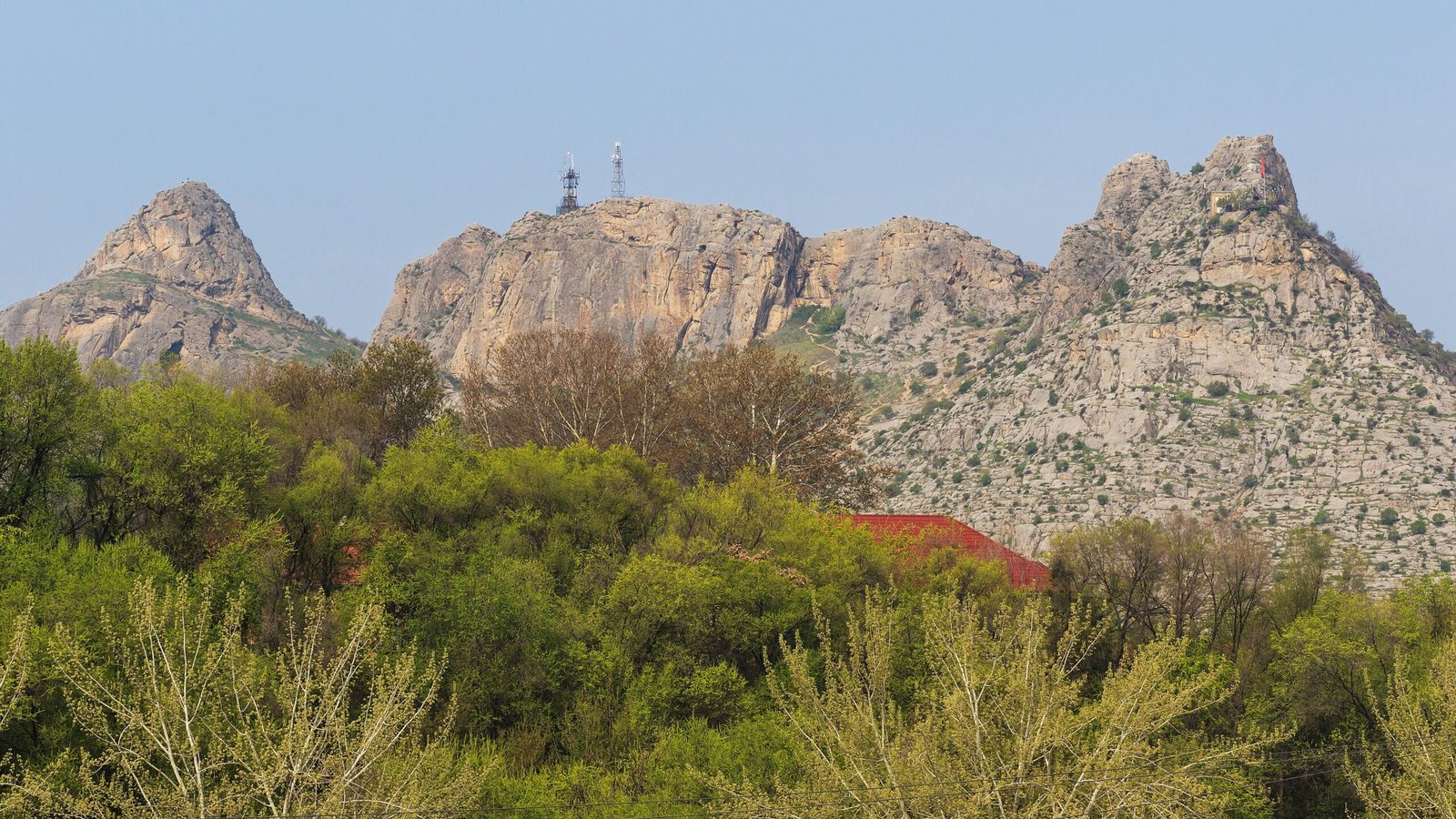
- Sulaiman-Too Sacred Mountain (2009) — a cultural site in the Osh Region, the only inscribed sacred mountain in Central Asia at the time of designation.
Subsequent years brought two further recognitions. In 2014, Kyrgyzstan joined China and Kazakhstan in the serial transnational inscription of the Silk Roads: the Routes Network of Chang’an-Tianshan Corridor. Two years later, in 2016, the Western Tien-Shan natural site was inscribed jointly with Kazakhstan and Uzbekistan, completing the current list.
The most visited — and the alternatives
Sulaiman-Too, the dominating peak above the city of Osh, draws the majority of heritage visitors to Kyrgyzstan. The mountain carries petroglyphs dating back several thousand years alongside the ruins of a 16th-century mosque, and has functioned as a place of pilgrimage along the Silk Road for centuries. It is among the rare UNESCO sites where the intangible dimension — ongoing ritual use — was as central to the nomination as the physical remains.
The Silk Roads serial site offers a different kind of encounter. Among Kyrgyzstan’s components along the Chang’an-Tianshan Corridor, the Burana Tower stands out: a truncated brick minaret in the Chuy Valley, all that remains of the medieval city of Balasagun, once a capital of the Karakhanid state. Elsewhere along the corridor, caravanserai ruins and fortified platforms mark routes that connected Tang-dynasty China with the Islamic world. For visitors who want to go further off the standard path, the Uzgen architectural complex — a mausoleum ensemble of the 11th and 12th centuries in southern Kyrgyzstan, currently on the tentative list — represents the kind of medieval Central Asian craftsmanship rarely seen outside Samarkand or Bukhara.
Natural and shared sites
Western Tien-Shan is the sole natural entry on Kyrgyzstan’s UNESCO list and one of the most biologically significant mountain systems in the world. The property, shared with Kazakhstan and Uzbekistan, covers the western portion of the Tian Shan range and protects habitats for snow leopard, Marco Polo sheep, and a remarkable concentration of wild fruit-forest species — including the wild ancestors of the domestic apple. The Sary-Chelek Nature Reserve, one of four component areas within Kyrgyzstan’s portion of the site, centres on a glacial lake surrounded by walnut and fruit forests at an altitude where the growing season is compressed into a few vivid months.
The transnational framing of both Western Tien-Shan and the Silk Roads inscription is worth underscoring. These are not sites that happen to cross borders — they were nominated precisely because their significance is inseparable from their regional scale. Managing them requires ongoing cooperation between national authorities with different regulatory traditions and conservation priorities, a complexity that UNESCO’s Outstanding Universal Value framework is still working through.
How to find them
All three inscribed sites are accessible from Kyrgyzstan’s main cities, though distances and road conditions vary considerably. Sulaiman-Too rises directly above Osh, the country’s second city, and is reachable on foot. The Burana Tower lies roughly 80 kilometres east of Bishkek along a paved road. The Western Tien-Shan components are more remote, with Sary-Chelek requiring a full day’s travel from Jalal-Abad and limited tourist infrastructure once there — which is, for many visitors, precisely the point.
Kyrgyzstan’s World Heritage sites sit alongside thousands of other places on CHO’s interactive map, with GPS and sourced editorial history for each. See also our guides to Italy’s and France’s UNESCO sites, and our piece on cultural travel beyond mass tourism.
Frequently Asked Questions
How many UNESCO World Heritage Sites does Kyrgyzstan have?
Kyrgyzstan has three inscribed UNESCO World Heritage Sites as of 2026: Sulaiman-Too Sacred Mountain (2009), the Silk Roads: the Routes Network of Chang’an-Tianshan Corridor (2014), and Western Tien-Shan (2016). Two of the three are transnational nominations shared with neighbouring countries.
What was Kyrgyzstan’s first UNESCO World Heritage Site?
Sulaiman-Too Sacred Mountain, inscribed in 2009, was Kyrgyzstan’s first UNESCO World Heritage Site. Located above the city of Osh in the Fergana Valley, it is recognised for its combination of ancient petroglyphs, 16th-century mosque ruins, and its long history as a place of pilgrimage along the Silk Road.
Does Kyrgyzstan have any natural UNESCO World Heritage Sites?
Yes. Western Tien-Shan, inscribed in 2016, is Kyrgyzstan’s sole natural World Heritage Site. It is a transnational property shared with Kazakhstan and Uzbekistan, protecting high-altitude ecosystems across the western portion of the Tian Shan mountain range, including habitats for snow leopard and wild fruit-forest species.
Which Kyrgyzstan sites are part of transnational UNESCO inscriptions?
Two of Kyrgyzstan’s three sites are transnational. The Silk Roads: the Routes Network of Chang’an-Tianshan Corridor (2014) is shared with China and Kazakhstan, while Western Tien-Shan (2016) is shared with Kazakhstan and Uzbekistan. Both nominations reflect the regional scale of the landscapes and cultural networks they protect.
Sources used in this article
- UNESCO — State Party Kyrgyzstan — World Heritage list.
- UNESCO — Kyrgyzstan: World Heritage Sites.
- CHO magazine — What is a World Heritage Site?
- CHO — Interactive map of heritage sites.