
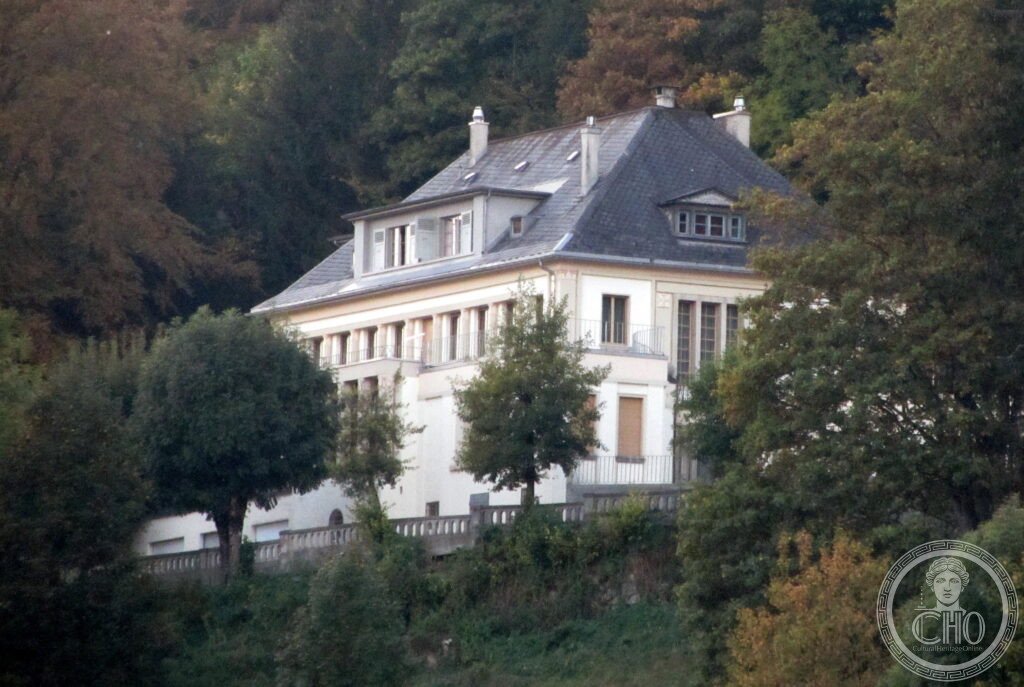

The man who founded Zenith watches gave the twenty-five-year-old Jeanneret a commission in Le Locle: what came back was a courtyard villa of classical restraint that had very little left of the Style Sapin.
At a glance
Villa Favre-Jacot stands in Le Locle, the twin watchmaking town of La Chaux-de-Fonds and, like its neighbour, a UNESCO World Heritage site for its planned industrial landscape. The villa was designed in 1912 by Charles-Édouard Jeanneret, then twenty-five, for Georges Favre-Jacot, who had founded the Zenith watch manufacture in Le Locle in 1865. It is one of two projects Jeanneret completed in the same year (the Maison Blanche in La Chaux-de-Fonds is the other), and both show the same pivot: away from the Style Sapin and L’Eplattenier’s Jura ornament, toward a spare, proportional architecture influenced by Jeanneret’s studies with Perret and Behrens. The villa is included in the UNESCO transnational inscription for Le Corbusier’s architectural work (2016).
Key facts
- Architect: Charles-Édouard Jeanneret (later Le Corbusier)
- Year: 1912–1913 (commissioned February 1912, completed September 1913; Fondation Le Corbusier)
- Client: Georges Favre-Jacot, founder of the Zenith watch manufacture (1865, Le Locle)
- Location: Le Locle, canton of Neuchâtel, Switzerland
- GPS: 47.0543° N, 6.7343° E — Google Maps
- Heritage: Fondation Le Corbusier (primary source). Le Locle is a UNESCO WH city for watchmaking town planning (2009, site 1362)
- Urban context: Le Locle is itself a UNESCO WH site (watchmaking town planning, 2009)
History
Georges Favre-Jacot had built one of the most successful watch manufacturers in the Jura: Zenith, founded in 1865, was by 1912 a global brand. When he commissioned a villa from Jeanneret, he was engaging a young architect who had studied in Paris and Berlin and who was already pulling away from the regional style he had learned at school. The commission coincided almost exactly with the Maison Blanche for Jeanneret’s parents in La Chaux-de-Fonds; together the two projects mark the year when the Style Sapin disappeared from Jeanneret’s vocabulary.
The villa was designed with a spacious courtyard or terrace arrangement that gave it a grander, more civic scale than the domestic Pouillerel houses. The watchmaking wealth of the region — which had financed the International Museum of Watchmaking in La Chaux-de-Fonds and would later fund the Maison Blanche preservation — here funded a private architecture at a scale Le Corbusier would not achieve again until his Paris villas of the 1920s.
The building is in a UNESCO World Heritage city (Le Locle / La Chaux-de-Fonds, watchmaking, 2009, site 1362)’s work, alongside the Maison Blanche and Villa Schwob from La Chaux-de-Fonds.
What you see
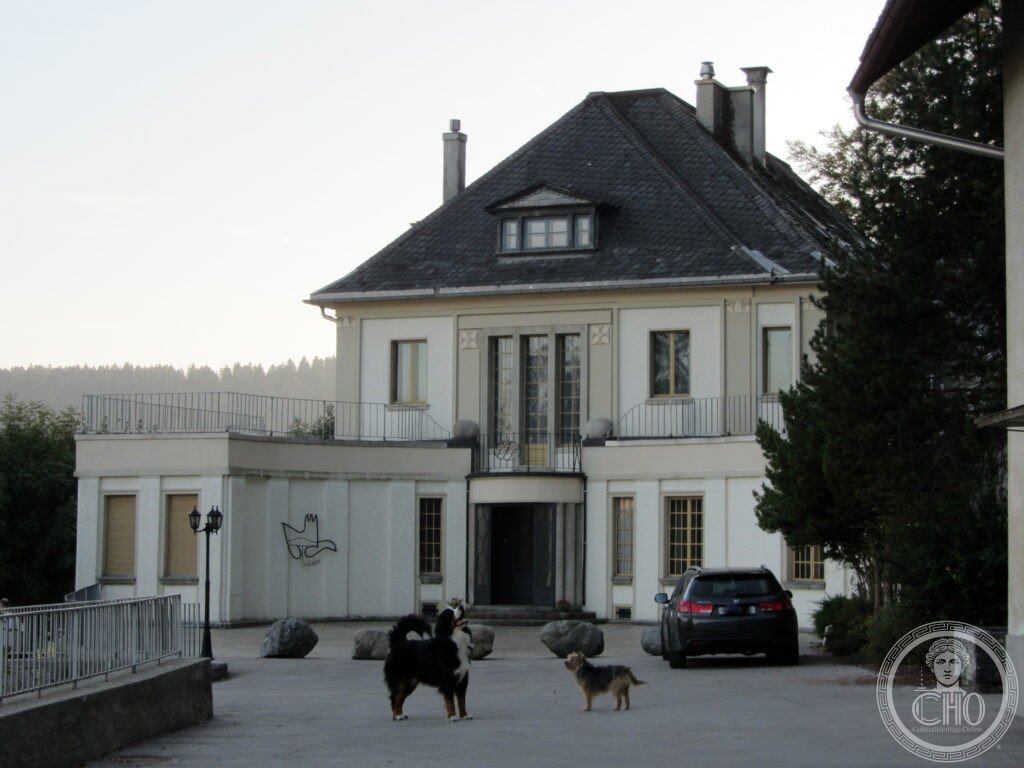
The villa presents a composed classical front: symmetrical, with carefully controlled openings and a terrace or courtyard that sets the main body of the building back from the street and gives it room to breathe. The ornament is minimal — a restrained cornice, clean window surrounds, a proportioned entrance — and the overall impression is of a building that knows the classical tradition without being enslaved to it. Compared with the elaborately patterned façades of the Pouillerel trilogy, the difference is total.
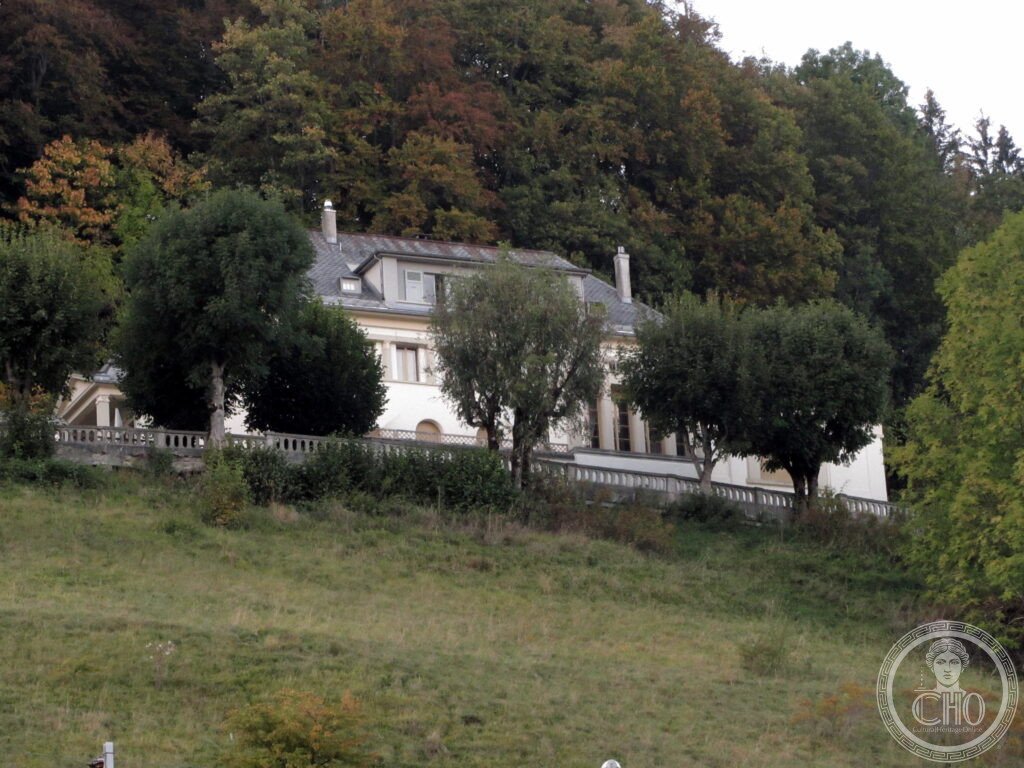
The site and setting in Le Locle, a more rural and enclosed watchmaking valley than the open grid of La Chaux-de-Fonds, give the villa a different urban character: it reads as a property set into a hillside community, rather than a demonstration object on a lane of similar houses.
Practical information
- Villa Favre-Jacot is a private property; the exterior is visible from the street.
- Le Locle is served by frequent trains from La Chaux-de-Fonds (10 minutes) and from Biel/Bienne.
- Combine with the La Chaux-de-Fonds villas for a full day on the Le Corbusier trail in the Jura.
Getting there
Le Locle is a ten-minute train ride from La Chaux-de-Fonds. The villa is in the residential quarters of Le Locle; from the station, a short uphill walk. Le Locle is itself a UNESCO World Heritage site for its watchmaking urban landscape, making it worth exploring beyond the villa.
Nearby
- Maison Blanche, La Chaux-de-Fonds (1912) — the twin commission of the same year, ten minutes by train.
- Villa Schwob (Villa Turque), La Chaux-de-Fonds (1916–17) — Jeanneret’s most ambitious Swiss commission.
- La Chaux-de-Fonds / Le Locle — Watchmaking Town Planning (UNESCO WH overview).
Photo gallery
Sources
- Wikipedia EN, “Le Corbusier” (Villa Favre-Jacot commission for watchmaker Georges Favre-Jacot in Le Locle; 1912 as key transition year).
- Wikipedia EN, “Zenith (watch company)” (Georges Favre-Jacot as founder, 1865, Le Locle).
- Wikidata Q29523079 (GPS: 47.05426, 6.73426; P84 architect Q4724 Le Corbusier).
- Fondation Le Corbusier (primary source: 1912–1913). Le Locle is a UNESCO WH city for watchmaking town planning (2009, same inscription as La Chaux-de-Fonds, site 1362).
Find it on the map
See this place and what’s around it →📷 Become a Cultural Heritage Online photographer
Share your photos of places: they stay published under your name as the author. The more they're seen, the more you get noticed — and soon a contest will reward the most appreciated photos.
Log in or sign up free to add a photo