
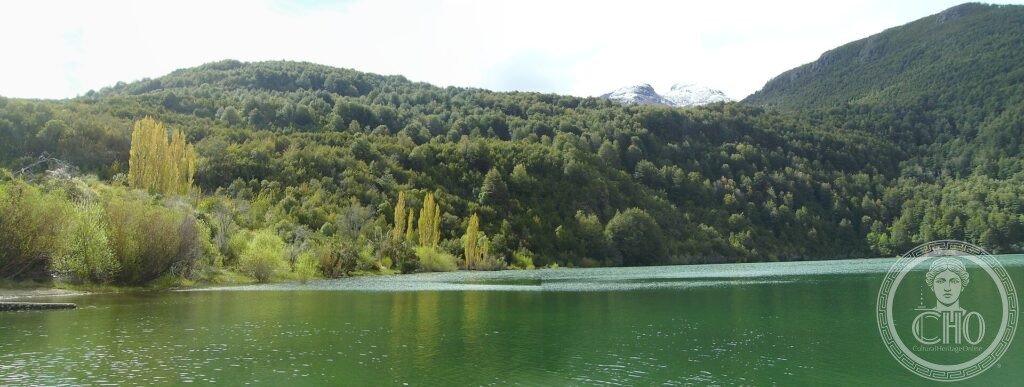
In the Andes of Argentine Patagonia, among emerald lakes and snow-covered mountains, very ancient forests survive, dominated by the alerce: the Patagonian cypress, a tree that can live more than three thousand years and is among the longest-lived on the planet. Los Alerces protects these giants and the glacial landscapes around them.
At a glance
Los Alerces National Park, in the Andes of Patagonian Argentina, protects some of the last great stands of the Andean-Patagonian forest, dominated by the alerce (Fitzroya cupressoides) — a giant conifer that can live for more than three thousand years, among the longest-lived trees on Earth. Shaped by ice ages, the park is a landscape of glacial lakes, rivers, moraines and snow-capped peaks, sheltering ancient forest little changed since the retreat of the glaciers. It was inscribed by UNESCO in 2017.
Key facts
- UNESCO: World Heritage since 2017 (Los Alerces National Park)
- The alerce: a giant conifer that can live over 3,000 years
- Ancient forest: some of the last great Andean-Patagonian woodland
- Glacial landscape: lakes, rivers, moraines and peaks
- Long-lived trees: among the oldest living things on Earth
- Patagonian Andes: on the Chile–Argentina mountain border
History
The forests of Los Alerces are survivors: as the great glaciers of the ice ages retreated, the Andean-Patagonian forest spread back across the valleys, and in this protected corner it has remained largely intact. At its heart stand the alerces, slow-growing conifers whose largest specimens, some over 2,000 or even 3,000 years old and 60 m tall, were already ancient when much of human history unfolded.
Heavily logged elsewhere for its durable timber, the alerce found refuge here, and the park was created to protect both the trees and the glacial lakes and mountains around them. Recognised for this near-pristine forest and its venerable trees, Los Alerces was inscribed by UNESCO in 2017.
What you see
Boat trips and trails lead across and around the park’s emerald lakes — Futalaufquen, Menéndez and others — to groves of giant alerces, including the famous “Grandfather” tree, and to viewpoints of forested slopes beneath snow peaks. The clear rivers and lakes, ringed by ancient forest, are the setting throughout.
The serenity of the green lakes beneath the Andes, guarded by thousand-year-old trees, is the beauty of Los Alerces.
Practical information
- Park: trails and boat trips from Villa Futalaufquen
- Best time: the southern summer (December–March)
- Time needed: one to two days
- Setting: in Chubut province, Patagonian Argentina
Getting there
Los Alerces National Park is in Chubut province, in the Andes of Patagonian Argentina, near the town of Esquel, which has road and air links. GPS: 42.80° S, 71.80° W.
Nearby
- Esquel — the nearest town and gateway
- Trevelin — a town of Welsh-Patagonian heritage nearby
- Andean lakes — the chain of lakes along the mountains
Sources
- UNESCO World Heritage Centre — “Los Alerces National Park” (ref. 1526)
- Administración de Parques Nacionales (Argentina) — official body
- Encyclopaedia Britannica — Patagonia; Fitzroya
Find it on the map
See this place and what’s around it →📷 Become a Cultural Heritage Online photographer
Share your photos of places: they stay published under your name as the author. The more they're seen, the more you get noticed — and soon a contest will reward the most appreciated photos.
Log in or sign up free to add a photo