Brazil has 25 UNESCO World Heritage Sites, spanning colonial Baroque towns folded into hillsides, vast Amazonian conservation complexes, prehistoric rock art in karst canyons, and one of the planet’s most biodiverse coastlines. From Cultural Heritage Online.
Why Brazil’s list looks the way it does
Brazil’s 25 inscriptions reflect the country’s extraordinary dual identity: a repository of Portuguese colonial urbanism unlike anywhere else in the Americas, and a custodian of several of the world’s most ecologically critical biomes. The breakdown tells the story — 15 cultural sites, 9 natural, and one mixed designation for Paraty and Ilha Grande, where Atlantic Forest meets a colonial port that supplied gold routes to the coast.
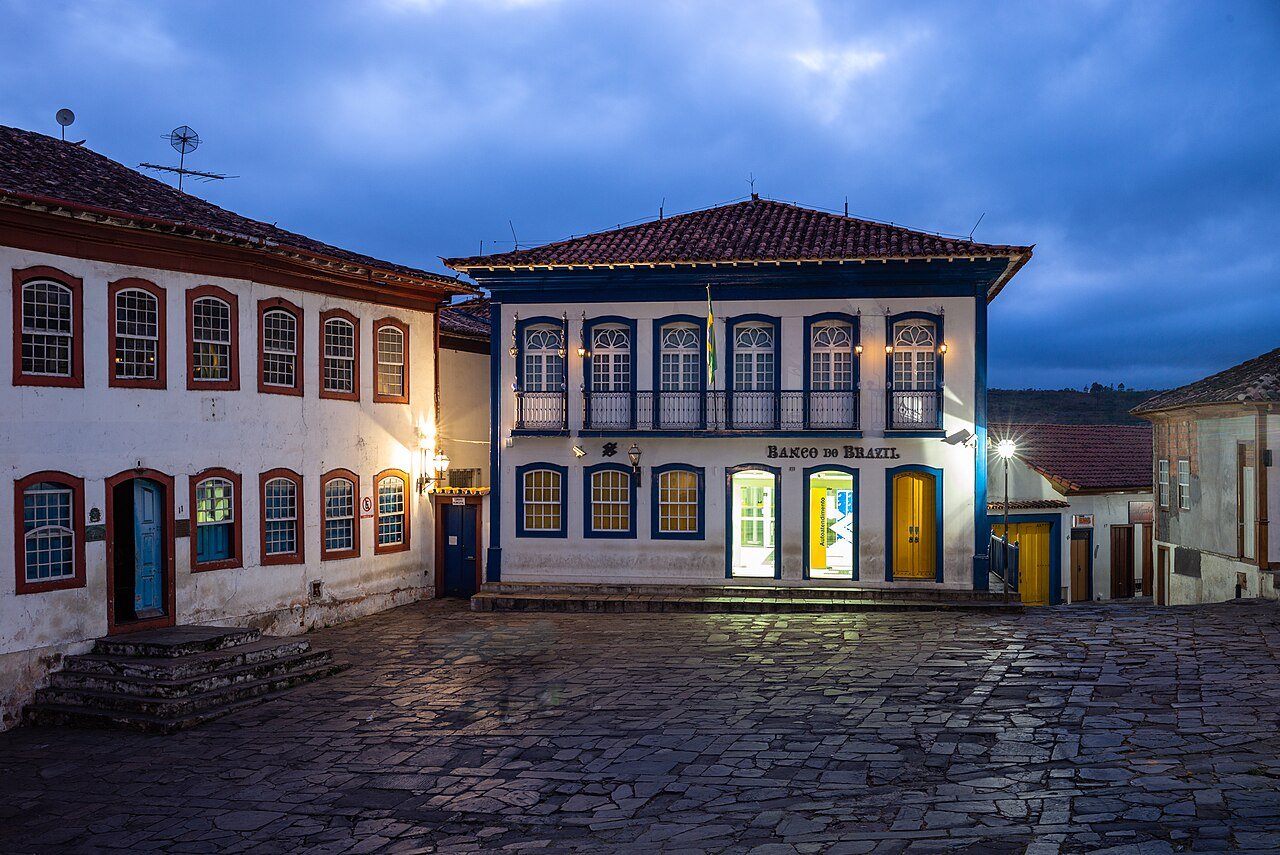
The cultural sites cluster around the colonial interior of Minas Gerais, where 18th-century diamond and gold wealth built churches, squares, and street plans that survived largely intact because economic decline followed quickly after the mineral boom. The natural sites, by contrast, are spread across the country’s five major biomes, with the Amazon and the Atlantic Forest together accounting for much of the list.
The first inscriptions
Brazil joined the World Heritage Convention early and its first inscription came at the inaugural 1980 session. The founding sites set the tone for what the country would consistently bring to the list: urban heritage of exceptional integrity from the colonial period, and landscapes of planetary ecological significance.
- Historic Town of Ouro Preto (1980) — Brazil’s first inscription, the former capital of Minas Gerais and the apex of Portuguese Baroque architecture in the Americas
- Historic Centre of Olinda (1982) — a Pernambuco hilltop city whose 16th-century layout and church ensemble survived Dutch occupation and later rebuilding pressures
- Jesuit Missions of the Guaranis (1983/1984, shared with Argentina) — the ruins of five Jesuit reductions straddling the Brazilian-Argentine border
- Iguaçu National Park (1986) — Brazil’s first natural inscription and one half of a transboundary system with Argentina’s corresponding park
The most visited — and the alternatives
Iguaçu Falls draws millions annually and is frequently cited as one of the most spectacular natural sites on any continent. In the cultural category, Salvador’s Historic Centre and the Historic Centre of São Luís attract substantial visitor numbers, as does the Sanctuary of Bom Jesus do Matozinho in Congonhas, with Aleijadinho’s celebrated soapstone prophets. These are genuinely exceptional places, and the crowds reflect that.
The lesser-known inscriptions repay attention. The Valongo Wharf Archaeological Site in Rio de Janeiro (2017) marks the point of arrival for an estimated 900,000 enslaved Africans — the largest such disembarkation site in the Americas and one of the most significant sites of memory in the Atlantic world. Sítio Roberto Burle Marx (2021), also near Rio, preserves the working estate of Brazil’s foremost landscape architect, with its archive of native tropical plant species used in decades of experimental modernist design. São Francisco Square in São Cristóvão (2010), in Sergipe, represents a rare intact example of Iberian-influenced urban planning from the period of the Spanish-Portuguese union.
Natural and shared sites
Brazil’s natural inscriptions span a range that few countries can match. The Central Amazon Conservation Complex (2000) is one of the largest protected areas on Earth, encompassing flooded forests and river systems supporting endemic species not found elsewhere. The Pantanal Conservation Area (2000) covers a portion of the world’s largest tropical wetland. The Cerrado Protected Areas (2001) protect a sample of the Brazilian savanna, one of the world’s biodiversity hotspots. Two more recent additions have extended the natural list: Lençóis Maranhenses National Park, inscribed in 2024 for its extraordinary dune-and-lagoon landscape, and Cavernas do Peruaçu National Park, inscribed in 2025 for a karst canyon containing rock art dating to the tenth millennium BCE.
On the shared inscriptions side, the Jesuit Missions of the Guaranis spans Brazil and Argentina. Iguaçu National Park forms a transboundary system with Argentina’s Iguazú National Park, though each country’s park holds a separate inscription. The Discovery Coast and South-East Atlantic Forest Reserves together represent a serial nomination spread across multiple Brazilian states, protecting fragments of one of the world’s most threatened forest systems.
How to find them
Brazil’s World Heritage sites sit alongside thousands of other places on CHO’s interactive map, with GPS and sourced editorial history for each. See also our guides to Italy’s and France’s UNESCO sites, and our piece on cultural travel beyond mass tourism.
Frequently Asked Questions
How many UNESCO World Heritage Sites does Brazil have?
Brazil has 25 UNESCO World Heritage Sites as of 2025. The list comprises 15 cultural sites, 9 natural sites, and 1 mixed site (Paraty and Ilha Grande), making Brazil the country with the most inscriptions in South America.
What was Brazil’s first UNESCO World Heritage Site?
The Historic Town of Ouro Preto, inscribed in 1980, was Brazil’s inaugural World Heritage Site. The former capital of Minas Gerais was recognised for its exceptional ensemble of Portuguese Baroque architecture, produced during the 18th-century gold and diamond boom.
What is Brazil’s most recently inscribed World Heritage Site?
Cavernas do Peruaçu National Park was inscribed in 2025, becoming Brazil’s 25th World Heritage Site. The site encompasses a karst canyon in Minas Gerais with rock art and archaeological evidence of human occupation dating to the tenth millennium BCE.
Does Brazil have any transnational UNESCO World Heritage Sites?
Yes. The Jesuit Missions of the Guaranis is a shared inscription with Argentina, covering the ruins of five 17th- and 18th-century Jesuit reductions on both sides of the border. Iguaçu National Park adjoins Argentina’s separately inscribed Iguazú National Park, together forming one of the most significant transboundary natural systems on the list.
Sources used in this article
- UNESCO — State Party Brazil — World Heritage list.
- UNESCO — Brazil: World Heritage Sites.
- CHO magazine — What is a World Heritage Site?
- CHO — Interactive map of heritage sites.
Sources
- S1 — Fausto, Boris. A Concise History of Brazil. Cambridge University Press, 1999. ISBN 978-0-521-56526-4.
- S2 — Skidmore, Thomas E. Brazil: Five Centuries of Change. Oxford University Press, 1999. ISBN 978-0-19-505809-3.
Spotted an error? Write to editorial@culturalheritageonline.com and we correct it the same day.