Český Krumlov

Český Krumlov castle Vltava river meander Bohemia Czech Republic Baroque theater UNESCO
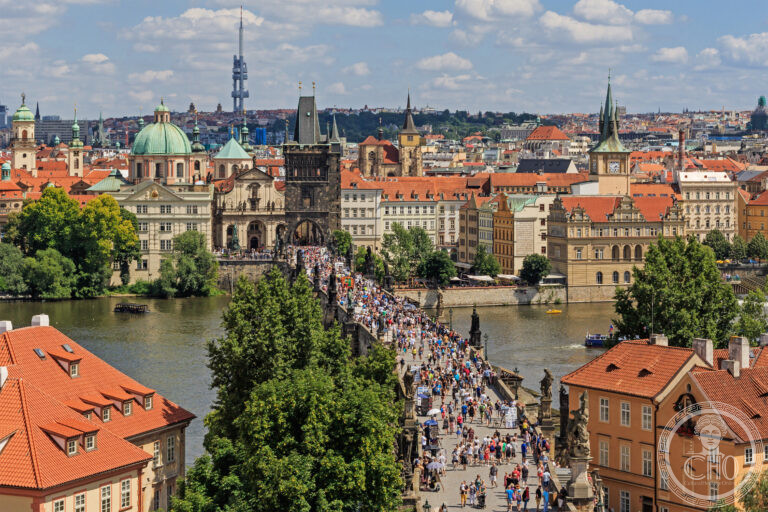
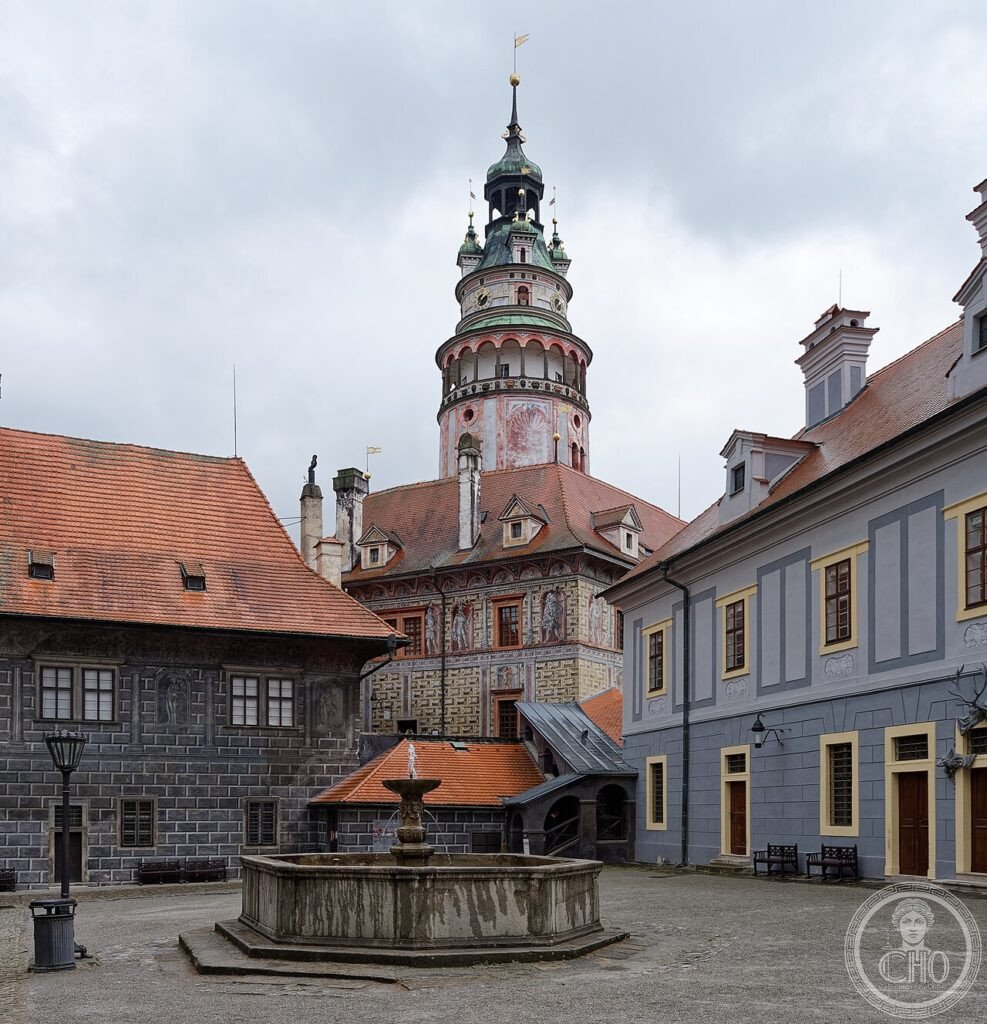
Český Krumlov Castle (founded 13th century CE; expanded by the Rosenberg family 1302–1602 CE, then the Eggenberg and Schwarzenberg dynasties; the castle complex: 40 buildings on a rocky spur encircled by a meander of the Vltava River; the Round Tower (Kulatá věž; 13th century CE; the oldest part of the castle; decorated with painted Renaissance arcades 16th century CE) and the castle baroque theatre (1682 CE; one of the best-preserved Baroque theatre interiors in the world with original stage machinery, wing sets, and costumes still in place), Český Krumlov, South Bohemian Region, Czech Republic. UNESCO World Heritage Site 1992. Photo via Wikimedia Commons.
South Bohemian Region, Czech Republic · 13th–18th century CE; Rosenberg, Eggenberg, Schwarzenberg dynasties; Baroque castle theatre 1682 CE; UNESCO WHS 1992

Český Krumlov

A Bohemian castle town wrapped in a river loop and frozen in amber since the Baroque age — Český Krumlov (South Bohemian Region; UNESCO WHS 1992) occupies a rocky promontory encircled by the Vltava River, its 40-building castle complex rising above a medieval town so intact that it passed from Gothic to Renaissance to Baroque without a modern street inserted between them.

At a glance

Český Krumlov (the most precisely CeskyKrumlov single South Bohemian Region Jihočeský kraj Czech Republic Vltava River Moldau meander 170 km south Prague 25 km Austrian border Linz 40 km town 13000 inhabitants municipality castle 40 buildings 2nd largest castle complex Czech Republic after Prague Castle rocky spur encircled Vltava River meander 270 degree river loop natural moat town and castle UNESCO WHS 1992 reference 591 3 bear moat castle living bears tradition Rosenberg bears since 16th century CE still maintained Rosenberg dynasty 1302 1602 CE primary builders Eggenberg family 1622 1717 CE Baroque additions theatre Schwarzenberg 1719 1947 CE final dynasty theatre museum UNESCO heritage in any UNESCO world heritage site).

Key facts

  • The Baroque castle theatre of Český Krumlov (the most intact 17th-century theatre mechanism surviving anywhere in the world): the Castle Theatre (Zámecké divadlo; 1682 CE; the Eggenberg family; expanded by Schwarzenberg dynasty to capacity of 400 spectators in 1766 CE) is the only 17th-century European Baroque court theatre to have survived with its original stage machinery fully intact: 13 original hand-operated wing sets on rails; original flying machinery (rope-and-pulley systems for aerial effects); original trap doors; a scene-change mechanism capable of transforming the stage setting in under 30 seconds; and approximately 400 original 17th-to-18th-century costumes stored in the castle archives; the theatre fell out of use in 1767 CE and was never modernized, which accounts for the preservation; it was rediscovered in 1944 CE still with all mechanisms in place; it now operates for a limited number of performances per year using historically informed lighting (candles and oil lamps) — the only place in the world where you can see a fully functioning Baroque opera performed in a period theatre with period technology
  • GPS: 48.8130° N, 14.3151° E

History

From Rosenberg stronghold to Baroque showpiece to Communist mothballs to UNESCO recognition (the most precisely CeskyKrumlov single 1253 CE Vítkovec clan first castle built rocky spur above Vltava meander 1302 CE Rosenberg family inherited Krumlov Rosenbergs powerful South Bohemian noble dynasty Five-Petalled Rose heraldic device rose symbol throughout castle town 1302 1602 CE Rosenberg period 300 years primary builders Gothic castle expanded Renaissance arcades painted tower Round Tower Renaissance frescoes arcade loggia 1508 CE William I Rosenberg extensive Renaissance rebuilding most of town centre Gothic to Renaissance conversion 1602 CE Petr Vok Rosenberg last Rosenberg sold estate to Emperor Rudolf II Habsburg financial difficulties end 300-year dynasty 1622 CE Johann Ulrich von Eggenberg received Krumlov from Emperor Ferdinand II after Battle White Mountain 1620 CE reward for Catholic support 1682 CE Eggenberg Baroque Castle Theatre built most significant Baroque addition entire complex 1717 CE last Eggenberg died no heir 1719 CE Schwarzenberg family inherited 1766 CE Joseph Adam Schwarzenberg expanded theatre 400 seats Baroque expansion 1767 CE theatre closed out of fashion locked preserved 1938 CE Sudeten Crisis German annexation South Bohemia 1939 1945 CE WWII 1945 CE Sudeten Germans expelled Beneš decrees Schwarzenberg estate confiscated 1948 CE Communist coup Czech Castle became state property museum 1992 CE UNESCO heritage: the Rosenberg rose and the dynasty that built Bohemia’s most romantic castle (how one family shaped 300 years of South Bohemian architecture): the Rosenberg family (Rožmberkové in Czech; one of the most powerful Bohemian noble families; their heraldic device: a five-petalled red rose on silver ground, which appears throughout the town and castle) were the primary builders of the Český Krumlov complex from the 13th to 17th centuries; their cultural patronage included: humanist court culture (Vilém z Rožmberka (1535–1592 CE) maintained one of the most sophisticated Renaissance courts north of the Alps); architectural expansion (the Renaissance arcade decoration of the castle tower — the painted illusionistic arcades that make the Round Tower look like it has open loggia from a distance — were commissioned by the Rosenbergs); and the town itself: the grid of streets, burgher houses, and monasteries below the castle are largely the result of 300 years of Rosenberg patronage; the five-petalled rose is carved, painted, and embedded in ironwork throughout the historic centre — a heraldic text visible everywhere you look) — the most precisely CeskyKrumlov single 1253 CE Vítkovec 1302 CE Rosenberg 300 years five-petalled rose town castle 1508 CE William I Renaissance arcade Round Tower painted frescoes 1602 CE Petr Vok sold Rudolf II end dynasty 1622 CE Eggenberg Habsburg reward White Mountain Catholic support 1682 CE Baroque Theatre 13 wing sets 400 costumes period machinery intact 1717 CE last Eggenberg 1719 CE Schwarzenberg 1767 CE theatre closed preserved intact 1992 CE UNESCO heritage in any UNESCO world heritage site).

What you see

The castle complex, the painted Round Tower, the Baroque gardens, and the medieval town (the most precisely CeskyKrumlov single Castle complex 40 buildings 5 courtyards 2nd largest Czech Republic after Prague connected by bridge over moat with 3 living bears tradition 16th century CE Rosenberg heraldic bears still maintained castle complex Route from 1st courtyard entrance gate Round Tower 13th century CE oldest part frescoed Renaissance arcade painted Mannerist decoration 1580 CE simulated architectural masonry window frames pilasters from a distance tower appears to have open loggia entirely painted illusion 2nd courtyard clock tower Baroque theatre entrance 4th courtyard Baroque Wing Eggenberg 1690 CE garden 5th courtyard Lower Castle garden formal Baroque garden 1750 CE 18th century CE Schwarzenberg Baroque English park redesign cascade fountain viewpoint Belvedere pavilion Baroque theatre 4th courtyard guided visit mandatory 1682 CE original 13 wing rail sets scene change 30 seconds 400 original costumes intact trap doors flying rigging period opera rare performances candle oil lamp lighting Town below castle Lazebnický bridge stone bridge 17th century CE Náměstí Svornosti main square burghers houses Gothic-Renaissance facades Hotel Ruže former Jesuit college 1588 CE Egon Schiele Art Centrum: Egon Schiele (1890–1918 CE the Austrian Expressionist painter) lived in Český Krumlov 1911 CE — his mother was from the town — and painted numerous townscape works and models; the Schiele Art Centrum (converted 1992 CE from a Baroque brewery) holds permanent Schiele works alongside visiting exhibitions; Schiele was arrested in Neulengbach during this period accused of indecency later exonerated UNESCO heritage: the castle moat bears and Rosenberg heraldry (the living heraldic animals that still guard the castle gate): the three brown bears living in the moat below the castle gate are the direct continuation of a tradition begun by the Rosenberg family in the 16th century CE (the Rosenberg coat of arms: a five-petalled rose, not a bear — the bears were added as a separate heraldic conceit, possibly a pun on the name Český Krumlov’s regional association with the bear symbol); the tradition has continued without interruption since ca. 1575 CE (the first documentary evidence of bears at the castle); the current bears are maintained by the South Bohemian Museum; they are the only living heraldic animals continuously maintained at a Central European castle since the 16th century CE) — the most precisely CeskyKrumlov single 40 buildings 5 courtyards 2nd largest Czech Republic bears moat tradition 1575 CE continuous Rosenberg Round Tower 13th CE painted Renaissance arcade 1580 illusionistic Baroque theatre 1682 CE 13 wing sets 400 costumes trap doors flying rigging 30-second scene change Belvedere Baroque garden cascade Náměstí Svornosti main square Hotel Ruže Jesuit 1588 Egon Schiele 1890 1918 Austrian Expressionist lived 1911 mother from town Centrum 1992 brewery converted UNESCO heritage in any UNESCO world heritage site).

Practical information

  • Getting there: from Prague: Student Agency / FlixBus (3h; €8-15; direct; departs Florenc bus station; several daily); or car from Prague (170 km; 2h30m on D4 motorway then regional roads); from Vienna: bus or car (160 km; 2h15m; a popular day trip from Vienna); castle complex free entry to courtyards; guided tours of castle interior and theatre by booking (Castle Route I: €10; Castle Route II: €12; Baroque Theatre tour: €15, strictly limited availability, book weeks ahead at zamek.ckrumlov.cz); Bears at the moat: visible without ticket from the bridge above; castle gardens (free; open May–October 8 AM–7 PM); Egon Schiele Art Centrum (€8; Tue–Sun 10 AM–6 PM); town historic centre: walking 30–40 min circuit; best time (May–June and September–October: before summer crowds peak July–August; the Baroque Music Festival (early July, Castle Theatre with period lighting) and Five-Petalled Rose Festival (third weekend June, medieval re-enactment in costume) are the signature cultural events)

Getting there

From Prague: bus 3h (€8–15, FlixBus/Student Agency). From Vienna: car/bus 160 km (2h15m). Castle courtyards free. Interior tours €10–15 (Baroque Theatre €15, book ahead). Egon Schiele Centrum €8. Best: May–June, September. GPS: 48.8130, 14.3151.

Nearby

  • Holašovice — 25 km north-west (UNESCO WHS 1998; a perfectly preserved South Bohemian village of 22 farmsteads in the South Bohemian Folk Baroque style (18th–19th century CE; the characteristic architectural programme: whitewashed walls, lunette window gables, painted decorative panels; the village has not changed in plan or built form since ca. 1840 CE; no new buildings, no demolitions; a working agricultural village that happens to be one of the most intact folk architecture ensembles in Central Europe; visited by very few tourists compared to Český Krumlov)
  • Salzburg — 80 km south-west (UNESCO WHS 1996; Mozart’s birthplace (27 January 1756 CE; the Geburtshaus at Getreidegasse 9; open daily); the Hohensalzburg Fortress (1077 CE; the best-preserved medieval fortress in the Alps; reached by funicular); the Baroque Cathedral (1628 CE; Archbishop Wolf Dietrich von Raitenau; the first large Baroque cathedral north of the Alps); the Salzburg Festival (late July–August; the largest classical music festival in Europe; 200+ concerts in six weeks; Mozart operas performed in the court where he was employed and dismissed))

Sources

  • Wikipedia, Český Krumlov; Český Krumlov Castle; Egon Schiele Art Centrum; Rosenberg family, accessed June 2026
  • UNESCO, Historic Centre of Český Krumlov, WHS reference 591, inscribed 1992

Hero image: Český Krumlov, South Bohemia, Czech Republic, Wikimedia Commons. Editorial text © Cultural Heritage Online, 2026.

📷 Diventa un fotografo di Cultural Heritage Online

Condividi le tue foto dei luoghi: restano pubblicate con la tua firma come autore. Più vengono viste, più ti fai conoscere — e presto un concorso premierà le foto più apprezzate.

Accedi o registrati gratis per aggiungere una foto
📋 Copy & share on social
Scroll to Top