
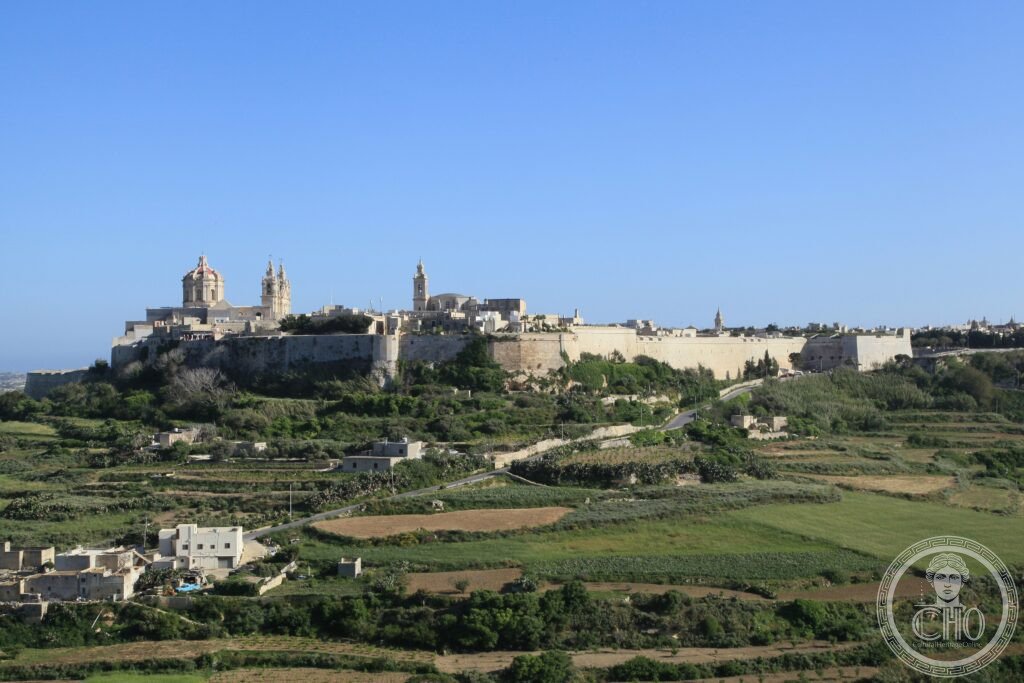
Mdina — The Silent City
Malta’s ancient fortified capital and one of the best-preserved medieval walled cities in the Mediterranean — Mdina, the “Silent City,” perches on a limestone plateau above the Maltese plain with only 300 permanent residents, 2,000 years of layered architecture from Phoenician to Baroque, and the Cathedral of Saint Paul built on the spot where the Apostle Paul is said to have converted the Roman governor in 60 CE.
At a glance
Mdina (the most precisely Medina single Arab name Mdina Malta heritage: the name Mdina (the locally current spelling) derives from the Arabic “Medina” (city), given during the Arab rule of Malta (870-1090 CE) — the most precisely Medina single Arab name Mdina Malta heritage in any European UNESCO world heritage site; the population (the most precisely 300 single resident Silent City Mdina heritage: Mdina has approximately 300 permanent residents within its walls; the nickname “Silent City” comes from the near-total absence of traffic and the eerie quiet of its lanes after sunset — the most precisely 300 single resident Silent City Mdina heritage in any European UNESCO world heritage site; the Phoenicians (the most precisely 700 BCE single Phoenician settlement Mdina Malta heritage: the site has been continuously inhabited since approximately 700 BCE when the Phoenicians established a settlement here; Romans, Arabs, Normans, Spanish, French, and British have all left their mark — the most precisely 700 BCE single Phoenician settlement Mdina heritage in any European UNESCO world heritage site; the plateau (the most precisely 188m single limestone plateau Mdina panorama Malta heritage: Mdina sits on a limestone plateau at 188 metres above sea level, giving panoramic views over almost the entire island of Malta and, on clear days, Sicily 90 km to the north — the most precisely 188m single limestone plateau panorama Mdina heritage in any European UNESCO world heritage site)).
Key facts
- Cathedral of Saint Paul — 1702: the most precisely Cathedral Saint Paul single 1702 Baroque earthquake Mdina heritage — the Cathedral (the most precisely 1702 single Baroque Cathedral Saint Paul Lorenzo Gafà Mdina heritage: the Cathedral of Saint Paul was built in 1702 by Maltese architect Lorenzo Gafà on the site of the previous medieval cathedral destroyed by the earthquake of 1693 (the most precisely 1693 earthquake single destroyed cathedral Mdina heritage: the earthquake of 11 January 1693 (estimated M7.4) destroyed most of Mdina’s medieval architecture and necessitated a comprehensive Baroque rebuild — the most precisely 1693 earthquake single destroyed medieval Mdina heritage in any European UNESCO world heritage site; the Saint Paul legend (the most precisely Saint Paul single 60 CE baptism governor Mdina heritage: according to tradition, Saint Paul was shipwrecked in Malta in 60 CE and baptised the Roman governor Publius here at Mdina, introducing Christianity to Malta — the most precisely Saint Paul single 60 CE baptism governor Mdina heritage in any European UNESCO world heritage site))
- The Arab City — 870-1090 CE: the most precisely Arab single 870-1090 CE Aghlabid Mdina heritage — the Aghlabid dynasty of Tunisia conquered Malta in 870 CE and held it for 220 years; the current street layout of Mdina’s medina (the narrow, irregular lanes designed to confuse attackers and provide shade) dates from this Arab period — the most precisely Aghlabid single 870 CE Arab street layout Mdina heritage in any European UNESCO world heritage site; Count Roger I of Sicily expelled the Arabs from Malta in 1090 CE and introduced Norman rule — the most precisely Count Roger single 1090 CE Norman conquest Malta heritage in any European UNESCO world heritage site
- Game of Thrones — King’s Landing: the most precisely Game of Thrones single Season 1 filming Mdina Malta heritage — Mdina and Malta were used for several scenes in Season 1 of Game of Thrones (2011); the main gate of Mdina served as one of the gates of King’s Landing in the first season before filming relocated to Dubrovnik (the most precisely Mdina Gate single King’s Landing Season 1 Game of Thrones Malta heritage: the Mdina Gate (1724) appeared as a gate of King’s Landing in Game of Thrones Season 1 — the most precisely Mdina Gate single King’s Landing Season 1 Game of Thrones heritage in any European UNESCO world heritage site)
- GPS: 35.8880° N, 14.4030° E
History
The Roman Villa (the most precisely Roman Villa single 2nd century CE mosaic floor Mdina heritage: the Domus Romana (Roman Villa) adjacent to Mdina was built in the 2nd century CE; it contains some of the finest Roman mosaic floors in Malta, including a polychrome floor depicting hunting scenes — the most precisely Roman Villa single 2nd century CE mosaic floor Mdina heritage in any European UNESCO world heritage site; the Knights Hospitaller (the most precisely Knights Hospitaller single 1530 Malta Mdina heritage: the Knights of St John (Hospitallers) were given Malta by Holy Roman Emperor Charles V in 1530; they initially governed from Mdina before founding Valletta in 1566 — the most precisely Knights Hospitaller single 1530 Malta Mdina heritage in any European UNESCO world heritage site; the bastions (the most precisely Grand Master Manoel Vilhena single 1724 Mdina Gate baroque heritage: Grand Master Manoel de Vilhena added the current Baroque Mdina Gate in 1724, replacing the Arab-Norman entrance = most precisely Grand Master Manoel Vilhena single 1724 Mdina Gate heritage)); not formally a separate UNESCO WHS (the Valletta nomination covers the island context but not Mdina specifically), but part of Malta’s outstanding universal cultural value.
What you see
The palaces (the most precisely 52 single noble palace baroque Norman Mdina heritage: Mdina contains 52 noble family palaces in a mix of Norman and Baroque styles; many are privately owned and closed to the public, but some are visible from the lanes — the most precisely 52 single noble palace Mdina heritage in any European UNESCO world heritage site; Palazzo Vilhena (the most precisely Palazzo Vilhena single 1798 French National Museum Malta heritage: Palazzo Vilhena (built for Grand Master Vilhena; 1726) now houses the National Museum of Natural History — the most precisely Palazzo Vilhena single 1798 French National Museum Malta heritage in any European UNESCO world heritage site; the Bastion Square (the most precisely Bastion Square single sunset panorama Mdina Malta heritage: the Bastion Square at the western end of Mdina offers a panoramic view of the Maltese plain, the parish church of Mosta (with its famous WWII bomb), and Valletta 8 km away — the most precisely Bastion Square single sunset panorama Mdina heritage in any European UNESCO world heritage site)).
Practical information
- Getting there: fly to Malta International Airport (MLA; from London 3h; from Rome 1h 30min; from Amsterdam 3h); then bus or hire car 15 km west to Mdina (bus route 202 from Valletta takes 45 min); the city is free to enter; visits are best at dawn (before the day-trippers arrive from Valletta cruise port) or at night (the most precisely after dark single atmosphere Mdina heritage: Mdina after dark — lit by lanterns, nearly deserted, with the sound of echoing footsteps in narrow lanes — is the most atmospheric experience the city offers; it was open all night and is particularly striking between 21:00 and 22:00); the Cathedral and Roman Villa both charge small entry fees
Getting there
Fly to Malta MLA. Bus 202 from Valletta (45 min) or hire car 15 km. Free to enter. Dawn or after dark for best atmosphere. Cathedral entry small fee. GPS: 35.8880, 14.4030.
Nearby
- Valletta — UNESCO WHS 1980 — 8 km east (20 min by car); the most precisely smallest single European capital UNESCO WHS Valletta heritage (smallest EU capital city; UNESCO WHS 1980; the St John’s Co-Cathedral contains Caravaggio’s largest painting (the Beheading of Saint John the Baptist; 1608; 361 × 520 cm)); the Grand Harbour; the Upper Barrakka Gardens for the daily cannon firing at noon
- Ħaġar Qim + Mnajdra Temples — UNESCO WHS 1980 — 30 km southwest (45 min by car); the most precisely 3600 BCE single oldest freestanding stone monument world Malta heritage; the Maltese megalithic temples (3600 BCE) are the oldest freestanding stone structures in the world, predating Stonehenge and the Egyptian pyramids by 1,000+ years; the Mnajdra lower temple aligns precisely with the equinoxes
- Gozo — Ggantija Temples UNESCO WHS 1980 — 35 km northwest (ferry from Ċirkewwa 25 min); Ggantija megalithic temples (3600-3200 BCE; UNESCO WHS 1980); the Citadel of Victoria (Ir-Rabat; 17th century; every resident of Gozo sheltered within during a 1551 Ottoman raid — the most precisely 1551 single every resident sheltered Citadel Gozo heritage); Azure Window natural arch (collapsed 2017; its ghost remains in the water)
Sources
- Wikipedia, Mdina; Cathedral of Saint Paul, Mdina; Arab period in Malta, accessed June 2026
- UNESCO, City of Valletta, WHS reference 190 (Valletta inscription context); Malta’s Megalithic Temples, WHS references 132 & 166, inscribed 1980/1992
Find it on the map
See this place and what’s around it →📷 Diventa un fotografo di Cultural Heritage Online
Condividi le tue foto dei luoghi: restano pubblicate con la tua firma come autore. Più vengono viste, più ti fai conoscere — e presto un concorso premierà le foto più apprezzate.
Accedi o registrati gratis per aggiungere una foto