
.jpg)
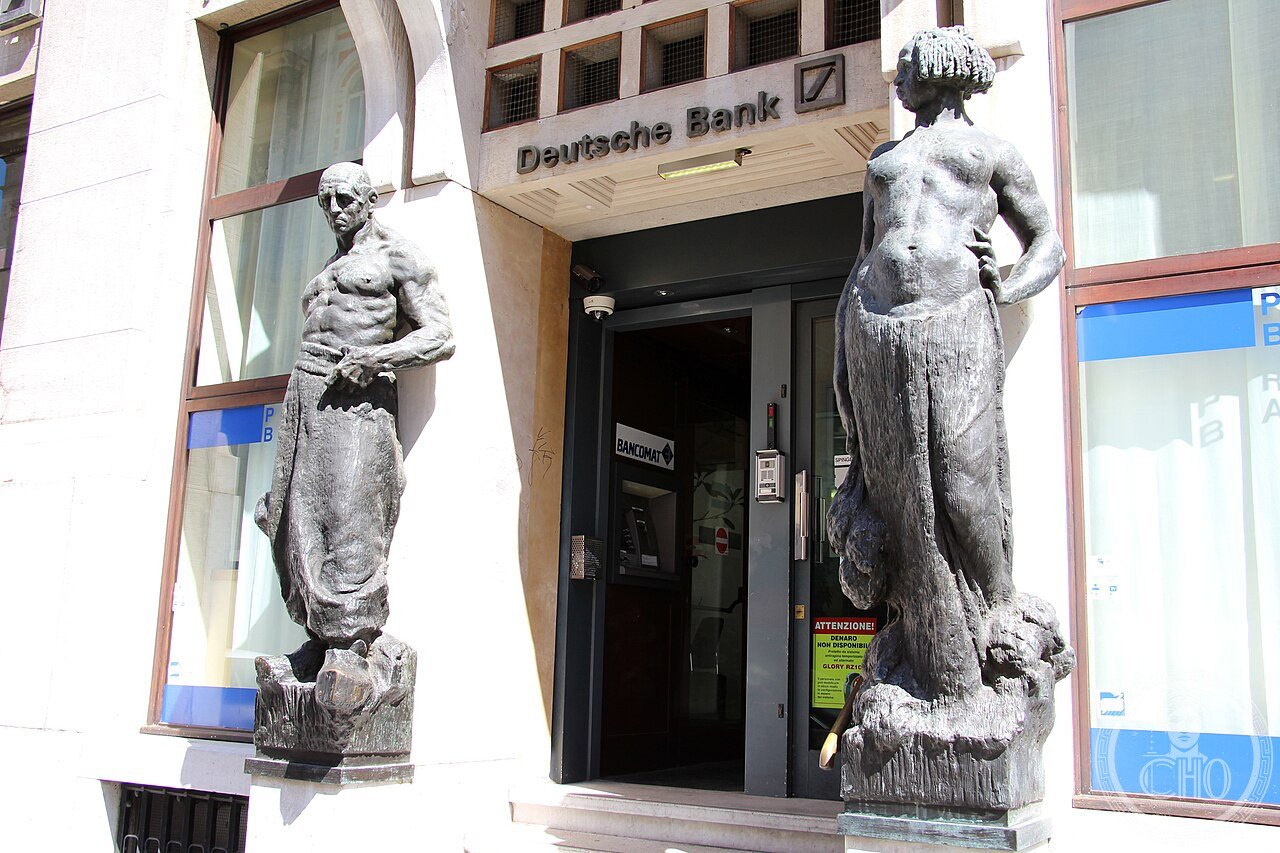
Where Czech and Triestine Sezessionstil meet at the same desk: Costaperaria and Polívka’s 1914 corner block was built for a Prague bank’s Adriatic headquarters, and still carries the wrought-iron ‘ZB’ monogram on its original bronze door.
At a glance
Palazzo della Banca di Praga stands at Via Roma 7, corner Via Mazzini 20, on a lot created when the Trieste municipality demolished several buildings on Ponterosso in 1911 to widen the street. The Czech bank Živnostenská banka pro Čechy a Moravu bought the new corner lot and built its Adriatic headquarters on it. The architects were Josip Costaperaria, a Wagner-school graduate working in Trieste, and Osvald Polívka, the architect of Prague’s Municipal House — the Czech Secession’s most famous interior.
Key facts
- Architects: Josip Costaperaria (Trieste, Wagner school) and Osvald Polívka (Prague)
- Client: Živnostenská banka pro Čechy a Moravu (Czech commercial bank)
- Built: 1911–14
- Address: Via Roma 7 / Via Mazzini 20, 34132 Trieste
- Style: Late Secession (approaching Rationalism)
- Sculptor: Ladislav Šaloun (bronze statues, Prague, 1926)
- Current tenant: Deutsche Bank (since 1928 through successors)
- GPS: 45.6513, 13.7719
History
The building reads as the late-Secession argument transposed from Mitteleuropean late-1900s vocabulary into something already approaching the rationalism of the 1920s. The lower zone opens with large windows in checkerboard metal frames; the upper residential levels carry rectangular windows in clear stone surrounds. The two bronze statues representing Industry and Labour, by the Czech sculptor Ladislav Šaloun, were not placed on the building until 1926 — delayed by WWI shipping blockages from Prague. The bank ceded the building to Banca d’America e d’Italia in 1928; today it houses Deutsche Bank. The wrought-iron ‘ZB’ monogram on the original bronze entrance door is still legible.
What you see
Slightly projecting erkers develop across two levels and culminate in polygonal terraces topped by small balconies. The late-Secession language is cooler and more geometric here than in the earlier Trieste buildings: Costaperaria and Polívka were working at the moment when Central European architecture was shifting from ornamental surface to structural rationality. The Šaloun statues — muscular, purposeful, Viennese in their heroic figuration — bring the Czech contribution into focus on the building’s exterior.
Practical information
- Access: Banking branch (Deutsche Bank) — exterior free; interior access during banking hours for clients
- What to look for: The ‘ZB’ monogram on the bronze entrance door; the Šaloun statues on the upper levels
- Time needed: 10 minutes
Getting there
Via Roma is two blocks north of Piazza della Borsa. From Casa Bartoli, walk north along Via del Teatro Romano and turn right onto Via Roma; the palazzo is at n. 7, 200 metres from the start.
Nearby
- Casa Terni-Smolars (Romeo Depaoli, 1906) — 300 m south-east, Via Dante 6
- Narodni Dom (Max Fabiani, 1904) — 400 m north-east, Via Filzi 14
- Canal Grande (Trieste’s neo-Baroque waterway) — 200 m west
Sources
- Beniculturali.comune.trieste.it: Palazzo della Banca di Praga
- Triestesegreta: El palazo dela Banca de Praga
- Wikimedia Commons: Photo, Fred Romero, CC BY 2.0
Find it on the map
See this place and what’s around it →Record researched and written by Carla Szathvary for Cultural Heritage Online, 2026.
📷 Become a Cultural Heritage Online photographer
Share your photos of places: they stay published under your name as the author. The more they're seen, the more you get noticed — and soon a contest will reward the most appreciated photos.
Log in or sign up free to add a photoIs this page about you?
This page is read by travellers and heritage enthusiasts who find it on Google. Tell us how you are connected to this place and we will take it from there.