
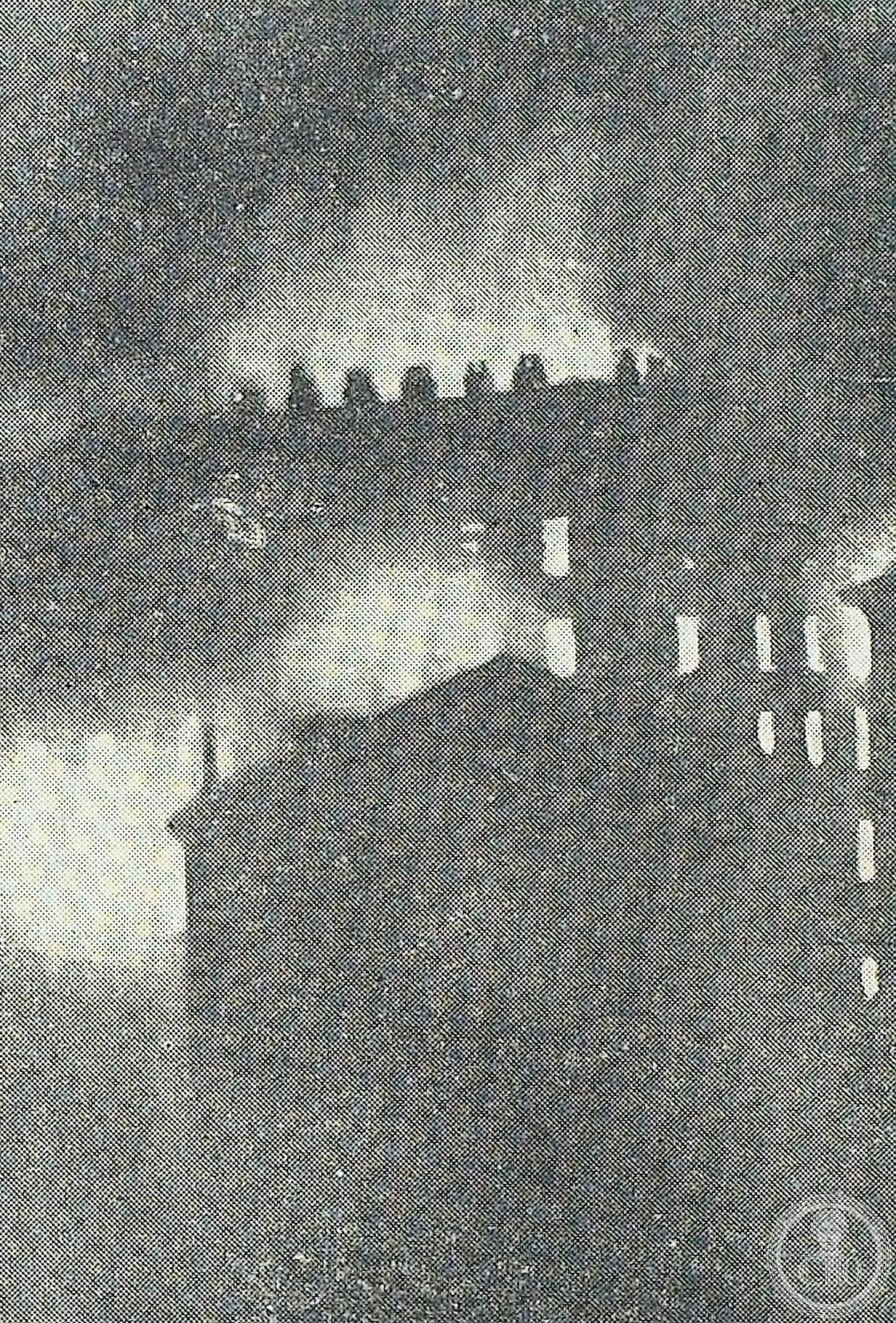
Max Fabiani’s 1904 People’s House was Europe’s first multifunctional community centre and the city’s most politically charged building: the Fascist arson of 13 July 1920 that destroyed it was called by historian Renzo De Felice ‘the true baptism of organised Fascist squadrismo.’
At a glance
Narodni Dom — the People’s House — stands at Via Fabio Filzi 14, rebuilt on the shell left by the arson of 1920 and restored to Max Fabiani’s original plans in 1988–90. Fabiani designed it between 1901 and 1904 for the Slovene community of Trieste. The building was the first multifunctional community centre of its kind in Europe: a small theatre, a bank, a gymnasium, two cafés, two restaurants, a hotel, and apartments, all organised around a central atrium. The Italian-speaking city called it Hotel Balkan after its hospitality function. Today the University of Trieste houses its School of Modern Languages for Interpreters and Translators (SSLMIT) here.
Key facts
- Architect: Max Fabiani (1865–1962), Otto Wagner atelier 1894–98
- Built: 1901–04
- Client: Slovene community of Trieste
- Address: Via Fabio Filzi 14, 34132 Trieste
- Style: Vienna Secession (Wagnerschule)
- Arson: 13 July 1920 (Fascist squadristi)
- Reconstruction: Camillo Jona (Hotel Regina), restored 1988–90
- Current use: University of Trieste — SSLMIT
- GPS: 45.6547, 13.7747
History
Fabiani trained in Otto Wagner’s atelier between 1894 and 1898; Narodni Dom is what a Wagner pupil built when given a community-centre brief in his own city. The technical-rational structural system, the monumental stone façade, and the integrated services — electric generator, central heating — translated the Postsparkasse vocabulary into a Trieste corner. On 13 July 1920, Italian Fascist Blackshirts led by Francesco Giunta set the building on fire. Renzo De Felice later called the act “the true baptism of organised Fascist squadrismo.” Fabiani himself joined the Italian Fascist movement in May 1921, less than a year after the arson. Camillo Jona reconstructed the shell as Hotel Regina; restoration to the original plans came in 1988–90 and again around 2010. The University of Trieste bought the building in 1996.
What you see
The building as it stands today is a faithful restoration of Fabiani’s original Wagner-school composition. The monumental stone façade, the structural honesty, and the integrated services register the same Viennese vocabulary visible at Casa Bartoli — but here deployed at larger scale for a civic, not commercial, programme. Read the elevations slowly. The Wagner grammar survives the twentieth century, but you have to look for it past the layers of reconstruction and restoration.
Practical information
- Access: University of Trieste SSLMIT — exterior free; interior accessible during academic hours
- Time needed: 10–15 minutes for exterior; longer if attending a university event
- Context: The hero image above shows the building burning in 1920; the exterior visible today is the result of restoration completed in 1988–90
Getting there
Via Filzi is in the north end of Trieste’s Borgo Teresiano grid, 600 metres north of Piazza della Borsa. From the Canal Grande, walk east on Via Mazzini and then north on Via Filzi.
Nearby
- Palazzo della Banca di Praga (Costaperaria + Polívka, 1914) — 400 m south-west, Via Roma 7
- Sinagoga di Trieste (Berlam family, 1912) — 400 m south, Via San Francesco 19
- Canal Grande (Borgo Teresiano waterway) — 300 m west
Sources
- Wikipedia EN: Trieste National Hall (Narodni Dom)
- Patriaindipendente.it: Narodni Dom e l’ascesa del fascismo
- Balcanicaucaso.org: Narodni Dom, 102 anni dopo
- Wikimedia Commons: Narodni Dom burning, 1920, Public Domain
Find it on the map
See this place and what’s around it →Record researched and written by Carla Szathvary for Cultural Heritage Online, 2026.
📷 Become a Cultural Heritage Online photographer
Share your photos of places: they stay published under your name as the author. The more they're seen, the more you get noticed — and soon a contest will reward the most appreciated photos.
Log in or sign up free to add a photoIs this page about you?
This page is read by travellers and heritage enthusiasts who find it on Google. Tell us how you are connected to this place and we will take it from there.