
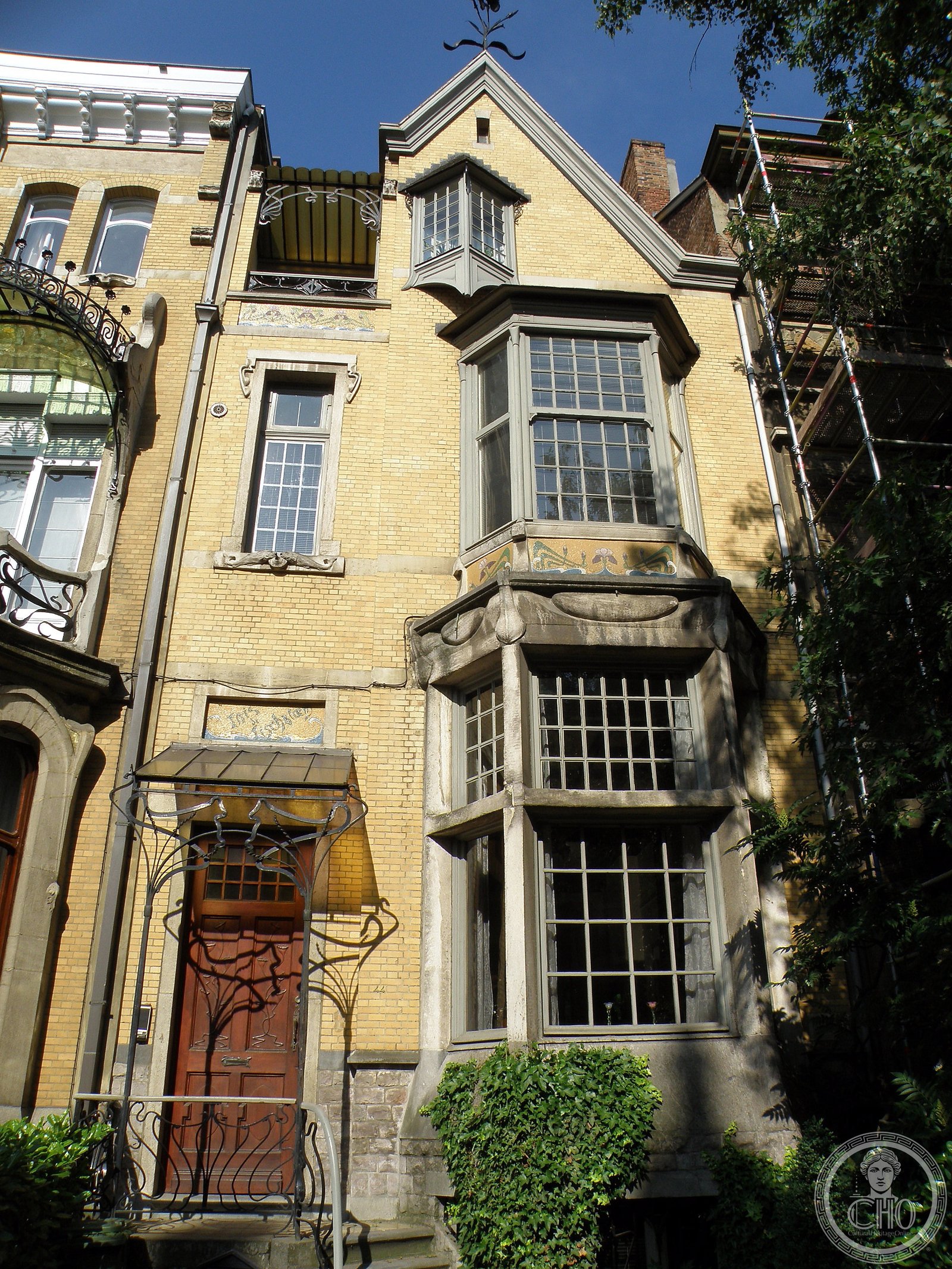
A house named after a flower, on streets where every front tries to outshine its neighbour.
At a glance
Iris de Lischbloem — “Iris the flag-flower” — is an Art Nouveau townhouse in Zurenborg, the planned district in south-east Antwerp famous for its concentration of fin-de-siècle architecture. Built in 1898 to designs by Gustave Van den Bossche, it belongs to the dense run of named houses that make Zurenborg one of the richest Art Nouveau quarters in Europe. Like its neighbours, it carries an emblematic name, set into a facade conceived as a small showpiece of the new style.
Key facts
- Architect: Gustave Van den Bossche
- Built: 1898
- Style: Art Nouveau
- District: Zurenborg, south-east Antwerp
- Name: “Iris de Lischbloem” (Iris the flag-flower)
- Context: a planned late-19th-century neighbourhood
History
Zurenborg was largely laid out between 1894 and 1906, one of the few parts of Antwerp built to a deliberate urban plan in the late nineteenth century. The new quarter reflected the city’s growing wealth from its port and trade, and its streets — above all around Cogels-Osylei — filled with elaborate townhouses for the well-to-do.
Iris de Lischbloem, built in 1898 by Gustave Van den Bossche, was one of these. Naming houses after flowers, ideas or places was part of the district’s character, turning a residential street into a gallery of facades.
The whole neighbourhood survives today as a protected ensemble, one of the densest displays of Art Nouveau and eclectic architecture anywhere.
What you see
The house presents a decorative Art Nouveau front in the manner of the Zurenborg townhouses, where the flat plane of the facade is broken by curving lines, ornamental detail and the emblem that gives the building its name.
Its interest is as much collective as individual: Iris de Lischbloem is one note in a long street-chord, where each house was designed to converse with and outdo its neighbours, and the ensemble matters as much as any single front.
Practical information
- The house is private; it is enjoyed from the street as part of a walk through Zurenborg.
- The neighbouring Cogels-Osylei and Waterloostraat hold the district’s most famous houses.
- Time needed: combine with a full Zurenborg walking circuit.
Getting there
Zurenborg lies in south-east Antwerp, between the Berchem railway station and the city centre, reached by tram or a walk from Berchem.
Nearby
- Cogels-Osylei, the showpiece street of Zurenborg.
- The “seasons” houses of the Waterloostraat.
- De Vijf Werelddelen in the Antwerp Zuid.
Sources
- Wikipedia (EN), “Zurenborg”.
- Flemish heritage inventory (inventaris.onroerenderfgoed.be).
Find it on the map
See this place and what’s around it →Record researched and written by Luigi De Marchi for Cultural Heritage Online, 2026.
📷 Become a Cultural Heritage Online photographer
Share your photos of places: they stay published under your name as the author. The more they're seen, the more you get noticed — and soon a contest will reward the most appreciated photos.
Log in or sign up free to add a photoIs this page about you?
This page is read by travellers and heritage enthusiasts who find it on Google. Tell us how you are connected to this place and we will take it from there.