

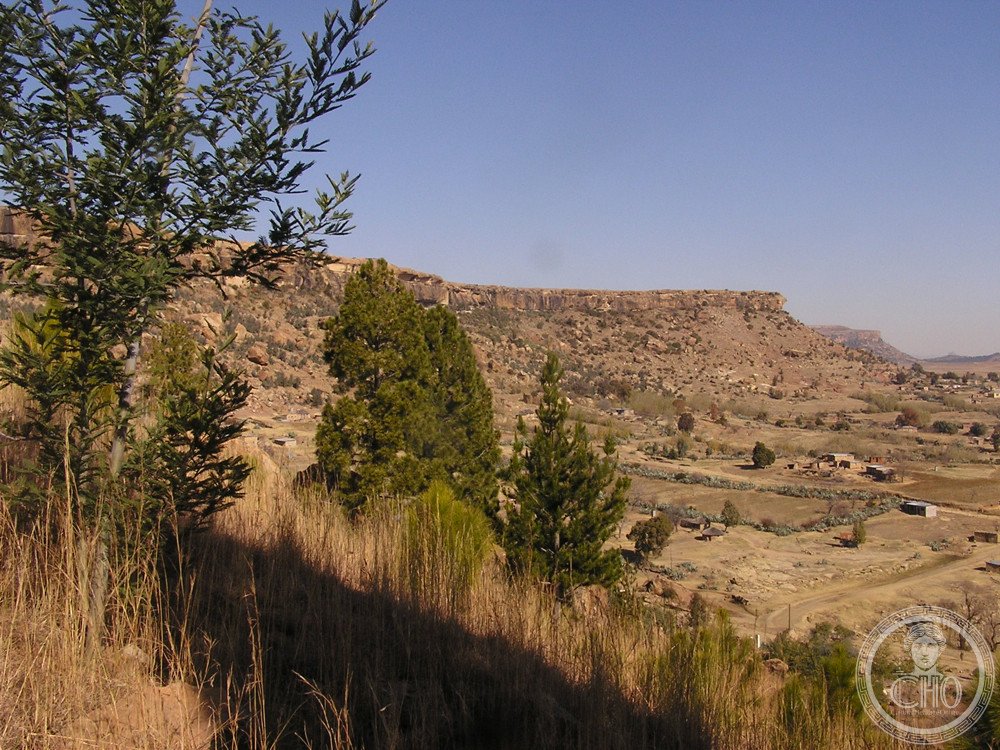
The Mountain at Night – Moshoeshoe’s unconquered plateau where the Basotho nation was forged and its kings still rest.
At a glance
- Type
- Historic mountain fortress and royal burial ground
- Period
- Occupied from 1824
- Style
- Natural sandstone plateau fortress
- Location
- 20 km east of Maseru, Lesotho
- Coordinates
- -29.3625, 27.7211
- Founder
- King Moshoeshoe I
Overview
Thaba Bosiu – the Mountain at Night – is the flat-topped sandstone plateau Moshoeshoe I occupied in 1824, gathering refugees of the lifaqane wars into the nation that became the Basotho. Its sheer passes, defended through Zulu, Ndebele, Boer, and British assaults, never fell – the only such record in southern Africa – and the summit holds the kings’ graves and the ruins of the founder’s village.
History
Legend says the mountain grows at night to defeat besiegers; history says Moshoeshoe’s diplomacy matched his rock – paying cattle to repulsed enemies, courting missionaries, and finally placing his realm under Victoria in 1868 to save it from the Free State, the move that kept Lesotho sovereign inside South Africa’s map. Royal burials continue on the summit; the nation’s oaths invoke the mountain.
Architecture and Design
Stone-walled passes – Khubelu, Mokhachane – thread the cliffs; on top, hut foundations, the kings’ cemetery, and Moshoeshoe’s court site read the capital’s plan. The visitor centre below models the qiloane conical hill that inspired the mokorotlo hat, Lesotho’s emblem.
Cultural significance
Thaba Bosiu is Lesotho’s founding shrine – mountain, dynasty, and survival in one – the obligatory oath-ground of politics and the first stop of national self-explanation to visitors.
Visiting today
Guides lead the pass ascent daily from the cultural village; allow two hours with the summit circuit. Maseru lies thirty minutes away.
Getting there
Taxis and tours run from Maseru’s border posts; the road is paved to the visitor centre.
Sources and resources
Find it on the map
See this place and what’s around it →Record researched and written by Luigi De Marchi for Cultural Heritage Online, 2026.
📷 Become a Cultural Heritage Online photographer
Share your photos of places: they stay published under your name as the author. The more they're seen, the more you get noticed — and soon a contest will reward the most appreciated photos.
Log in or sign up free to add a photoIs this page about you?
This page is read by travellers and heritage enthusiasts who find it on Google. Tell us how you are connected to this place and we will take it from there.