
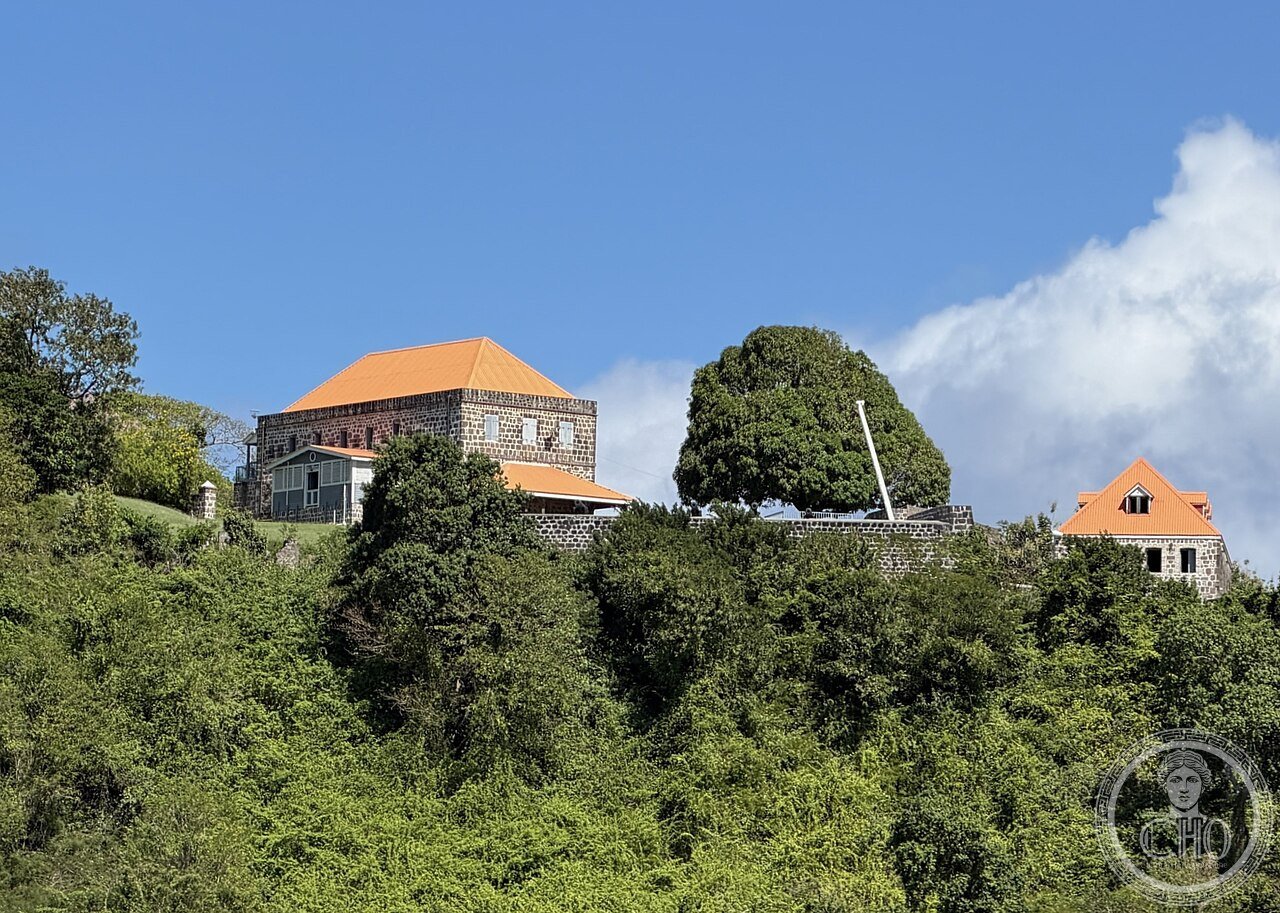
The garrison reclaimed from the jungle – site of the 1802 revolt of the 8th West India Regiment that helped win free status for the empire’s Black soldiers.
At a glance
- Type
- Garrison fortress (Cabrits National Park)
- Period
- 1770s-1815
- Style
- Georgian military
- Location
- Cabrits peninsula, Portsmouth, Dominica
- Coordinates
- 15.5869, -61.4750
- Restorer
- Historian Lennox Honychurch
Overview
Fort Shirley spreads fifty Georgian structures over the twin volcanic hills of the Cabrits peninsula above Prince Rupert Bay – the British garrison of Dominica’s north, swallowed by rainforest after 1854 and patiently uncovered since the 1980s under historian Lennox Honychurch. The restored officers’ quarters and batteries now host events within the national park’s green.
History
In April 1802 the 8th West India Regiment – enslaved Africans recruited as soldiers – revolted here against degrading labour and the fear of sale, holding the garrison days before suppression; the mutiny’s inquiry contributed to the 1807 act freeing all serving West India Regiment soldiers, eight hundred men’s defiance bending imperial law. The fort’s interpretation centres their story.
Architecture and Design
Cut-stone powder magazines, cisterns, and the commandant’s house step through strangler figs; the restored mess hall’s gala dinners and the battery’s cannon over the bay stage heritage in living use. Trails link the upper batteries’ ruins in the dry forest.
Cultural significance
Fort Shirley joins Caribbean military heritage to Black soldiers’ agency – the 1802 revolt its proudest narrative – and anchors Dominica’s north alongside the island’s UNESCO-listed Morne Trois Pitons wilderness.
Visiting today
The national park opens daily; combine with Indian River rows and the Waitukubuli trail’s segment. Cruise calls at Portsmouth make morning visits busiest.
Getting there
Portsmouth lies an hour’s coastal drive from Roseau; the park gate sits at the bay’s northern curve.
Sources and resources
Find it on the map
See this place and what’s around it →📷 Become a Cultural Heritage Online photographer
Share your photos of places: they stay published under your name as the author. The more they're seen, the more you get noticed — and soon a contest will reward the most appreciated photos.
Log in or sign up free to add a photoIs this page about you?
This page is read by travellers and heritage enthusiasts who find it on Google. Tell us how you are connected to this place and we will take it from there.