
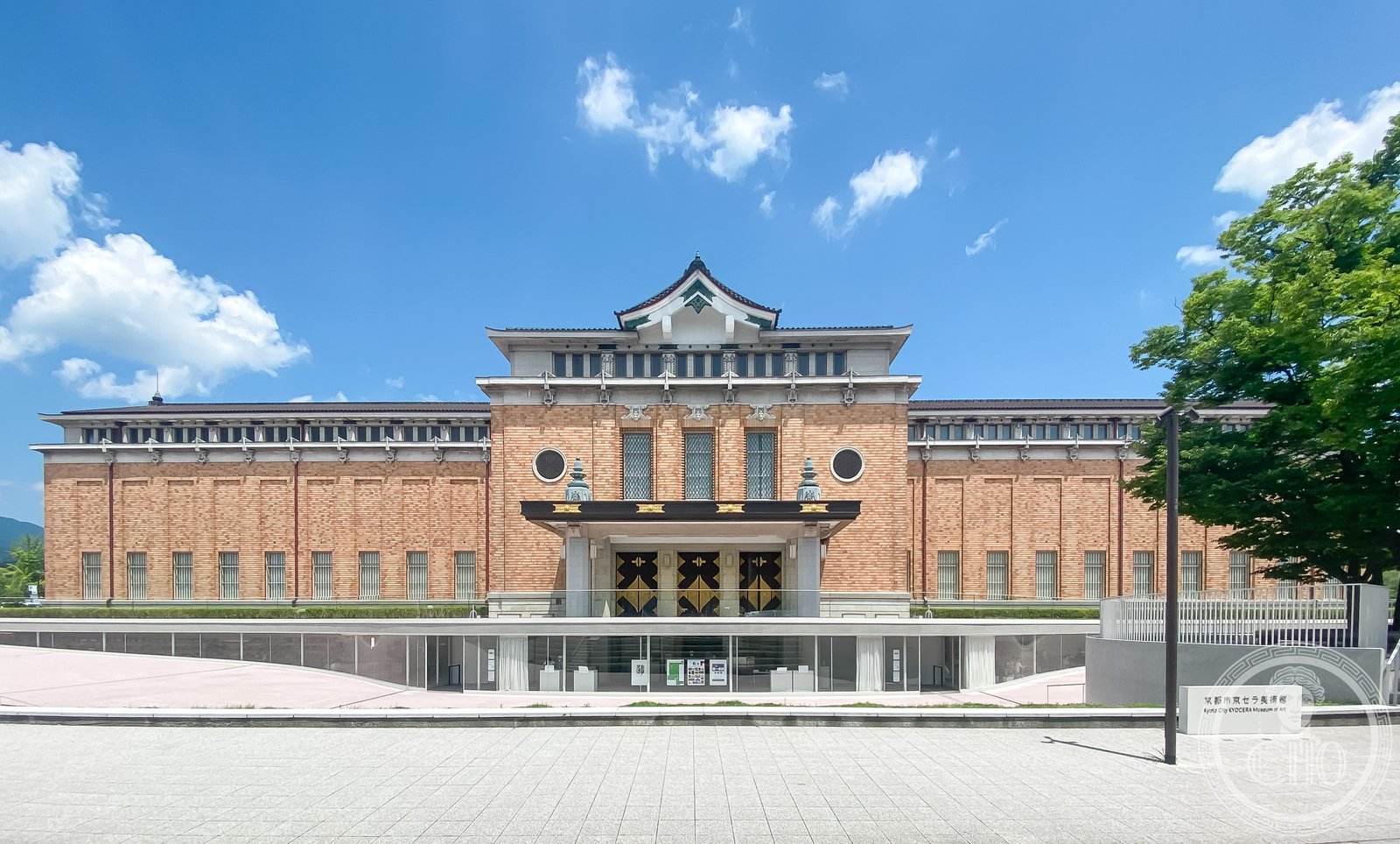
Built to commemorate the 1,100th anniversary of Kyoto’s founding as imperial capital, this monumental museum synthesizes Western Art Deco symmetry with Japanese imperial architectural elements in a style officially designated Teikan-yōshiki, or the Imperial Crown Style. Designed by Maeda Kesataro and completed in 1933, the building combines a hipped Japanese-style roof of Kyoto green tiles with a Neo-Baroque entrance facade, grand coffered ceilings, and a monumental staircase that quotes Beaux-Arts convention. The Imperial Crown Style was a deliberate government policy: major public buildings of the 1930s were required to read as Japanese while employing modern reinforced concrete construction. The museum, now officially named the Kyoto City Kyocera Museum of Art following a major corporate sponsorship and extensive renovation completed in 2020, holds one of Japan’s largest collections of modern and contemporary Japanese art and remains a National Historic Site of Japan.
At a glance
- Type
- Public art museum
- Period
- 1930–1933 (construction); 2017–2020 (renovation)
- Style
- Imperial Crown Style (Teikan-yōshiki)
- Location
- Okazaki, Sakyo-ku, Kyoto, Japan
- Coordinates
- 35.0128° N, 135.7836° E
- Architect(s)
- Maeda Kesataro
Overview
The Kyoto City Kyocera Museum of Art is Japan’s oldest public art museum still operating in its original building, and one of the finest surviving examples of the Imperial Crown Style that dominated Japanese civic architecture in the 1930s. The building sits within Okazaki Park, a cultural zone east of the city centre that also houses the Heian Shrine, the National Museum of Modern Art Kyoto, and the Kyoto Municipal Zoo. The museum’s permanent collection focuses on modern and contemporary art by Kyoto-based and Japanese artists, while its renovated underground and new east wing accommodate major international exhibitions. The 2020 renovation by Nishimoto Koji added glass-enclosed galleries beneath the historic entrance plaza without altering the protected historic exterior.
History
The museum was conceived in 1926 as the centerpiece of celebrations marking 1,100 years since Emperor Kanmu moved the imperial capital to Kyoto in 794. Construction began in 1930 and the building opened in 1933 as the Kyoto Municipal Art Museum. Its founding collection was assembled through donations from Kyoto’s artistic community and public acquisitions. During the Pacific War the building was requisitioned for military use; afterwards it returned to its museum function and gradually expanded its collection through the postwar decades. In 2017 the museum closed for a three-year renovation, reopening in 2020 under its current name following a naming-rights agreement with the Kyocera Corporation. The renovation was designed to modernize facilities while preserving the nationally designated historic exterior and main hall.
Architecture & Design
The building exemplifies the tension and ingenuity of the Imperial Crown Style. The symmetrical facade, organized around a projecting central bay with paired columns and a decorated frieze, reads unmistakably as a Beaux-Arts public building. Above this Western base rises a sweeping hipped roof of Kyoto-green glazed tiles with dramatically upswept eaves, referencing the rooflines of classical Japanese palace architecture. The entrance vestibule leads into a grand hall with a coffered ceiling and a double staircase of pale stone, creating a processional sequence of monumental spaces. The brickwork and stone detailing of the lower floors, the bronze entrance doors, and the proportioning of the window bays all show careful compositional thought. The 2020 underground extension, entered through glass pavilions flanking the historic entrance, adds contemporary gallery space without competing with the protected historic structure above.
Cultural significance
The museum is a rare, well-preserved example of a building type that once defined Japanese civic identity but has largely been demolished or altered beyond recognition. The Imperial Crown Style was politically charged: it was mandated by a nationalist government seeking architectural symbols of continuity between modern Japan and the imperial tradition. Surviving examples like this one are now valued as historical documents of that cultural moment as much as for their intrinsic architectural quality. The building is designated a National Historic Site of Japan, one of only a handful of modern buildings to receive this status. Its continued use as a living museum rather than a frozen monument gives it an importance that pure preservation could not achieve.
Visiting today
The museum is open Tuesday through Sunday, 10:00 to 18:00 (last admission 17:30), with extended hours during major exhibitions. The historic main hall and its staircase can be visited free of charge; individual exhibitions require separate tickets. The museum is located in Okazaki Park, a pleasant area for walking, and is near several other major cultural institutions. A cafe and museum shop are on site. The surrounding park and the view toward Heian Shrine’s torii make the approach worth taking on foot.
Getting there
From central Kyoto, take the Tozai Subway Line to Higashiyama Station, then walk north for approximately ten minutes through Okazaki Park. Alternatively, city bus routes 5, 32, and 100 stop at Okazaki-koen Bijutsukan Dōbutsuen-mae. By bicycle, the museum is about 20 minutes from Kyoto Station along the Okazaki canal path, a pleasant route through traditional neighbourhoods. Parking is limited; public transport is recommended.
Sources & resources
Find it on the map
See this place and what’s around it →Record researched and written by Luigi De Marchi for Cultural Heritage Online, 2026.
📷 Become a Cultural Heritage Online photographer
Share your photos of places: they stay published under your name as the author. The more they're seen, the more you get noticed — and soon a contest will reward the most appreciated photos.
Log in or sign up free to add a photoIs this page about you?
This page is read by travellers and heritage enthusiasts who find it on Google. Tell us how you are connected to this place and we will take it from there.