
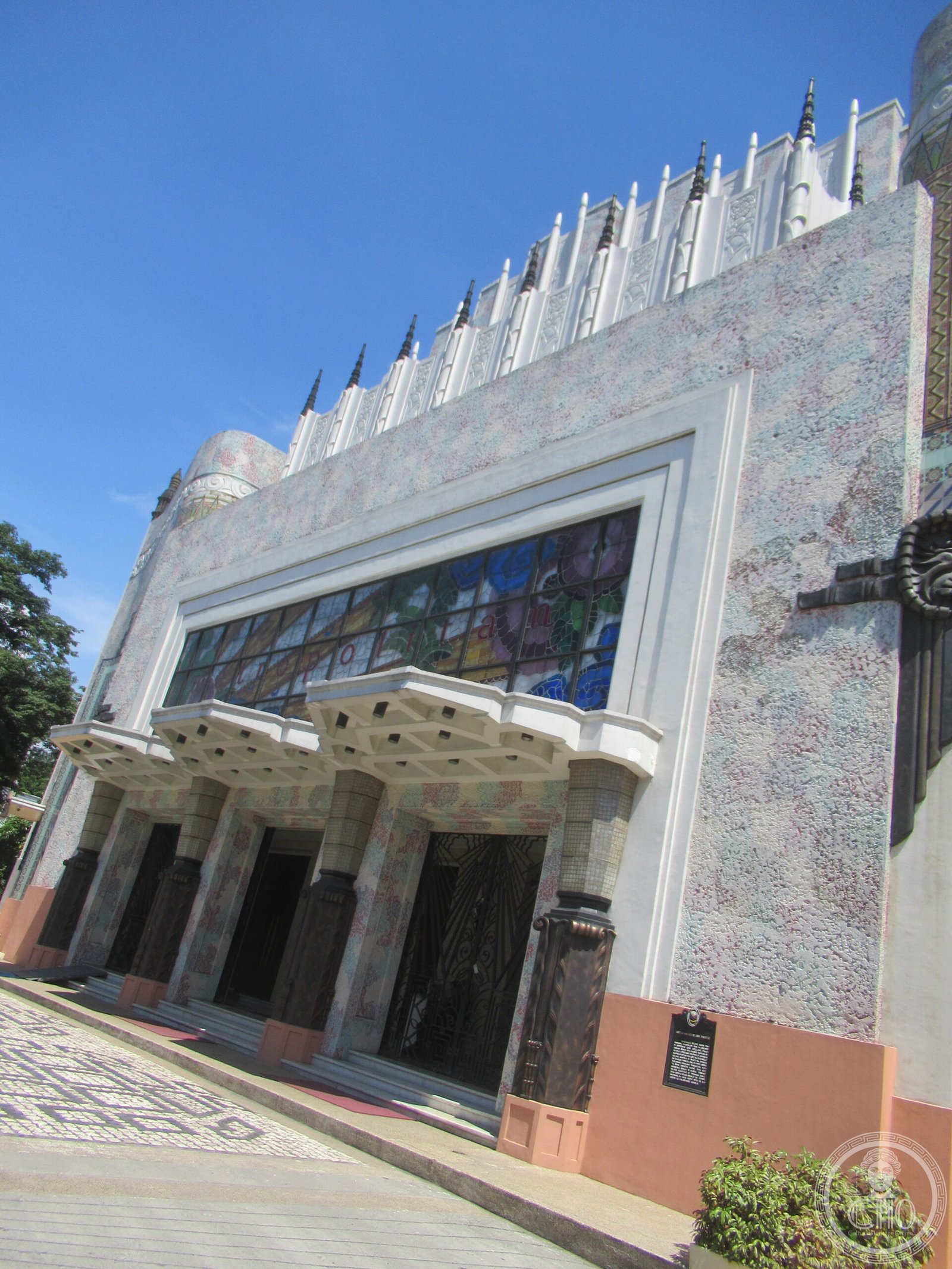
The Metropolitan Theater — known simply as “The Met” — stands on Padre Burgos Avenue in the heart of Manila as one of the most audacious works of Art Deco architecture ever built in Southeast Asia. Designed by Filipino national artist Juan Arellano and completed in 1931, the building fused the streamlined geometry of international Art Deco with traditional Filipino decorative motifs: stylized sunbursts, parabolic arches, and step-pyramid rooflines that blend Mayan abstraction with Hollywood glamour. The Met opened under the American Commonwealth era as the premier performing-arts venue of the Philippines, hosting opera, ballet, and theatre for Manila high society. The Second World War shattered its gilded world; the 1945 Battle of Manila left the building scarred. Decades of political indifference and failed restoration campaigns followed. Today the Met stands as a National Cultural Treasure, a skeletal monument to colonial-era ambition — and to the fragility of architectural heritage when institutions fail to act.
At a glance
- Type
- Performing arts theatre
- Period
- American Commonwealth era, 1931
- Style
- Art Deco / Spanish Colonial Revival / Filipino Modernism
- Location
- Padre Burgos Avenue, Ermita, Manila, Philippines
- Coordinates
- 14.5965° N, 120.9814° E
- Architect(s)
- Juan Arellano (National Artist of the Philippines)
Overview
The Metropolitan Theater was the jewel of Manila cultural life under the American Commonwealth. Juan Arellano — who also designed Manila City Hall and the Post Office Building — brought an entirely original vision to the commission. Rather than import a ready-made American Deco formula, he synthesised the angular vocabulary of 1920s modernism with indigenous Philippine decorative grammar, producing a building of singular identity. The theatre seated approximately 1,700 patrons across orchestra, mezzanine, and balcony levels. Its mosaic-tiled lobby, painted ceilings, and sculpted façade reliefs were benchmarks of craftsmanship in the Pacific region. Declared a National Cultural Treasure by the National Museum of the Philippines, the Met has been on the ICOMOS endangered heritage list and has been the subject of repeated restoration promises, none completed.
History
Construction began in the late 1920s and the Met opened in 1931, positioning Manila as a cultural capital of the Pacific. Through the 1930s it hosted international touring companies and became central to Filipino national identity as the Commonwealth moved toward independence. The Japanese occupation (1942–45) repurposed the building, and the catastrophic Battle of Manila in February 1945 — the second-most-destructive urban battle of World War II — left structural damage and the loss of irreplaceable interior elements. Post-war governments lacked the will or resources for full restoration. By 1996 the building was closed to public use. In 2010 the National Commission for Culture and the Arts announced a restoration; scaffolding appeared and disappeared over subsequent years. As of the early 2020s, partial structural work has been undertaken, but the building remains closed and its long-term future is uncertain.
Architecture & Design
Arellano organised the façade around a central projecting bay flanked by lower wings, the whole surface articulated with bas-relief panels depicting Philippine flora, mythological figures, and geometric step patterns. The roofline carries a sequence of vertical fins and recessed setbacks that echo the stepped-pyramid massing of Mayan temples — a motif popular in Hollywood Deco of the same period, here reinterpreted with a distinctly Filipino sensibility. The entrance archway is parabolic, its keystone carved with a sunburst — a symbol simultaneously Art Deco and pre-colonial Filipino. Inside, the auditorium employed a horseshoe plan with cantilevered balconies; the proscenium was framed by geometric plasterwork of exceptional refinement. Mosaic tile floors in geometric patterns survive partially and give a sense of the original chromatic richness.
Cultural significance
The Metropolitan Theater is recognised as the finest Art Deco building in Southeast Asia by many architectural historians, and its designation as a National Cultural Treasure reflects the depth of its importance to Philippine national identity. It represents the moment when Filipino architects first synthesised global modernism with indigenous cultural forms — a postcolonial architectural declaration made, paradoxically, under colonial administration. Its current state of decay has made it a flashpoint for debates about heritage preservation, government accountability, and the place of the pre-war built environment in contemporary Filipino urban life. Every announced restoration has mobilised architects, artists, and citizens in advocacy: the building catalyses cultural memory far beyond its physical presence.
Visiting today
As of 2024 the Metropolitan Theater remains closed to general public entry. The exterior on Padre Burgos Avenue is fully visible and freely observable from the street and Liwasang Bonifacio park opposite. Restoration scaffolding may be present on parts of the façade. The National Museum of the Philippines complex is nearby and provides context on Philippine architectural history. Check the National Commission for Culture and the Arts (NCCA) website for any updates on access or guided tour programmes.
Getting there
The Met is located on Padre Burgos Avenue in Ermita, Manila, adjacent to Liwasang Bonifacio. The nearest LRT-1 station is Central Terminal (United Nations Avenue), approximately 600 metres south. Jeepneys and buses along Taft Avenue and Roxas Boulevard serve the area. From Intramuros it is a 10-minute walk north via Bonifacio Drive. Tricycles and rideshare apps (Grab) reach the site directly.
Sources & resources
Find it on the map
See this place and what’s around it →Record researched and written by Luigi De Marchi for Cultural Heritage Online, 2026.
📷 Become a Cultural Heritage Online photographer
Share your photos of places: they stay published under your name as the author. The more they're seen, the more you get noticed — and soon a contest will reward the most appreciated photos.
Log in or sign up free to add a photoIs this page about you?
This page is read by travellers and heritage enthusiasts who find it on Google. Tell us how you are connected to this place and we will take it from there.