
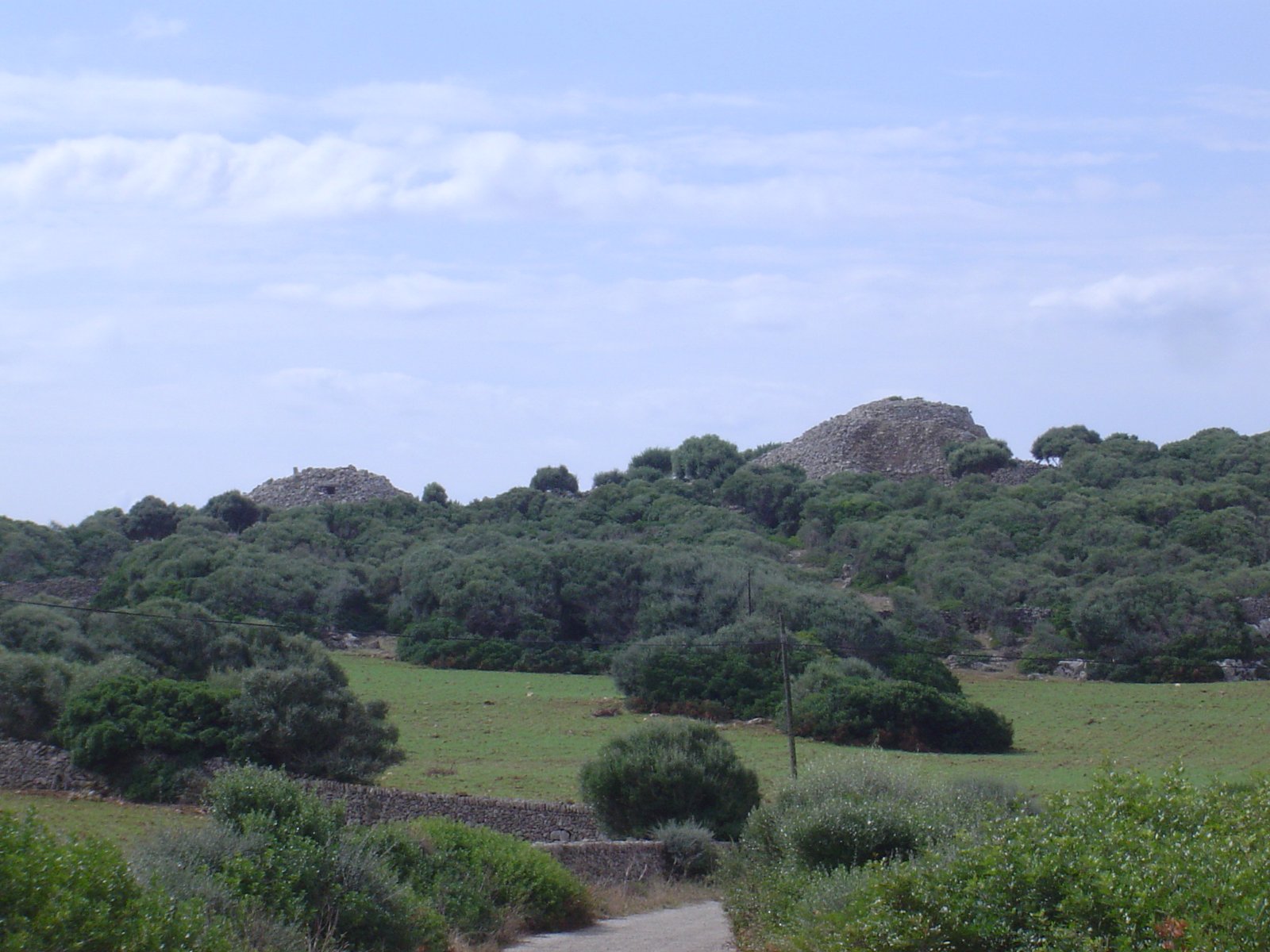
An island of stone towers, T-shaped altars and boat-shaped tombs: Menorca preserves the densest concentration of prehistoric monuments in the western Mediterranean, inscribed by UNESCO in 2023.
At a glance
Between roughly 1000 and 123 BCE, the Bronze Age and Iron Age peoples of Menorca raised an extraordinary landscape of stone monuments. Three forms define the Talayotic culture: the talayot, a conical stone tower of debated function; the taula, a T-shaped megalith found nowhere else on Earth, always set within a circular enclosure and evidently sacred; and the naveta, a boat-shaped collective tomb with a corbelled roof. UNESCO inscribed the site in July 2023, recognising its exceptional integrity and the uniqueness of the taula tradition.
Key facts
- UNESCO inscription: 2023 (World Heritage Site)
- Period: c. 1000–123 BCE (Bronze Age to Iron Age)
- Location: Island of Menorca, Balearic Islands, Spain
- Monument types: Talayots, taulas (T-shaped altars), navetes, hypostyle halls
- Key sites: Torre d’en Galmes, Taula de Torralba d’en Salord, Naveta des Tudons
- Naveta des Tudons: c. 1200 BCE — oldest intact roofed building in the Iberian Peninsula
- Taulas: Found exclusively on Menorca; no parallel structure exists anywhere else on Earth
History
Menorca was first settled around 6000 BCE, but the culture whose monuments define the island today emerged circa 1000 BCE at the start of the Talayotic period. This society organised itself around nucleated settlements anchored by talayots — large conical towers that may have served as watchtowers, communal halls, or sacred spaces. The taula enclosures, with their T-shaped monoliths, represent a ritual tradition unique to Menorca; their engineering precision — the capstone weighing several tonnes placed with millimetre accuracy — speaks to a sophisticated, organised society. Roman conquest in 123 BCE ended the Talayotic period, but Menorca never experienced the intensive quarrying or urbanisation that destroyed comparable sites elsewhere.
What you see
Torre d’en Galmes is the largest Talayotic settlement on the island: three talayots, a taula enclosure, a hypostyle hall, circular stone dwellings, and a legible network of ancient streets spread across a hilltop plateau 10 km from Alaior. Taula de Torralba d’en Salord is considered the finest surviving taula, standing almost four metres tall within a well-preserved horseshoe enclosure. Naveta des Tudons, near Ciutadella, is a collective burial monument c. 1200 BCE whose corbelled stone ceiling has stood for more than three thousand years — the oldest intact roofed building in the Iberian Peninsula. Across the island, more than 1,500 prehistoric monuments have been catalogued.
Practical information
- Torre d’en Galmes: Open daily; entry fee approx. €3–5; car park and guided tours on site
- Naveta des Tudons: Free access; roadside car park off the Me-1 road
- Taula de Torralba d’en Salord: Admission fee; access from Alaior municipality
- Best time: April–June or September–October for mild weather and fewer crowds
Getting there
Menorca is served by Maho Airport (MAH), with year-round flights from mainland Spain and seasonal connections from across Europe. A car is strongly recommended: Torre d’en Galmes is 10 km from Alaior; Naveta des Tudons is 5 km east of Ciutadella on the Me-1 road.
Nearby
- Ciutadella de Menorca — the island historic capital, with a medieval cathedral and old quarter
- Mao (Mahon) — home to the Museu de Menorca with the most important Talayotic finds
- Cales Coves — coastal cliff face with pre-Talayotic rock-cut hypogea
- Son Catlar — the largest walled Talayotic settlement, perimeter wall still three metres high
Sources
Find it on the map
See this place and what’s around it →📷 Become a Cultural Heritage Online photographer
Share your photos of places: they stay published under your name as the author. The more they're seen, the more you get noticed — and soon a contest will reward the most appreciated photos.
Log in or sign up free to add a photo