
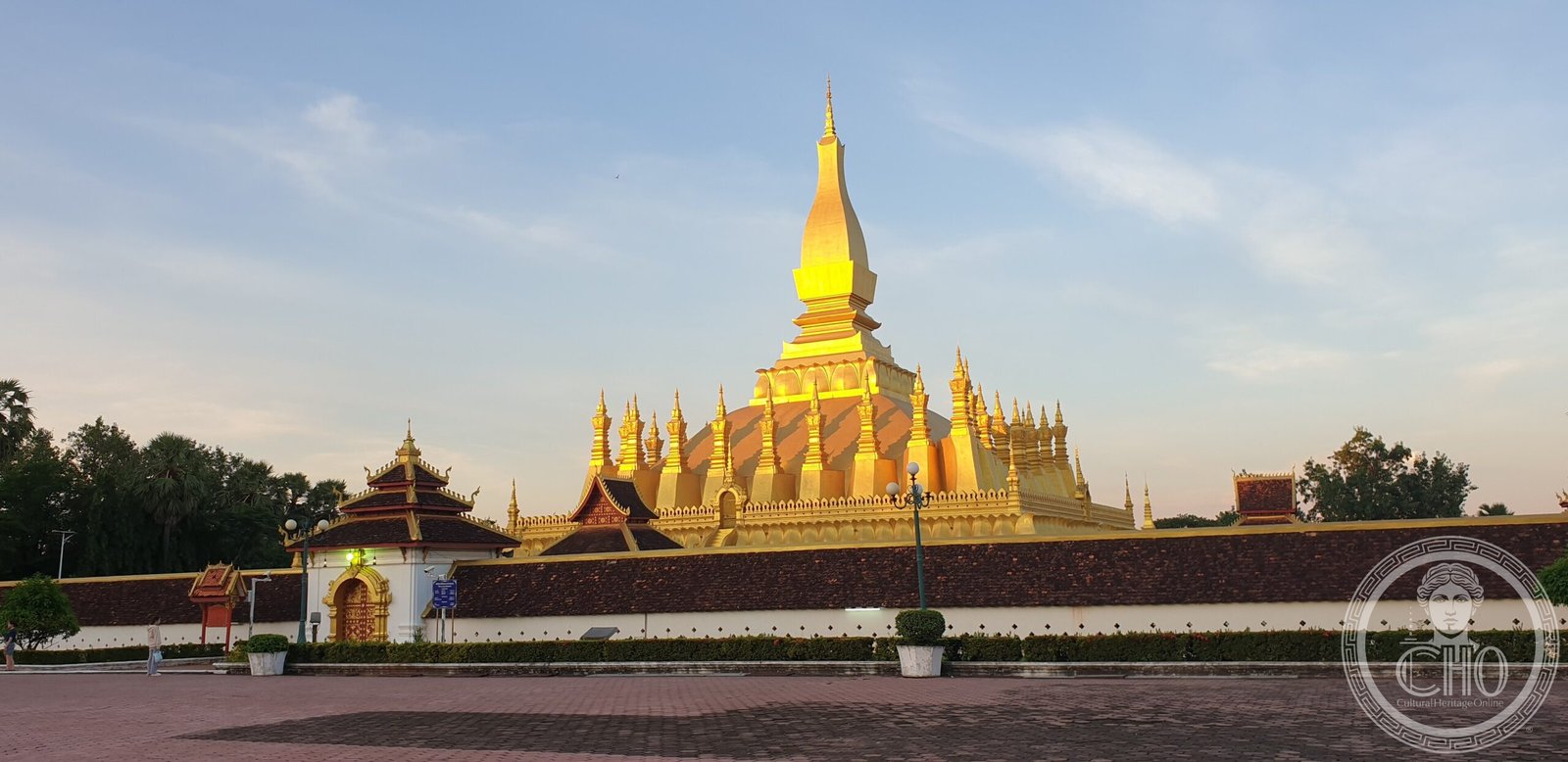
Laos’s most sacred Buddhist monument, this gold-covered stupa dominates Vientiane’s skyline and stands as the nation’s principal symbol of spiritual devotion and cultural identity.
At a glance
Pha That Luang is a monumental Buddhist stupa whose gleaming exterior has made it one of Southeast Asia’s most recognizable religious structures. The name means “Great Stupa” in Lao. Its tall, tapering form rises prominently above the capital’s landscape.
History
The stupa’s initial establishment is suggested to date to the 3rd century AD, though the monument has experienced a complex history marked by successive reconstructions. Invasions and conflict in the region necessitated major restoration work, notably in the 1930s, when significant rebuilding efforts restored and reinforced the structure.
What you see
The stupa’s defining feature is its gold covering, which catches light dramatically throughout the day. The structure embodies classical Buddhist architectural principles, with its prominent vertical emphasis drawing the eye upward in a gesture toward the divine.
Cultural significance
Pha That Luang holds profound importance for Lao Buddhism and national identity. It remains the country’s most revered Buddhist monument and serves as a focal point for religious observance and cultural pride among Lao people both domestically and in diaspora communities worldwide.
Key facts
- Country: Laos
- City: Vientiane
- Coordinates: 17.9762, 102.63425
- Initial establishment: Suggested 3rd century AD
- Major reconstruction: 1930s
Practical information & getting there
Pha That Luang is located in Vientiane and is easily accessed from the city center. As an active religious site, visitors should dress respectfully and observe local customs. Detailed opening hours and current access information are best confirmed with local tourism resources before your visit.
Sources & resources
- Pha That Luang – Wikipedia
- Cultural Heritage Online
Find it on the map
See this place and what’s around it →📷 Become a Cultural Heritage Online photographer
Share your photos of places: they stay published under your name as the author. The more they're seen, the more you get noticed — and soon a contest will reward the most appreciated photos.
Log in or sign up free to add a photoIs this page about you?
This page is read by travellers and heritage enthusiasts who find it on Google. Tell us how you are connected to this place and we will take it from there.