
The largest and most continuously occupied settlement of the Hohokam — the prehistoric people who inhabited the Sonoran Desert from 300 BC to 1450 AD and built the most sophisticated pre-Columbian irrigation system in North America: approximately 800 km of primary canals distributing water across 40,000 hectares of desert to sustain a population of perhaps 100,000 people.
At a glance
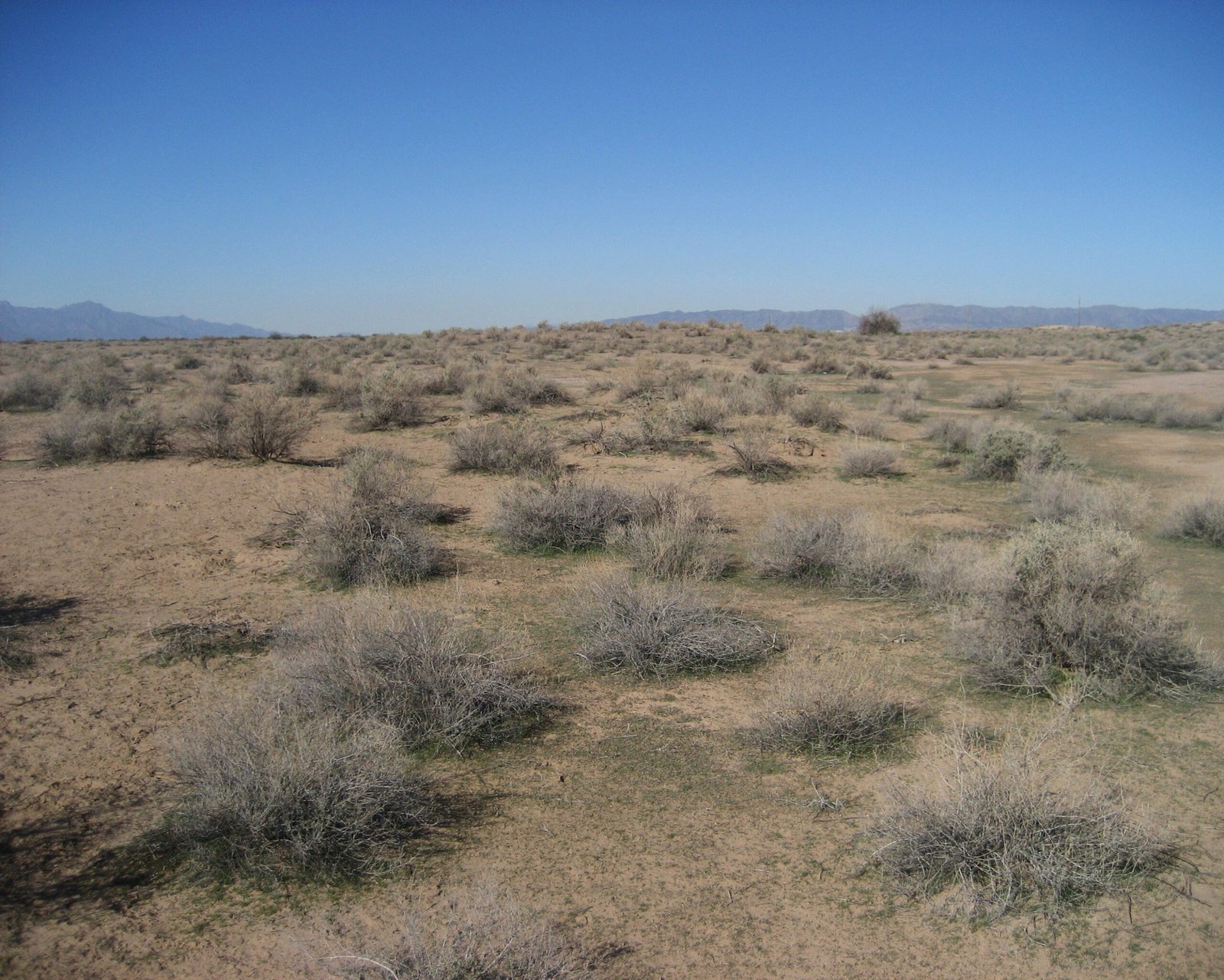
In the Gila River valley approximately 50 km south of Phoenix, within the Gila River Indian Community reservation, the site of Snaketown (O’odham: Skoaquik) preserves the remains of the largest and longest-occupied settlement of the Hohokam culture. Occupied continuously for approximately 1,700 years — from the Pioneer period (c. 300 BC) through the Classic period (c. 1300-1450 AD) — Snaketown’s extraordinary significance lies not in its surviving architecture but in what it represents: the centre of a civilisation that transformed one of the most hostile deserts in North America into an intensively managed agricultural landscape capable of sustaining tens of thousands of people. The site is within a reservation and not publicly accessible, but the Hohokam legacy is preserved at several nearby museums and heritage sites.
Key facts
- Occupied: c. 300 BC–1450 AD (approximately 1,700 continuous years)
- Peak population: Estimated 600-1,000 people at Snaketown; 30,000-100,000 in the broader Hohokam Phoenix Basin
- Canal network: Approximately 800 km of primary canals in the Salt and Gila River valleys — the largest pre-Columbian irrigation system in North America
- Irrigated area: Approximately 40,000 hectares of desert brought under agriculture
- Excavation: Emil Haury, University of Arizona, 1934-35 and 1964-65; subsequent O’odham community studies
- Stratigraphic sequence: 12 documented occupation phases — the longest unbroken sequence at any Hohokam site
- Descendant community: The Akimel O’odham (Pima) and Tohono O’odham of Arizona consider themselves Hohokam descendants
History
The Hohokam culture emerged in the Sonoran Desert of present-day Arizona from a regional archaeological tradition that extends back to at least 300 BC. The name “Hohokam” comes from the O’odham language and is generally translated as “those who have vanished” or “all used up” — a name applied by the Akimel O’odham people, who consider themselves the Hohokam’s descendants, to their ancestors. Snaketown, from the O’odham Skoaquik (“place of snakes”), was occupied continuously from the Pioneer period (c. 300 BC-500 AD) through the Colonial, Sedentary, and Classic periods to the general abandonment of the Hohokam heartland around 1450 AD — a span of approximately 1,700 years that makes it one of the longest continuously occupied prehistoric settlements in North America. Excavations by Emil Haury of the University of Arizona in 1934-35 and 1964-65 revealed a stratigraphic sequence of 12 occupation phases, each documented by distinctive ceramic styles, architectural patterns, and material culture.
The Hohokam achievement that sets them apart in the pre-Columbian Americas was hydraulic: beginning in the Colonial period (c. 500-900 AD) and expanding massively in the Sedentary and Classic periods, the Hohokam constructed an irrigation canal network of approximately 800 km of primary canals in the Salt and Gila River valleys, distributing water from the rivers across approximately 40,000 hectares of desert to support intensive agriculture of maize, beans, squash, cotton, and agave. The scale of this infrastructure — which supported an estimated 30,000-100,000 people in the Phoenix Basin during the Classic period — was unmatched anywhere in the pre-Columbian Americas north of Mesoamerica. The canals were dug with stone and wood tools by hand, without draft animals or wheeled vehicles, and required continuous communal maintenance to prevent silting and diversion failure.
The Hohokam also developed a distinctive artistic tradition — red-on-buff pottery, carved stone palettes, copper bells traded from western Mexico, shell jewellery, and the only known pre-Columbian ball courts north of Mexico (over 200 identified). The culture’s abrupt collapse and abandonment around 1450 AD — following probable prolonged drought, catastrophic flooding events, soil salinisation from excessive irrigation, and social disruption — remains one of the most intensively studied questions in American archaeology. The Akimel O’odham (Pima) and Tohono O’odham peoples of Arizona maintain a living connection to the Hohokam world.
What you see
Snaketown itself is not open to the public — the site lies within the Gila River Indian Community reservation, and the community controls access out of respect for the ancestral landscape. Above-ground remains are minimal: the site’s primary structures were pithouses (semi-subterranean dwellings) and pole-and-thatch buildings that leave no visible surface trace. However, the broader Hohokam landscape can be experienced at several accessible sites. Casa Grande Ruins National Monument (approximately 60 km east of Snaketown) preserves the largest and best-known Classic period Hohokam structure — a four-storey caliche-walled building of uncertain function, protected since 1892 under the first federal prehistoric site protection in US history. The Pueblo Grande Museum and Archaeological Park in Phoenix preserves a platform mound and canal system on the original townsite of a major Hohokam settlement, with an excellent interpretive centre.
The canal infrastructure is the Hohokam’s most visible legacy in the modern landscape: many of the canals dug by Hohokam engineers formed the template for the modern irrigation canals of the Phoenix metropolitan area, and aerial photography reveals the Hohokam grid underlying the contemporary city. The Hohokam ball courts — flat oval depressions surrounded by earthen embankments — survive at several sites including Snaketown (visible in aerial surveys), Pueblo Grande, and Casa Grande.
Practical information
- Snaketown access: Within Gila River Indian Community reservation; not open to general public
- Casa Grande Ruins NM: 1100 W Ruins Dr, Coolidge, AZ 85128; open daily 9am-5pm; entry fee applies (NPS America the Beautiful pass accepted)
- Pueblo Grande Museum: 4619 E Washington St, Phoenix, AZ 85034; open Mon-Sat 9am-4:45pm, Sun 1pm-4:45pm; small entry fee
- Heard Museum (Phoenix): Premier collection of Hohokam and Southwest Indigenous material culture, with active programming by descendant communities
- Nearest airport: Phoenix Sky Harbor International, approximately 15 km from Pueblo Grande
Getting there
Phoenix is the hub for visiting Hohokam sites. Pueblo Grande Museum is accessible from downtown Phoenix via city bus (Routes 1 and 50). Casa Grande Ruins National Monument is approximately 80 km southeast of Phoenix via I-10; car access is straightforward. Snaketown is within the Gila River Indian Community reservation south of Chandler; requests for academic or tribal-approved visits should be directed to the Gila River Indian Community cultural resources office. The broader Hohokam landscape is best explored over a full day with a car.
Nearby
- Casa Grande Ruins National Monument — Best-preserved Classic period Hohokam structure, approximately 60 km southeast of Snaketown; the “Great House” is the most architecturally striking Hohokam building surviving above ground
- Pueblo Grande Museum and Archaeological Park (Phoenix) — Major Hohokam platform mound site within the modern city, with exceptional interpretive centre and active O’odham cultural programming
- Heard Museum (Phoenix) — World-class collection of Southwest Indigenous art and Hohokam material culture, with authoritative context on Hohokam-O’odham continuity
- Tonto National Monument — Cliff dwellings of the Salado people (a Hohokam-adjacent culture) in the Tonto Basin, approximately 100 km northeast of Phoenix
Sources
- Haury, E.W., The Hohokam: Desert Farmers and Craftsmen, University of Arizona Press (1976)
- Crown, P.L. & Judge, W.J. (eds.), Chaco and Hohokam: Prehistoric Regional Systems in the American Southwest, SAR Press (1991)
- Howard, J.B., “A Paleohydraulic Approach to Examining Agricultural Intensification in Hohokam Irrigation Systems,” World Archaeology 22:3 (1990)
- National Park Service, “Casa Grande Ruins National Monument,” nps.gov (accessed June 2026)
- Wikipedia contributors, “Snaketown,” Wikipedia, The Free Encyclopedia (accessed June 2026)
Find it on the map
See this place and what’s around it →📷 Become a Cultural Heritage Online photographer
Share your photos of places: they stay published under your name as the author. The more they're seen, the more you get noticed — and soon a contest will reward the most appreciated photos.
Log in or sign up free to add a photo