
Sperlonga
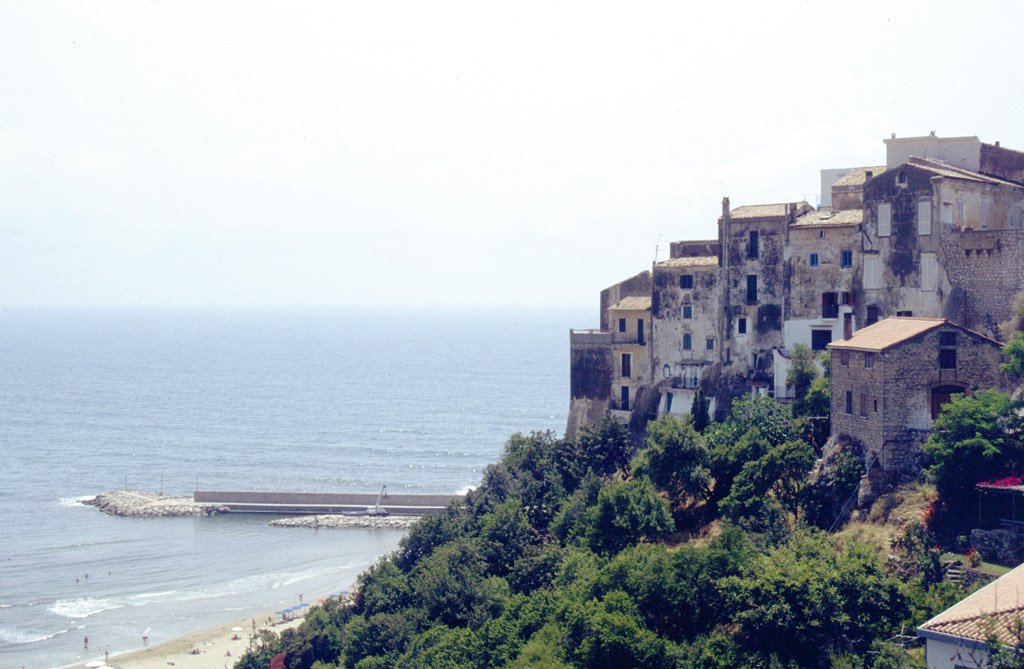
Clinging to a rocky promontory between Rome and Naples, Sperlonga is one of Lazio’s most striking coastal towns. Its whitewashed medieval centre, stacked in layers above the Tyrrhenian Sea, overlooks two sweeping sandy bays that have drawn visitors since the days of the Roman emperors.
History
The area’s most remarkable historical legacy lies just south of town: the Grotto of Tiberius, a vast sea cave where Emperor Tiberius created an elaborate dining grotto in the 1st century AD. Extraordinary marble sculptural groups — including a dramatic rendering of the blinding of Polyphemus — were discovered in fragments here in 1957 and are now displayed in the adjoining National Archaeological Museum of Sperlonga. The medieval town itself developed in the early Middle Ages as a defensive settlement for local populations seeking safety from coastal raids.
What to See
The historic centre rewards leisurely exploration: its whitewashed arches, geranium-draped staircases, and sea-view terraces are picturesque at every turn. The Museo Nazionale Archeologico holds the Sperlonga sculptures, arguably among the finest Hellenistic works in Italy. The twin beaches — Baia di Levante and Baia di Ponente — offer clear shallow water ideal for families.
Getting There
Sperlonga is best reached by car via the Via Flacca coastal road from Terracina or Gaeta. The nearest railway station is Fondi-Sperlonga on the Rome–Naples line, connected to town by bus (about 15 minutes). From Rome the drive takes approximately 90 minutes.
Find it on the map
See this place and what’s around it →📷 Become a Cultural Heritage Online photographer
Share your photos of places: they stay published under your name as the author. The more they're seen, the more you get noticed — and soon a contest will reward the most appreciated photos.
Log in or sign up free to add a photo