
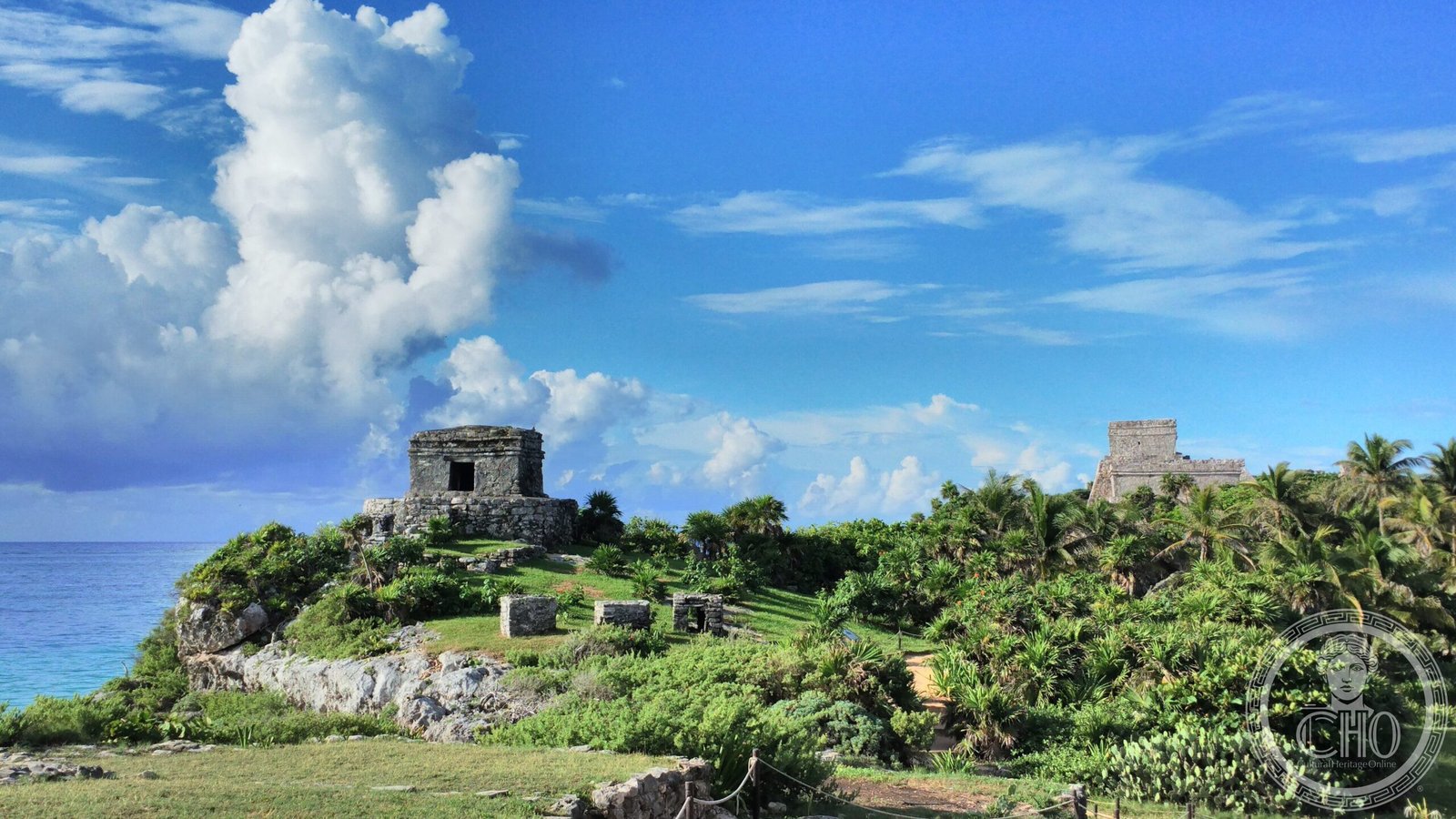
A walled Maya port city perched on Caribbean cliffs, Tulum ranks among the best-preserved coastal Maya sites and offers a dramatic setting where pre-Columbian architecture meets turquoise waters.
At a glance
Tulum sits atop 39-foot cliffs on the east coast of the Yucatán Peninsula, commanding views of the Caribbean Sea. The site served as a major port for the inland city of Coba and flourished as one of the last great Maya centers, achieving peak prominence between the 13th and 15th centuries.
History
Built during the late Maya period, Tulum rose to prominence in the 13th century as regional trade networks intensified. The walled city functioned as a vital maritime hub connecting Coba and other inland settlements to Caribbean trade routes. Spanish exploration reached Mexico in the early 16th century, yet Maya inhabitants maintained Tulum for approximately 70 years afterward. The city was ultimately abandoned by century’s end as colonial upheaval transformed the region.
What you see
The site reveals substantial stone structures arranged within defensive walls, adapted to the dramatic coastal topography. Cliff-side location and preserved architectural elements distinguish Tulum from inland Maya cities, reflecting its role as a seafaring center. The integration of buildings with the natural landscape and fortification walls remain visible today.
Cultural significance
Tulum represents a critical chapter in late Maya civilization, demonstrating sustained urban complexity and maritime trade networks in the final pre-Columbian centuries. Its preservation offers insights into coastal Maya society and the mechanisms of regional commerce that sustained major centers.
Key facts
- Country: Mexico
- State: Quintana Roo
- Coordinates: 20.21°N, 87.43°W
- Elevation: 12 meters (39 feet) above sea level
- Period: 13th–16th centuries
Practical information & getting there
Tulum is a major tourist destination easily accessible from Cancún and the Riviera Maya. The site’s dramatic coastal setting and well-preserved structures make it one of Mexico’s most visited archaeological zones. Contact local tourism authorities for current hours, admission fees, and access information.
Sources & resources
- Tulum – Wikipedia
- Cultural Heritage Online
Find it on the map
See this place and what’s around it →📷 Become a Cultural Heritage Online photographer
Share your photos of places: they stay published under your name as the author. The more they're seen, the more you get noticed — and soon a contest will reward the most appreciated photos.
Log in or sign up free to add a photo