
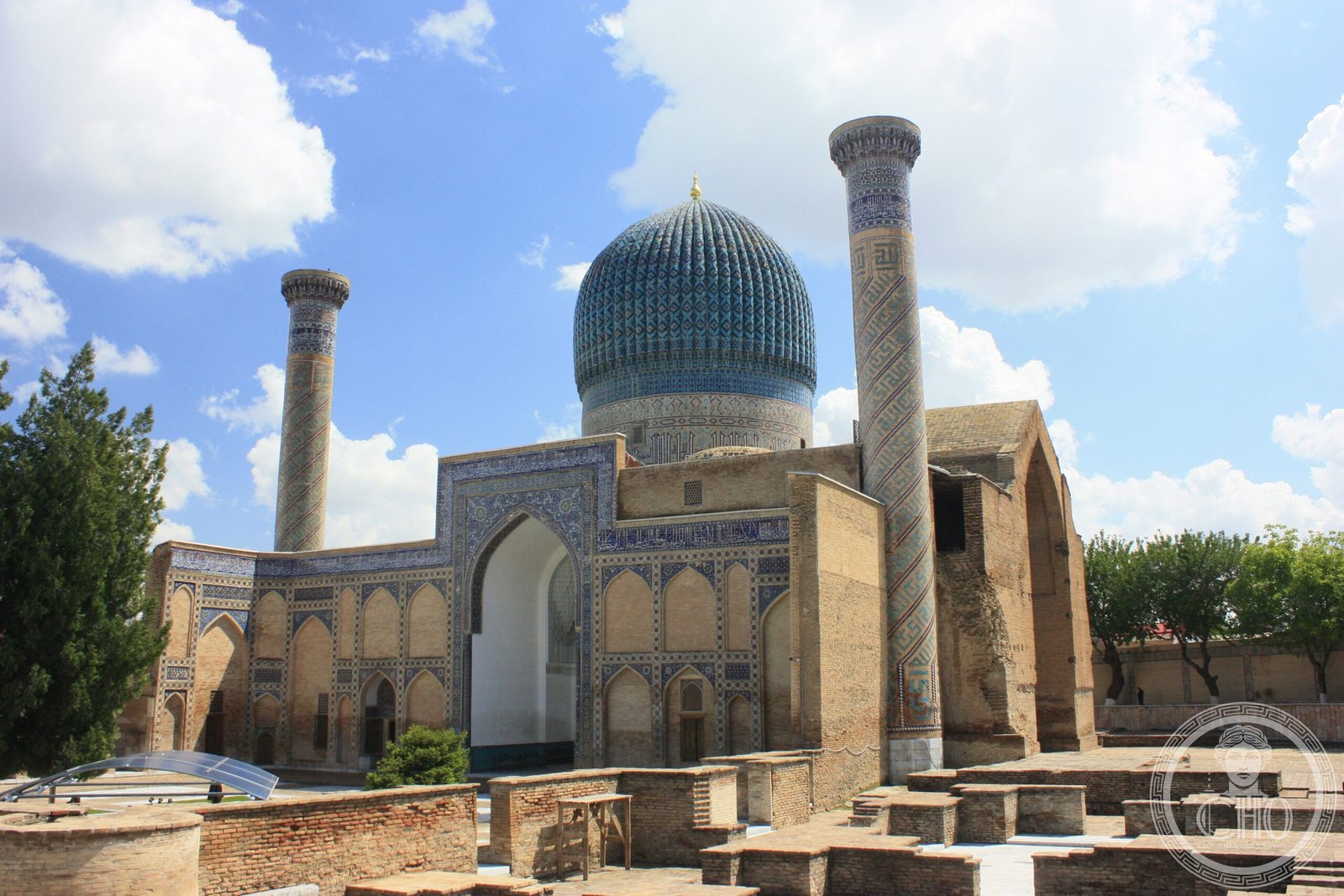
The mausoleum of Timur, the Turco-Mongol conqueror, stands as a watershed monument in Central Asian architecture—a prototype that would inspire the greatest Mughal tombs, from Humayun’s Tomb in Delhi to the Taj Mahal in Agra.
At a glance
Gur-e-Amir is the burial chamber of Timur (Tamerlane), the 14th-century military leader whose empire stretched across Central Asia. Built in Samarkand, his capital, the mausoleum demonstrates the architectural sophistication of the Timurid period and marks a crucial moment in the transmission of Central Asian design to the Indian subcontinent.
History
Timur’s mausoleum was constructed in Samarkand following his death in 1405. The building became a model for architectural ambition: his descendants, the Mughals, who would establish their dynasty across the Indian subcontinent, drew directly from Gur-e-Amir’s precedent when designing their own monumental tombs. The structure has undergone extensive restoration throughout its history to preserve its integrity.
What you see
The mausoleum exemplifies Timurid architectural principles that would be refined and reinterpreted by later builders. Its design established formal conventions—the marriage of Persian and Central Asian traditions—that shaped the aesthetic of Mughal funerary architecture across the centuries that followed.
Cultural significance
Gur-e-Amir occupies a pivotal position in the history of Turkestan’s architecture. It served as the precursor for and exercised direct influence over the development of Mughal monumental design, including Bagh-e-Babur in Kabul, Humayun’s Tomb in Delhi, and the Taj Mahal in Agra. Through these buildings, Timur’s architectural legacy helped shape Indian culture with Central Asian influences that endure to this day.
Key facts
- Country: Uzbekistan
- City: Samarkand
- Coordinates: 39.64833333°N, 66.96888889°E
- Subject: Mausoleum of Timur (Tamerlane), 14th–15th century
Practical information & getting there
Gur-e-Amir is located in Samarkand, one of Uzbekistan’s principal cultural centres. The site is accessible to visitors; consult local tourism resources for current opening hours and any access requirements before your visit.
Sources & resources
- Gur-e-Amir — Wikipedia
- Cultural Heritage Online
Find it on the map
See this place and what’s around it →📷 Become a Cultural Heritage Online photographer
Share your photos of places: they stay published under your name as the author. The more they're seen, the more you get noticed — and soon a contest will reward the most appreciated photos.
Log in or sign up free to add a photoIs this page about you?
This page is read by travellers and heritage enthusiasts who find it on Google. Tell us how you are connected to this place and we will take it from there.