
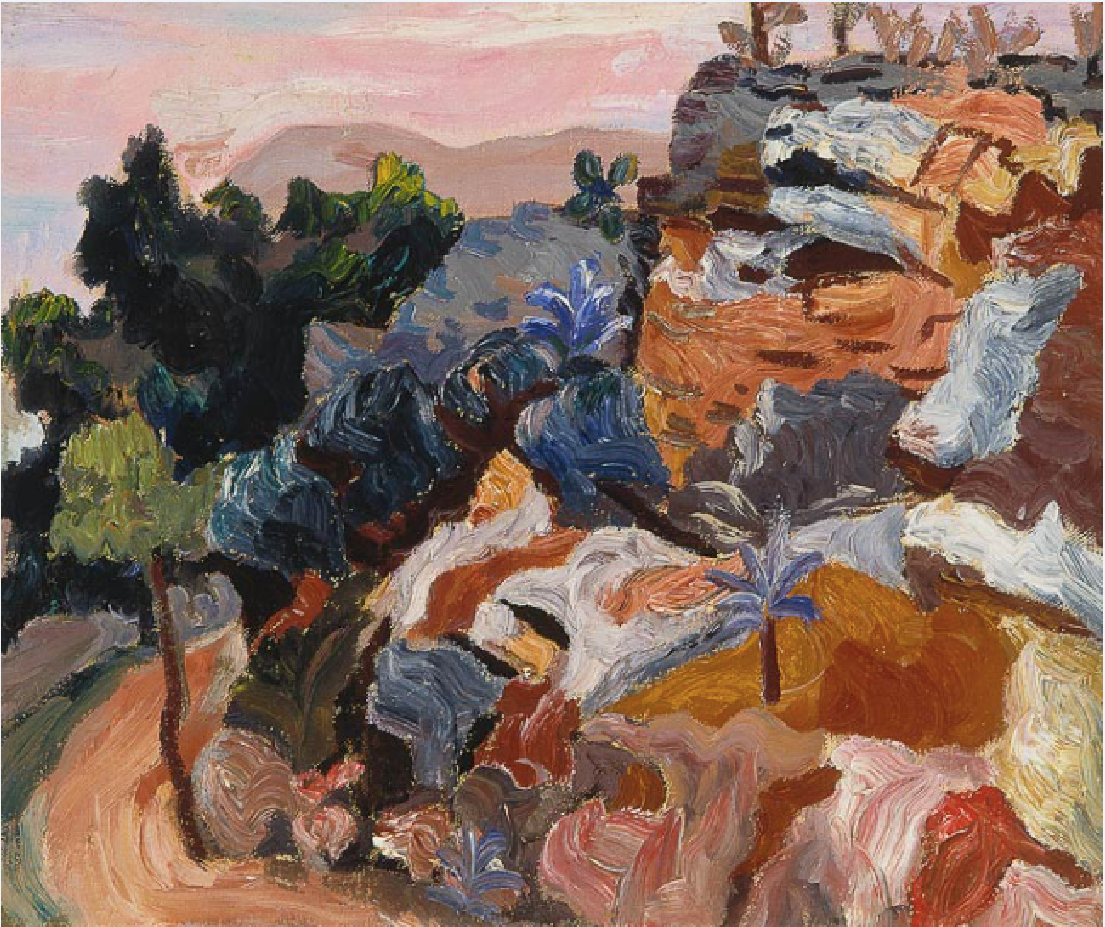
Paesaggio di Alassio is a landscape painting by Carlo Levi, completed in 1933. The work depicts the coastal town of Alassio in Liguria, northern Italy.
Levi was a multifaceted artist and intellectual who worked as a painter, writer, physician and political activist. Before his international recognition through the 1945 memoir Cristo si è fermato a Eboli (Christ Stopped at Eboli), Levi was already engaged in artistic practice. The painting of Alassio dates from the interwar period and reflects his attention to Italian landscapes and regional subjects. His later writings brought attention to the social and economic disparities within Italy, particularly through his sympathetic documentation of life in the impoverished southern regions.
About Carlo Levi
Born in Turin in 1902 to a wealthy Jewish physician family, Levi studied medicine at the University of Turin, graduating in 1924. He combined his medical training with artistic and literary pursuits, becoming known for his independent leftist political views and his humanitarian perspective on Italian society.
Details
- Artist: Carlo Levi
- Year: 1933
- Subject: Alassio, Liguria, Italy
- Medium: Painting
Frequently asked questions
Who was Carlo Levi?
Carlo Levi (1902–1975) was an Italian painter, writer, physician and political activist best known for his memoir Cristo si è fermato a Eboli, published in 1945, which documented his exile in the southern Italian region of Lucania and brought attention to the hardships of rural peasant life.
What is Alassio?
Alassio is a town on the Ligurian coast in northern Italy, known as a seaside destination. Levi’s 1933 landscape captures this Mediterranean setting.
When did Levi paint this work?
The painting was completed in 1933, during the interwar period of Italian history, several years before Levi’s exile and the publication of his famous memoir.
Sources
- S1 — Micieli, Nicola, ed. Carlo Levi: Il segno e la pittura. Bandecchi & Vivaldi, 2002. ISBN 978-88-8341-042-0.
- S2 — Fagiolo dell'Arco, Maurizio. I Sei di Torino: 1929–1931. Fabbri Editori, 1989. ISBN 978-88-450-3276-9.
Spotted an error? Write to editorial@culturalheritageonline.com and we correct it the same day.


